AI Dubbing: The New Digital Revolution Breaking Language Barriers for Regional Content Creators
Platforms like Instagram and YouTube are now offering the ability to dub regional videos into other languages with the help of artificial intelligence, bringing a major shift in creators' reach and earnings.
In today's digital age, social media platforms are flooded with content, but language has always remained a limitation. No matter how good a video a Gujarati or Marathi creator makes, if they do not know Hindi or English, their video would reach only a limited audience. Now, this situation is changing rapidly. Meta-owned Instagram and Alphabet-owned YouTube have introduced artificial intelligence (AI) based dubbing and translation tools. These tools are paving the way for regional content creators to move beyond their domestic market and reach a global audience.
According to a report by Livemint, on January 16, Instagram expanded its reels translation feature. This feature now includes Indian languages such as Bengali, Tamil, Telugu, Kannada, and Marathi, in addition to English, Hindi, Spanish, and Portuguese. Similarly, on February 4, YouTube opened its auto-dubbing feature to all creators, which now supports around 27 different languages. This technology does not merely translate words, but it has the capability to present them in another language while preserving the creator's voice and rhythm.
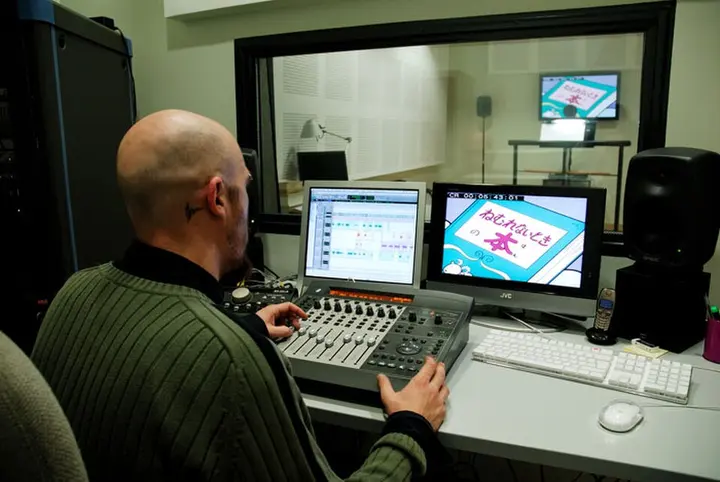
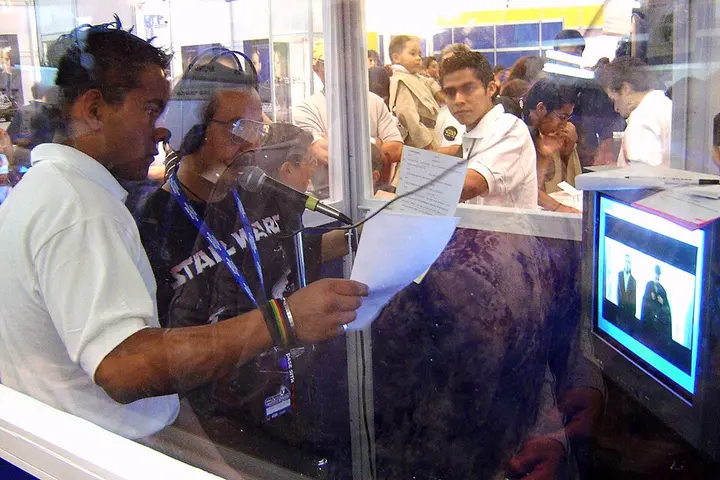
It is necessary to understand what dubbing is. According to Wikipedia, dubbing is the process of replacing the original sound of a video or adding a new sound to it during post-production. Traditionally, this process was very complex and expensive. It required professional voice artists, sound engineers, and studios. This process is also known as automated dialogue replacement (ADR). But with the advent of AI, this work is now possible in minutes and at a very low cost. AI programs can now generate a natural voice similar to that of a human, which is called speech synthesis.
To understand how this technology works, one has to look at its various stages. First, AI recognizes the words spoken in the video and converts them into text. Then, that text is translated into the target language. The most important stage is 'lip-syncing', in which AI matches the movement of the character's lips with the new voice. According to Wikipedia, a new method called 'visual dubbing' uses machine learning to alter the facial expressions of the actor as well, making it appear as though they are actually speaking in that very language. Models like Wav2Lip (2020) have proven that precise synchronization can be achieved between any voice and video.
- Speech recognitionAI recognizes the words spoken in the video and converts them into text.
- TranslationThat text is translated into the desired target language.
- Lip-syncingThe character's lip movements are matched with the new voice.
What are the benefits of this new technology for creators? According to Kannada finance creator Rajeev K.S., previously manual translation and dubbing of a single video took 2 to 3 hours. Now, with the help of AI tools, this work is done in just 20 to 30 minutes. This means a 60% to 80% reduction in production time. This time saving encourages creators to produce more content. Furthermore, there has been a major reduction in costs as expensive studios or artists are no longer required.
A significant increase in viewership, meaning the number of viewers, has also been observed. According to the experience of Bengali beauty creator Ipsita Moitra, her audience has grown beyond West Bengal due to AI dubbing. Previously, 35% of her viewers were from outside Bengal, which has now increased to 45% to 50%. If one of her normal reels gets 50,000 views, its multilingual version receives 60,000 to 65,000 views, representing an increase of about 20% to 30%. Another creator named Pallavi Paul Kundu states that AI is so accurate that people cannot even recognize whether she is actually speaking in another language or if it is dubbing.
ટકાવારી (%)
- Speech-to-textAI recognizes the original video voice and converts it into text.
- TranslationThe prepared text is translated into the target language (e.g., from Marathi to Hindi).
- Voice cloningA voice similar to the creator's original voice is generated by AI in the new language.
- Lip-syncingAI makes visual changes to match the character's lip movements in the video with the new voice.
According to Meta's first-quarter earnings call, more than 500 million users watch AI-translated videos on Instagram and Facebook every week. This figure shows that audiences are also accepting this new change. However, it is not necessary that earnings will increase simply by increasing views. Rajeev K.S. says that earnings on Instagram mainly depend on brand collaborations. Brands now look not only at views, but also at engagement—meaning how enthusiastically people watch the video and how they react to it.
The creator economy in India is growing very rapidly. According to a report by the Indian School of Business and HashFame, the number of creators in India was 9.6 lakh in 2020, which is projected to increase to 41.2 lakh in 2025. There has been a huge surge in the number of creators coming particularly from smaller cities (non-metro). In 2020, 38,000 non-metro creators participated in brand campaigns, which will exceed 4.08 lakh by 2025. AI dubbing can prove to be a boon for these creators as it can connect them with the whole of India without the barrier of language.
| Method | Time | Cost/Complexity |
|---|---|---|
| Manual dubbing | 2 to 3 hours | High (Artist and studio required) |
| AI dubbing | 20 to 30 minutes | Very low (Automated tools) |
However, there are also some challenges facing this technology. According to Marathi comedy creator Aishwarya Bombale, regional content often relies on local jokes, accents, and cultural references. When AI translates this, the original sentiment or humor is often lost. A technical translation might be accurate, but it may not sound natural. Because of this, audiences may not feel the same connection to the video as they would in the original language. Shubh Dutt, co-founder of Ringlight Media, also believes that the synchronization of regional dialects and voices remains a major challenge.
It is expected that this technology will become more accurate in the future. Amazon Prime Video also tested AI-generated dubbing in March 2025. However, there are ongoing discussions regarding its quality and its impact on the jobs of voice actors. Platforms like YouTube and Instagram are now also developing tools to measure viewership and conversion rates at the language level, so that brands can know how much they are actually benefiting from dubbed videos.
In conclusion, AI dubbing is not just a technical feature, but a medium that creates equal opportunities for regional artists. It breaks down language barriers and allows for the free flow of art and information. However, its success will depend on how well it can preserve the sensitivity and cultural identity of the original content. As this technology improves, we may enter an era where language will no longer be a barrier to anyone's growth.