6G and Artificial Intelligence: The Future 'Sensing Network' and India's Preparation
What will the world after 5G look like? 6G will not just be about speed, but a fusion of artificial intelligence and sensing technology that will transform the way we live.
Sunil Bharti Mittal, the pioneer of the telecom revolution in India and founder of Bharti Airtel, stated in a recent interview with NDTV that India will be ready for a 6G rollout by 2030. 6G, the sixth-generation cellular network, will be many times faster than the current 5G network and will incorporate cognitive artificial intelligence (AI) technology. According to Mittal, 6G will not merely be a tool for communication, but will become a 'sensing network' capable of perceiving the world around us.
With the advent of this technology, we might not even need to carry smartphones. Instead, we will wear devices such as smart glasses, rings, or earpods that will remain constantly connected to the network. Giving an example, Mittal said that Meta's Ray-Ban glasses are a small glimpse of this future. These devices will be able to 'sense' who you are meeting and what you are talking about, and even translate languages in real time when necessary. On this network, AI agents numbering 100 times more than humans will be active, continuously analyzing data.

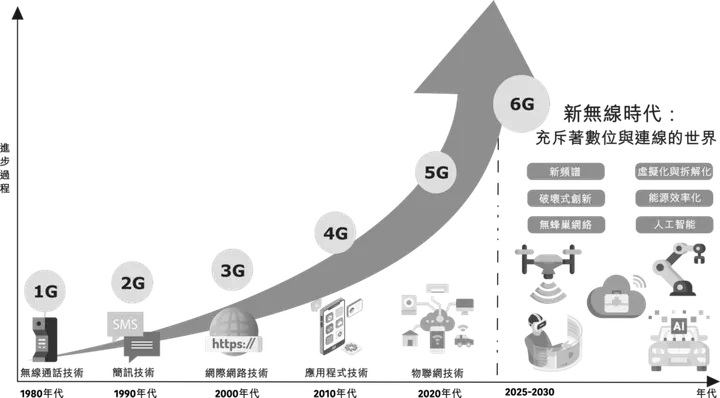
Speaking of the technical framework of 6G, it will operate on previously unexplored radio frequencies. The IMT-2030 framework has been prepared for this by the International Telecommunication Union (ITU-R). There are plans to use the terahertz (terahertz) band in 6G, which lies between 100 GHz and 3 THz. These frequencies can provide extremely high data rates, but one of their limitations is that they are easily blocked by obstacles. To solve this problem, researchers are working on 'reconfigurable intelligent surfaces' that can direct signals.
Regarding network speed, according to a Samsung white paper, they achieved a speed of 6 Gbit/s at a distance of 15 meters in indoor testing. Subsequently, in 2022, they achieved a speed of 2.3 Gbit/s at a distance of 120 meters. China's Purple Mountain Laboratories has even recorded an extraordinarily high speed of 206.25 Gbit/s in a laboratory. This speed is manifold higher than 5G, bringing a major revolution to the world of data transfer.
| Organization / Experiment | Speed and Distance Achieved |
|---|---|
| Samsung (Indoor Test) | 6 Gbit/s (15 meters distance) |
| Samsung (Subsequent Test) | 2.3 Gbit/s (120 meters distance) |
| Purple Mountain Laboratories, China | 206.25 Gbit/s (Laboratory test) |
| Generation | Core Technology | Main Use |
|---|---|---|
| 1G to 4G | Radio Waves | Voice and Mobile Internet |
| 5G | Millimeter Wave (mmWave) | High-Speed Data and IoT |
| 6G | Terahertz and AI | Sensing Networks and Holographic Communication |
The biggest feature of 6G will be the deep integration of artificial intelligence (AI) within it. Until now, AI was used in applications running on top of networks, but in 6G, AI will be part of the foundational architecture of the network. AI will help manage the network, allocate spectrum, and optimize services. This is called 'cognitive radio' technology, where the network itself will decide how much bandwidth a given user needs and which path is most efficient for transmitting data.
Artificial intelligence (AI) is a computational system that can perform human tasks such as learning, reasoning, and decision-making. Machine learning will be used in the 6G network, which will analyze data streams to find patterns and predict future needs. This will reduce latency—the delay in sending data—to an extremely low level. When we use augmented reality (AR) or virtual reality (VR), this ultra-low latency becomes critically important.
- Data SensingThe network will sense the surrounding environment and user movement through sensors.
- AI AnalysisCognitive AI agents will analyze data in real-time to determine needs.
- Spectrum OptimizationMachine learning algorithms will select the most efficient frequency and path.
- Autonomous ResponseThe network will automatically correct problems and provide service without human intervention.
Geopolitics is also playing a significant role in the development of 6G. China has filed the highest number of 6G patents so far and, in 2020, launched the world's first 6G testing satellite. On the other hand, countries like the US, Australia, Canada, and Japan have jointly announced principles for a secure and open 6G network. India is not lagging in this race either. In 2023, the Government of India released the 'Bharat 6G Vision' document, aimed at making India a leader in 6G technology.
According to Sunil Mittal, India today offers the cheapest telecom services in the world. 5G signals are available even better in India than in Europe and America. However, 6G will require massive investments. Mittal warns that if there is a fragmentation in spectrum and financial viability, difficulties could arise, much like in European countries. For the successful implementation of 6G, telecom companies must have sufficient funds to invest in the new technology.

6G will not be limited to smartphones alone; it will also take the Internet of Things (IoT) to new heights. It will support 'ambient IoT' devices that can operate on very low energy using backscatter communication. This means even the smallest everyday objects around you will be connected to the network via sensors. All of this will be AI-driven, which will also look after data security and privacy. According to a report in Nature Electronics, 6G networks must be human-centric, prioritizing security and confidentiality.
There are also certain challenges on the path to 6G. Operating at higher frequencies increases energy consumption in electronic circuits and generates heat. This requires further research into thermal protection and energy efficiency. Japan's Nagoya University has experimented with using superconducting materials to reduce signal loss for this purpose. When 6G becomes commercially available by 2030, it will not be just a network, but a fully intelligent ecosystem that will unite our physical and digital worlds.