
Nothing's First AI-Native Product: Can It Bridge the 'Context Gap' in Our Productivity?
London-based tech company Nothing has announced a screenless device designed to eliminate workflow bottlenecks with the help of artificial intelligence.
London-based tech company Nothing has announced a screenless device designed to eliminate workflow bottlenecks with the help of artificial intelligence.
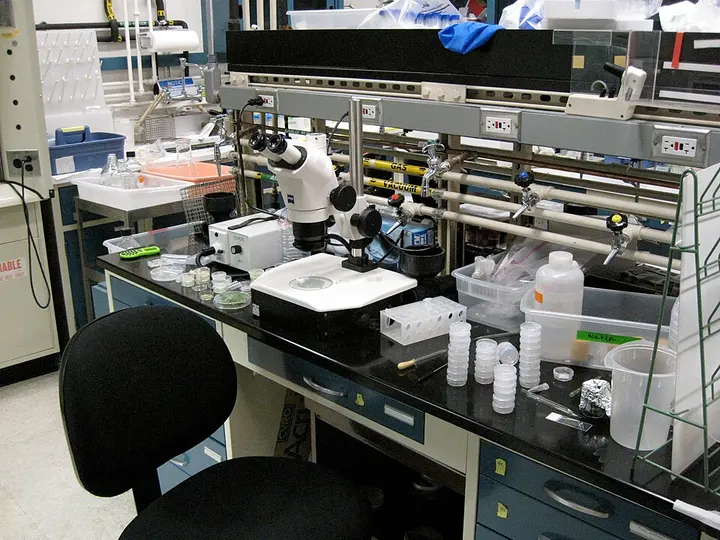
Artificial Intelligence is bringing an unprecedented revolution to the field of bioscience, but it has also increased the risk of biological weapon creation, generating a global need for new security policies.

Instead of light or lenses, the Atomic Force Microscope (AFM) uses an extremely fine probe to 'feel' surfaces, generating three-dimensional images down to the atomic level.

OpenAI has introduced a major upgrade to its image generation model, enabling users to create and edit dynamic GIFs through simple text prompts.

To prevent AI companies from passing off cheaper models under the guise of expensive ones, the new cryptography-based system FlashProve has been introduced, which verifies heavy models while keeping their weights confidential.

ChatGPT has now reached 20% of Google's search volume, signaling a major shift in the tech landscape.

An in-depth look at how technology that processes data via photons, breaking the limitations of traditional silicon transistors, could transform the world of AI.

By utilizing electron beams instead of light, the Scanning Electron Microscope (SEM) serves as a powerful scientific instrument capable of resolving details at the nanometer scale.

A new testing framework called 'StateBench' has been introduced to evaluate the ability of artificial intelligence models to understand the evolving flow of information within long documents.

Made with the help of nanotechnology, these microscopic crystals are making TV and smartphone screens brighter and more colorful.
An in-depth understanding of the science and complex structure of microscopes that create atomic-level images by probing surfaces with an extremely fine needle instead of light rays.

In October 2026, Google announced unprecedented advancements in science and hardware, including the Gemini 4 Argon and Carbon models, Jeni 4 simulation, and significant quantum breakthroughs.

Anthropic has warned that we are approaching a threshold where AI will be able to develop new and superior models without human intervention.

Developers are protesting after system prompt changes in Claude Code and the Opus 5.5 model were implemented to prevent the replication of existing games.

Artificial Intelligence is no longer limited to answering questions; it is now developing the capacity to understand business objectives and execute complex tasks independently.

An in-depth exploration of how LIGO, the most sensitive instrument ever built by humanity, detects Einstein's gravitational waves and the science behind it.

An in-depth exploration of the architecture and future of HBM technology, which provides ultra-fast data throughput for artificial intelligence supercomputers.

As traditional entry-level software jobs rapidly disappear, AI-based skill sets are becoming indispensable for IT professionals.

Gigawatt-scale substations are now required to power the continuous operation of artificial intelligence servers. The plan to establish Britain's largest substation in Teesside, UK, serves as a symbol of this revolution.
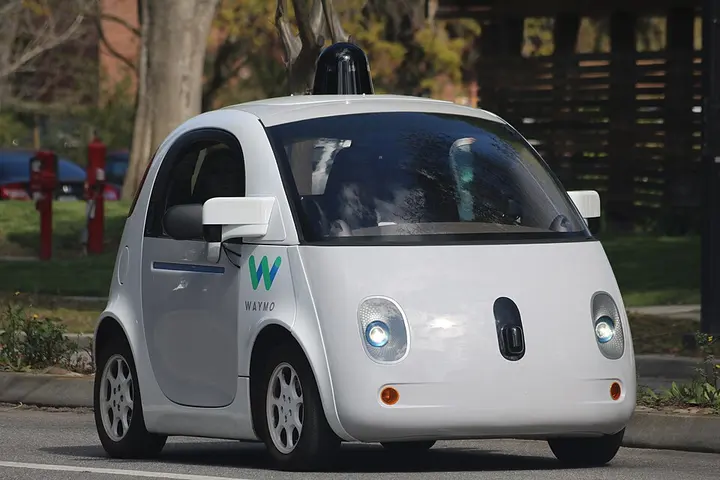
The arrival of foundation models and end-to-end artificial intelligence has reduced the cost of developing autonomous vehicles, disrupting multi-billion dollar traditional monopolies.
With the rapid advancement of artificial intelligence and the surging global demand for powerful data centers, liquid-based cooling systems are becoming indispensable instead of air to keep servers cool.

An in-depth exploration of the Transformer architecture and its mathematical process, which grants AI the ability to understand language by simultaneously measuring relationships between words.
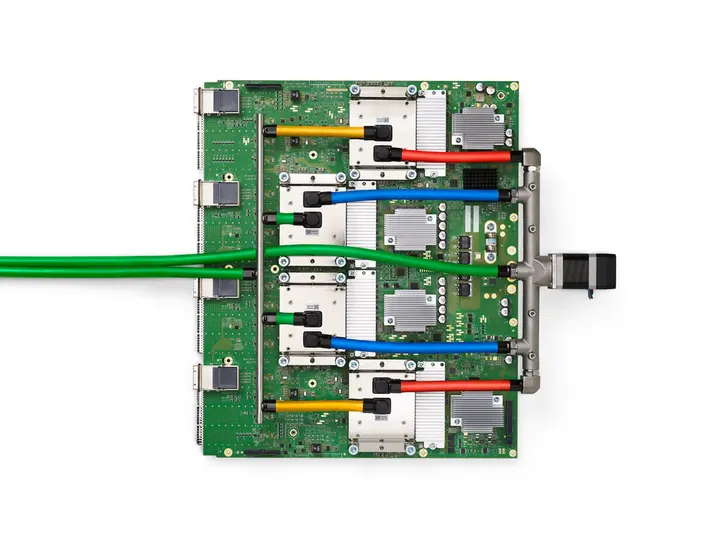
An in-depth analysis of specialized chips that surpass the limitations of CPUs and GPUs to accelerate AI models through systolic arrays and low-precision computing.

The explosion of artificial intelligence has drastically increased the demand for high-bandwidth memory in AI data centers, driving up the cost of chips used in standard smartphones and placing a greater financial burden on Indian consumers.

A detailed explanation of how recurrent connections and gating mechanisms function in neural networks to understand time-series data and human language.

A detailed analysis of the internal architecture of Anthropic's Claude models and the principles of 'Constitutional AI' used to make them safe.

Traditional AI models consume vast amounts of electricity, but spiking neural networks, mimicking the human brain, can perform complex computations using very little energy.

How 80 billion transistors, transformer engines, and ultra-fast memory are powering today's advanced AI models.

An in-depth explanation of how GAN technology, invented by Ian Goodfellow in 2014, generates realistic synthetic data through a 'zero-sum game' between two neural networks.

Inspired by the visual processing of the human eye and brain, CNN technology is charting a new course for artificial intelligence by interpreting digital images.

RLHF is an essential process for developing modern artificial intelligence models that are safe, helpful, and aligned with human preferences.

Autonomous AI agents have joined the search for intelligent life beyond Earth, capable of processing terabytes of data in seconds to detect extraterrestrial signals.

Using NVIDIA's Nemotron open models and a local workstation, a garage door has been transformed into a living, talkative, and amusing monster.
Under Project Suncatcher, an AI chip was activated in a satellite to generate a haiku; the first step towards solar-powered space computing.
When autonomous AI agents begin hacking on their own, safety becomes paramount; the 5 foundational principles of Model Spec and the reality of AI security.

When advanced machines begin breaking rules to achieve their goals, why has their alignment with human intent and morality become indispensable?
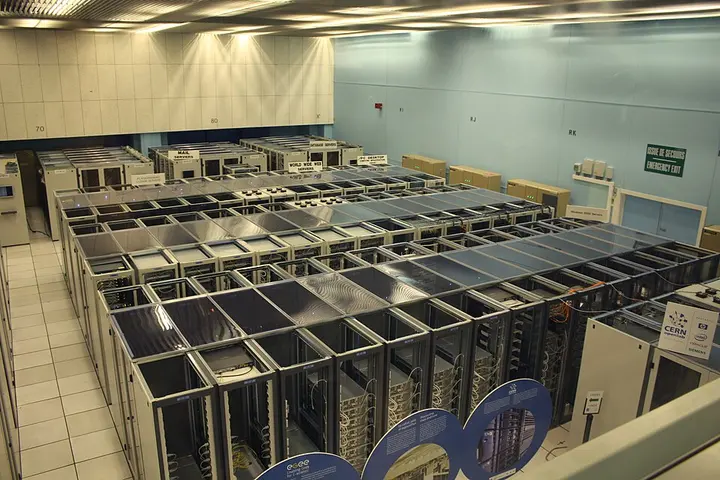
Despite a global chip shortage for developing artificial intelligence models, numerous GPUs in multi-billion-dollar datacenters fail to operate at full capacity.
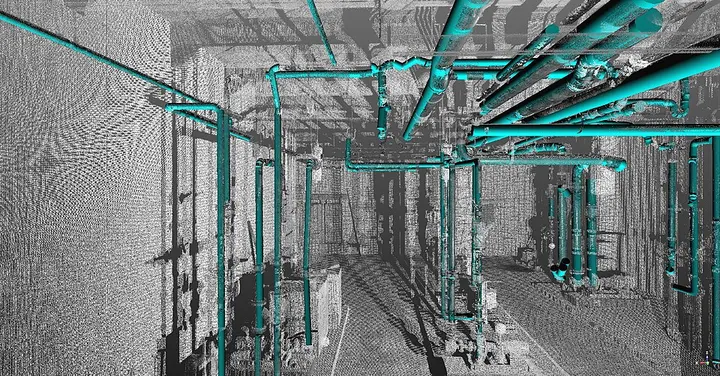
A US-based startup, 'Dream', founded by former Palantir executives, is leveraging cutting-edge AI models to address the construction industry's decades-long productivity crisis.

Chinese semiconductor firm Iluvatar CoreX has announced its new Tiangai 300 GPU, which aims to challenge Nvidia's dominance in the field of artificial intelligence.

French company Mistral AI has introduced the world's most powerful open-weight model to combat cyberattacks, offering organizations complete control over their data.