Google's October 2026 Leap: The AI Revolution Spanning Gemini 4 Argon, Space, and Quantum Computing
In October 2026, Google announced unprecedented advancements in science and hardware, including the Gemini 4 Argon and Carbon models, Jeni 4 simulation, and significant quantum breakthroughs.

October 2026 has proven to be a landmark month in the world of Artificial Intelligence (AI). Google has opened its treasure trove of research and products, introducing new technologies across multiple fields simultaneously. According to the company's official announcement, the frontier reasoning model Gemini 4 Argon was launched globally this month, and just two weeks later, Gemini 4 Carbon, capable of cyber security and long-horizon engineering, was announced. In addition to this, Genie 4, which performs live simulations of the real world, Project Suncatcher, which runs data center-class processors in Earth's orbit, and a discovery that removes a 20-year-old obstacle in quantum computing are included.
All these developments are not limited to the lab but extend to everyday life tools such as smartphones, fitness trackers, and common search engines. Google has been investing in machine learning and AI infrastructure for over twenty years. These announcements made in October 2026 show that the race toward Artificial General Intelligence (AGI) is no longer limited to language-based chatbots but has reached robotics, cyber defense, and space science.

Gemini 4 Series: Capabilities of Argon and Carbon
Google introduced Gemini 4 Argon globally to developers, enterprises, scientists, and general users at the beginning of October. This model is specifically designed to handle workflows for complex coding, financial analysis, and legal tasks. The Argon model has been made available in Google AI Studio, Gemini API, Google Cloud, and the Gemini app. Furthermore, 'Gemini 4 Argon for Robotics' has also been provided to understand physical world conditions in robotics.
Barely fifteen days after the launch of Argon, the company announced Gemini 4 Carbon. Carbon has been described as the company's most robust model to date, specifically capable of long-horizon engineering and cyber security defense. However, instead of releasing this model directly to the market, it has been placed under a controlled security framework. Currently, its pre-release testing is underway with the US government and trusted cyber experts under the Fairwind Program, so that its security can be ensured before it reaches the general public.
| Model Name | Primary Use | Availability Platform | Rollout Status |
|---|---|---|---|
| Gemini 4 Argon | Complex coding, financial analysis, legal workflows, and robotics | Google AI Studio, API, Cloud, Search, and Gemini App | Full global launch |
| Gemini 4 Carbon | Cybersecurity defense and long-term engineering | Exclusive partners under the Fairwind Program | Pre-release testing with US government and defenders |
Genie 4: Creating a virtual world with real physical laws
While Gemini models focus on language and logic, the newly introduced Genie 4 is a world model that gives AI an awareness of the real world. Genie 4 creates interactive simulations in real-time with advanced physics, human body movement, and native audio. Users can control these virtual scenes simply by providing prompts in plain language.
The greatest significance of this model lies in training robots and autonomous agents. There is an urgent need for such safe virtual environments to train robots in the real world without the risk of accidents or damage. According to Google DeepMind, this is an extremely important step toward achieving AGI, or human-equivalent artificial general intelligence.
- Text prompt inputThe user enters a description of a scene or environment based on their imagination in simple language.
- Physics and movement calculationGenie 4 calculates advanced physical rules and human movement patterns.
- Native audio integrationRealistic audio matching the scene is generated in real-time at that exact moment.
- Interactive controlThe user can control the running scene in real-time by giving new instructions.
Open Models and On-Device AI: EmbeddingGemma 2
To run searches locally on a device while maintaining privacy, Google has launched EmbeddingGemma 2, based on the Gemma 4 architecture. This model contains 740 million parameters. It organizes not only text but also code, images, videos, and audio into a single unified vector space. A parameter is a measure of what the model has learned in its 'brain'.
The specialty of this new model is that its modular design reduces local vector storage by 6x. Searching for a specific old video clip by speaking a voice memo, or retrieving answers from hours of audio using a text query on a standard smartphone or laptop without an internet connection, has now become extremely simple and private.
20-Year Barrier Broken in Quantum Computing
In the field of science, the most explosive announcement of October 2026 came from Google Quantum AI. According to a research paper published in the journal 'Science', the company has successfully demonstrated the 'magic state cultivation' method experimentally on its Willow quantum processor. This research has removed a major barrier that has existed in quantum computing for the last 20 years.
Extremely pure magic states are required for fault tolerance in quantum computing. In previous methods, nearly 95% of the computer's resources were wasted in creating these states. With the new method, errors have been reduced by approximately 40-fold compared to impure or standard states. This discovery paves the way for building large-scale, error-free quantum computers.

Google TPU in Space: Project Suncatcher
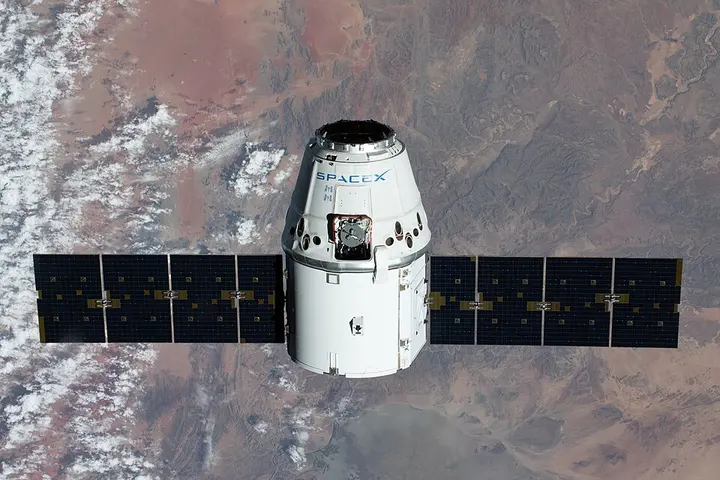
Google has achieved a major success under 'Project Suncatcher' by sending its Tensor Processing Unit (TPU) into low Earth orbit. The project's first prototype satellite sent the world's first AI response generated by a data center-class TPU from space back to Earth, which was a haiku poem composed by the onboard Gemma 4.
This milestone proves that Google's hardware can withstand the shocks of a rocket launch and operate safely in the vacuum of space. Under a long-term plan to build AI infrastructure in space by utilizing the abundant solar energy available in orbit, testing will now continue on how these chips survive radiation and extreme temperatures.
સંખ્યા
Progress in Daily Security, Health, and Education
New security shields have been added to the Android system for the daily protection of users. Phone by Google and Google Messages currently identify over 5 million suspicious scam calls and text messages every month. Now, an 'Enhanced Protection' mode based on cloud Gemini models and Private AI Compute has been added to messaging, which prevents fraud based on conversations.
On the other hand, to combat deepfakes and fake content, the SynthID Detector has been expanded globally in the English language. Google has so far watermarked 180 billion images and videos as well as 240,000 years of audio. These tools in Search and Chrome handle over 1 million verification requests daily and can also identify content from partner companies such as OpenAI, NVIDIA, Apple, and Kakao.
A major notable improvement has also been seen in the field of clinical healthcare. The first joint research by Google and Beth Israel Deaconess Medical Center was published in 'The Lancet' medical journal. In this study, Google's AMIE medical system helped physicians prepare patient histories in 75% of cases and showed accurate alignment with doctors' final diagnoses in 90% of cases. Along with this, Google has also introduced the Fitbit Edge fitness tracker, which has a 7-day battery life and includes a Gemini-based health coach.
For education and creativity, a no-code gaming platform called 'Playground' has been introduced, where games can be created with simple prompts. Custom quizzes and interactive learning overviews have been added to Gemini Notebook for students. Apart from this, at the Research@ 2026 event, Google made the Deep Review tool available to the public for scientific research, and a grant of $36 million was allocated to 17 organizations for AI research through Google.org. This extraordinary progress of October 2026 shows that artificial intelligence is no longer limited to screens but is expanding the boundaries of science, health, and space.