Humanoid Robots Doing Chores: A Cleaning Revolution or a Technological Experiment?
From San Francisco homes to automated factories, human-like humanoid robots are now performing tasks ranging from cleaning toilets to folding laundry. Based on complex techniques, teleoperation, and sensors, what is the reality of these robots entering our homes?

Home-service robots, depicted in science fiction stories for decades, are now stepping into real-life homes. A San Francisco-based startup company called Tau Robotics has recently launched an experiment to provide cleaning services in homes using human-shaped humanoids (robots with human-like physical structures). These robots, which stand four and a half feet tall, go to customers' homes to perform tasks such as wiping kitchen counters, vacuuming, mopping, and cleaning toilets. Although full autonomy is yet to be achieved in this field, this technology offers a glimpse into the future of human-machine coexistence.
However, while these robots may appear fully automatic at first glance, they are not currently completely independent. According to Cornelia Weinzierl, co-founder of Tau Robotics, the robots are currently operated with the help of teleoperation (operating a robot remotely by a human). Human pilots sitting at the company's headquarters view the home scene through cameras mounted on the robot's head and wrists and control the robot. Visual and sensor data of everything the robot does is collected. This data is used to train AI models to work independently in the future.
- Monitoring by human pilotOperators sitting at the company headquarters view the customer's home situation live through cameras on the robot's head and wrists.
- Kinematic guidanceThe operator performs movements with their own hands, which sensors capture and cause the robot's hands/claws to perform in the same way.
- Data collection and AI trainingData from successfully completed cleaning, folding clothes, or wiping dishes processes is used to train machine learning models.
- Autonomous cleaning implementationBased on the collected data, the robot performs tasks like vacuuming and mopping independently without human help in the future.
During home cleaning, the robot faces many challenges. Kinematic guidance (capturing the movements of a human operator via sensors to have the robot perform the same process) is used specifically for tasks like making a bed or folding clothes. However, the robot has now begun to perform some tasks, such as vacuuming and mopping, without human assistance. For durability, the Tau Robotics cleaning robot is equipped with 3D-printed claws instead of human hands and a head with a 3D-printed antenna. To prevent scratches on wooden floors, the robot is fitted with grippy socks.
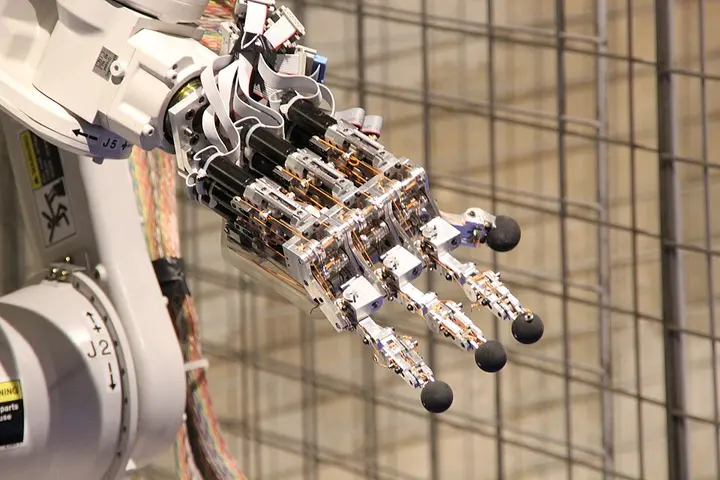
Sensors and actuators (motors that generate movement) are extremely important for bringing human-like movements to robotics. Proprioceptive sensors are used to determine the robot's own body balance and joint position. In this, accelerometers, tilt sensors, and the Zero Moment Point (ZMP) balancing method are useful. On the other hand, exteroceptive sensors such as cameras (CCD cameras), microphones, and tactile sensors are used to understand the external environment. For example, under the polyurethane skin at the tip of every finger of a robotic hand called the Shadow Hand, 34 tactels (sensors that provide tactile sensation) are installed.
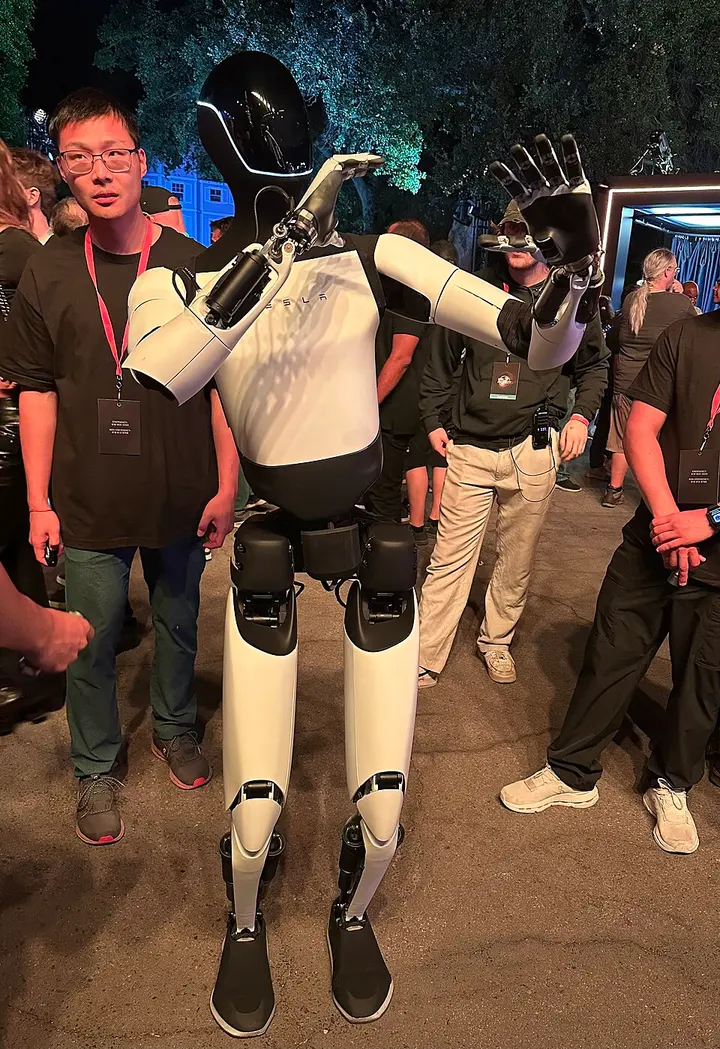
On the other hand, the car manufacturer Tesla is also working rapidly on its public humanoid robot, Tesla Optimus. Tesla CEO Elon Musk announced Optimus during AI Day in August 2021. The Optimus Generation-2 (Gen 2) robot stands 5 feet 8 inches (173 cm) tall and weighs 125 pounds (57 kg). In 2023, the Optimus hand had 11 degrees of freedom (directions of free joint movement), which was increased to 22 degrees of freedom in November 2024, allowing it to perform delicate tasks such as boiling an egg or folding a shirt.
There is a significant difference in the design, capabilities, and economic structures of various companies in the development of household humanoid robots. Tau Robotics, which provides cleaning services, used to charge its initial customers $30 per hour, which has now been increased to $60 for two robots per week or $100 for a one-time visit. Since the goal is data collection, this price has been kept low compared to the technology. On the other hand, Tesla aims to keep the future retail price of its Optimus robot between $20,000 and $30,000.
ડીગ્રી ઓફ ફ્રીડમ
In terms of production, the first-generation production line is being established at Tesla's Fremont factory, which will have the capacity to manufacture 1 million robots annually, while the goal is to produce 10 million robots annually at the Texas Gigafactory by 2027. Optimus will use Tesla's own AI5 and AI6 chips, allowing it to make decisions locally without an internet connection. Following the resignation of Milan Kovac, head of the Optimus program, in June 2025, Ashok Elluswamy has taken charge of the project.
However, these robots show major limitations when performing actual tasks inside homes. According to an MIT Technology Review report, when a Tau Robotics robot was climbing stairs in a house, it stumbled like a drunk person due to latency in signal transmission. When the temperature rose in the house, the robot operator's equipment overheated and shut down. Furthermore, while cleaning the toilet, the head detached from the flush stick 3 times, and errors such as leaving faucets open or spilling oil bottles were also observed. This shows how complex the chaotic environment of a human home is for a robot.
US Dollar ($)
Leading experts in the field of robotics caution against the reality of this technology. According to Rodney Brooks, co-founder of the Roomba vacuum, the idea that humanoid robots will become all-purpose helpers is a "fantasy" because achieving physical coordination in robots is extremely difficult. According to former Tesla engineer Chris Walti, building a humanoid robot is a challenge many times more complex than developing a self-driving car, and if the game of robotics were 9 overs long, we are currently only in the third over. Nevertheless, as data increases, these mechanical humans could play an important role in the coming decade in fields such as mold cleaning or elderly care.