ChatGPT Can Now Create Animated GIFs: The Breakthrough of OpenAI's New Images 2.6 Model
OpenAI has introduced a major upgrade to its image generation model, enabling users to create and edit dynamic GIFs through simple text prompts.

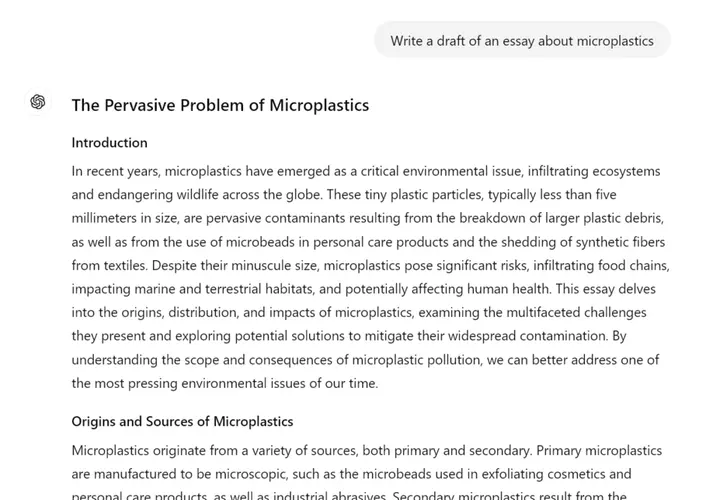
The world of Artificial Intelligence (AI) is undergoing changes every day, but the recent announcement by OpenAI is very exciting for general users. On November 4, 2026, the company announced that ChatGPT will now be able to create not just static images, but also animated GIFs (Graphics Interchange Format). This feature is made possible by OpenAI's new 'Images 2.6' model. Until now, DALL-E or its subsequent GPT Image models were used to create images in ChatGPT, but they did not have the capability to create animations directly. Now, users will be able to create GIFs of their choice by simply providing a prompt, i.e., a written command.
According to a report by The Verge, this update is not limited to just creating GIFs. Users will now be able to change the animation speed of the GIF and also edit each of its individual frames, i.e., each static part of the animation. This means that if you want to make a change at a specific second in an AI-generated GIF, it is now possible. An example shared by the company shows that when a user asks, "Can you create a GIF of a dancing cat?", ChatGPT immediately prepares it and also provides the option to view it frame-by-frame.
અબજ ચિત્રો/અઠવાડિયે
The technical force behind this new feature is the 'Images 2.6' model. According to OpenAI, this new model is faster than previous versions. The company noted that currently, more than 4 billion images are generated every week through ChatGPT and its API (Application Programming Interface), which is the link that connects software to each other. In September 2026, this figure was 3 billion per week, which shows how rapidly the popularity of AI-generated imagery is growing. The Images 2.6 model is currently being made available to all ChatGPT and Codex users on web, desktop, and mobile apps.
According to Wikipedia data, the journey of ChatGPT began in November 2022, and it has been continuously evolving since then. In October 2023, the integration of DALL-E 3 was introduced, which initiated the capability to generate images. Subsequently, in March 2025, OpenAI introduced the 'GPT Image' model, which brought significant improvements, particularly in the ability to render text within images. Now, with Images 2.6, the company has moved beyond static images toward dynamic content. Along with this model, the company has also launched new API models for developers named 'GPT-Image-2.6 Flare' and 'Sunburst,' which can generate higher-quality images more rapidly.
| Date | Model Name | Key Feature |
|---|---|---|
| October 2023 | DALL-E 3 | First-time integration of image generation |
| March 2025 | GPT Image | Improved ability to write text in images |
| November 2026 | Images 2.6 | Animated GIF and frame editing |
To understand how this GIF creation process works, we must grasp the fundamental principle of animation. Animation is essentially a collection of many static images that change one after another at high speed. The Images 2.6 model understands the user's prompt, prepares a series of coherent images accordingly, and combines them into a loop. In this process, the AI must ensure that consistency is maintained between each frame so that the animation appears natural. For example, if a cat is dancing, the movement of its tail and paws must be logical in every frame.
- Enter a promptThe user must write a description of what they want, such as 'Create a GIF of a running horse'.
- GenerationImages 2.6 model creates a GIF by preparing a series of images according to the command.
- EditingUsers can now change the animation speed or inspect each frame individually.
- SharingThe prepared GIF can be downloaded or shared directly with others.
Behind this progress by OpenAI lies its massive financial and infrastructural backing. In March 2026, the company's valuation was estimated at $852 billion, making it one of the most valuable AI companies in the world. Microsoft has invested over $13 billion in the company, and all of OpenAI's services run on Microsoft's Azure supercomputing platform. The company has announced a commitment to spend $1.4 trillion on AI infrastructure over the next eight years, which is necessary for developing such complex models.
However, along with such significant success, there are some limitations and challenges attached. According to Wikipedia reports, ChatGPT often suffers from the problem of 'hallucination,' or providing misleading information. In the case of images as well, the AI can sometimes create strange or unrealistic figures. Furthermore, to maintain the credibility of content generated by AI, OpenAI uses 'C2PA metadata.' This is a type of digital footprint that proves the image or GIF was created by artificial intelligence. This helps in preventing the spread of misinformation.
What does this technology mean for the average Indian user? Until now, we have relied on pre-made libraries to send GIFs on social media or WhatsApp. Now, we will be able to create GIFs according to our own imagination. For example, to wish someone a happy birthday, you can create a GIF of a "teddy bear dancing Gujarati Garba." This technology opens new doors for creativity, where language or artistic limitations do not pose a hurdle. You only need to express your imagination in the right words.
Under the leadership of OpenAI CEO Sam Altman, the company is evolving from being just a chatbot into a complete 'agentic' system. Agentic means a system that can perform tasks autonomously on behalf of the user. During 2025 and 2026, the company launched agents like 'Operator' and 'Codex' that can perform tasks ranging from placing online orders to coding. GIF generation is a small but significant step in this journey, demonstrating that AI is now becoming multimodal, meaning it is capable at all levels including text, voice, and visuals.
Ultimately, the Images 2.6 model is not just a software update, but a new way of digital expression. Although OpenAI is currently focusing on increasing revenue through advertisements and subscription models, its primary objective is to create AGI (Artificial General Intelligence), an AI that possesses human-level intelligence. As these models become more powerful, the distinction between reality and the world created by AI will continue to blur. For now, we can enjoy this technology by having ChatGPT create GIFs of our favorite cats or cartoon characters.