Claude and Constitutional AI: Anthropic's Unique Technology Teaching Ethical Values to Artificial Intelligence
A detailed analysis of the internal architecture of Anthropic's Claude models and the principles of 'Constitutional AI' used to make them safe.

In the world of Artificial Intelligence (AI), intense competition is currently underway among numerous companies, but the American software company Anthropic has entered this race with a distinct approach. The 'Claude' series of models developed by Anthropic is known not only for its capabilities but also for its ethics and safety. First introduced as a chatbot in March 2023, Claude has today become an essential tool in software development and business operations. The model is named after the renowned 20th-century mathematician Claude Shannon, who laid the foundation for information theory.
Under the leadership of Anthropic CEO Dario Amodei, the company has sought to make AI safer and more aligned with human values. Claude models are fundamentally generative pre-trained transformers. This means they have been trained by reading vast amounts of text to predict which word will come next. To understand this process, we must look at the basic units of language, known as tokens. A token is a small fragment of a word that the model uses to process information.

The defining characteristic of Claude models is their training methodology, known as 'Constitutional AI'. Typically, AI models are improved using 'Reinforcement Learning from Human Feedback' (RLHF), in which humans rate the AI's responses. However, this method is costly and can introduce human biases. As an alternative, Anthropic has crafted a 'constitution', which is a list of principles. Using this constitution, Claude evaluates its own responses and makes them safer.
According to company disclosures, this constitution has become more comprehensive over time. When the idea was first introduced in 2022, it contained only a few principles. The 2023 update incorporated 75 guidelines, drawing upon concepts from the 1948 UN Universal Declaration of Human Rights. By 2026, this constitution has grown into a vast document of 23,000 words, significantly larger than the 2,700 words of 2023. Time magazine described this constitution as 'something between a moral philosophy thesis and a corporate culture blog post'.
- Pre-trainingThe model is trained on vast data to predict the next word.
- Application of ConstitutionThe AI is given a list of principles (constitution) based on which it checks its responses.
- Self-correctionThe AI critiques its responses according to the constitution and revises them to generate new text.
- Reinforcement LearningThe model is given final training using improved responses so that it always remains safe.
Claude models have various levels or tiers, which are divided according to their capability and cost. The smallest and cheapest model is 'Haiku', followed by the mid-range 'Sonnet' and the most powerful 'Opus'. In 2026, the company introduced an extremely capable model named 'Mythos' which is available only to select organizations. For the general public, a model named 'Fable' has been released, which is based on Mythos but has strict safety safeguards placed on risky fields like cybersecurity and biology.
The capabilities of Claude have continuously increased. In the Claude 2.1 model released in July 2023, the context window was doubled to 2,00,000 tokens. The context window means the limit of how much information an AI can remember at once; 2,00,000 tokens means approximately 500 pages of text. In this model, the rate of hallucinations, meaning giving false information, was halved compared to Claude 2.0. In March 2024, the Claude 3 series arrived, which performed remarkably in complex tests like the 'needle in a haystack'.
With the introduction of Claude 3.5 Sonnet in June 2024, a feature named 'artifacts' was provided. Through this feature, the user can directly interact with code snippets or documents and view them in a separate window. In October 2024, the 'computer use' feature was introduced, which allows Claude to read a computer screen and operate the mouse and keyboard via an Application Programming Interface (API). Due to this, the AI can perform multi-step tasks by itself.
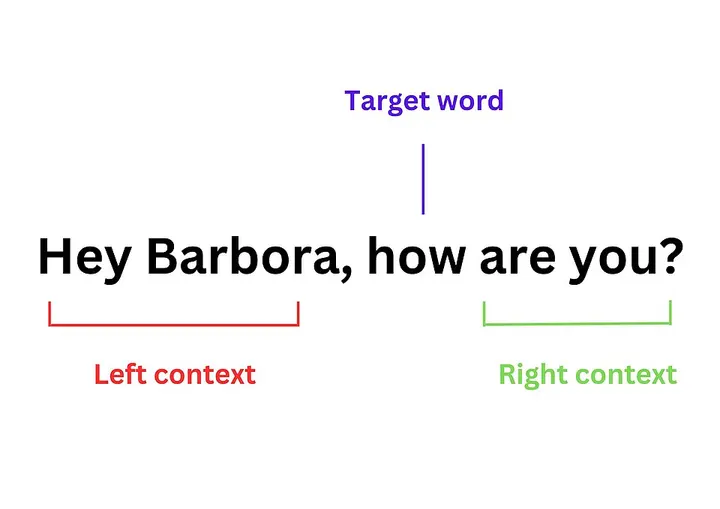
To understand how language models work, it is necessary to understand their context. When we ask a question, the model considers the words around it (context). In this process, all three aspects—the left-hand context, the target word, and the right-hand context—are important. Claude uses this method to generate answers that are extremely accurate and feel natural.
Anthropic has created not just a chatbot, but tools for specialized tasks as well. 'Claude Code' is a terminal-based coding agent that can automatically perform programming tasks. In the winter of 2025-2026, this tool became quite popular. Similarly, 'Claude Cowork' is a tool for non-technical users that performs tasks like organizing files or creating documents. However, risks are also associated with these tools. In one incident, Cowork deleted family photos from a user's computer, which later had to be recovered from an iCloud backup.
| Model Name | Capability | Main Usage |
|---|---|---|
| Haiku | Lowest | For fast and inexpensive tasks |
| Sonnet | Medium | Balanced performance and speed |
| Opus | High | Complex reasoning and analysis |
| Mythos | Extremely high | For specially selected organizations |
Claude's popularity is also growing in the business world. According to card-spend data from Ramp, the share of businesses paying for Anthropic's products increased by 4.9 percent to 24.4% in February 2026. This was the largest monthly surge for the company so far. Claude can now provide accurate answers not just in English, but in several languages such as Arabic and Russian, which demonstrates its global reach.

However, Anthropic's journey has not been without controversies. In February 2026, the US Department of Defense designated Anthropic as a 'supply chain risk' because the company refused to lift restrictions on the use of Claude for mass surveillance and autonomous weapons. However, in August 2026, a federal judge declared this decision unconstitutional and overturned it. Additionally, websites like iFixit also accused ClaudeBot of scraping data without permission.

Anthropic co-founder Jack Clark and his team are constantly emphasizing AI benchmarks and safety. The Opus 4 model of the Claude 4.0 series, released in May 2025, has been classified by the company as 'Level 3' on its safety scale, which means it is extremely powerful and also entails significant risks. That is why the company is working on improving the memory and efficiency of AI agents through research features like 'Dreaming'.

In the future, major revolutions are also expected in biological research and drug development through services like Claude Science. Anthropic's approach is clear: no matter how powerful AI is, it must always be subject to human values and a robust 'Constitution'. This is the reason why today Claude is emerging not just as a technology, but as a hope for the future of safe AI.