Agentic AI: The Autonomous Revolution from Data to Decision-Making in Enterprise Analytics and its Technical Implementation
Artificial Intelligence is no longer limited to answering questions; it is now developing the capacity to understand business objectives and execute complex tasks independently.
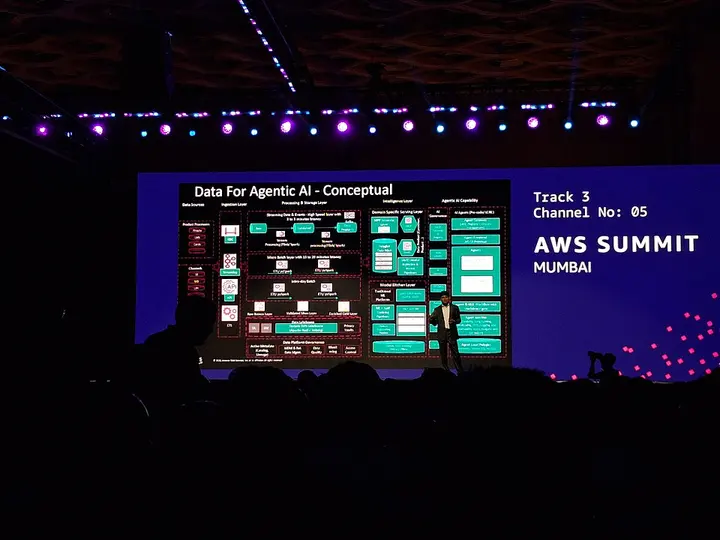
A major transformation is currently underway in the field of Artificial Intelligence (AI), known as 'agentic AI.' Until now, we have used chatbots primarily to obtain information or ask questions, but agentic AI goes a step further. According to the Wikipedia definition, agentic AI refers to programs that can make decisions, set goals, and take steps to complete them independently, without the direct assistance of a human programmer. Instead of merely conversing, this technology possesses the capability to effect changes in the real world or digital environments.
This technology is spreading very rapidly in the field of enterprise analytics, which involves the analysis of data in large industries. According to a survey of approximately 400 technology executives conducted by Snowflake and MIT Technology Review, agentic analytics is now beginning to generate business value. This research shows that 48% of insights generated by agents are such that they inspire direct action to improve business. Last year, this figure was 37%, which indicates a significant jump in the accuracy and utility of this technology within a single year.
% રેટિંગ (સારું કે ઉત્તમ)
However, despite this progress, more than half of AI insights still remain unused. According to the Snowflake report, 55% of executives believe that AI agents lack 'business context,' meaning an understanding of the internal needs and priorities of the business. For this reason, the data analysis provided by agents, while often technically correct, is frequently not practical for the business. To resolve this problem, companies are now emphasizing the addition of a 'semantic layer' to their data architecture, which provides business meaning to the data.
Technically speaking, the architecture of agentic AI is much more complex than that of standard chatbots. According to Wikipedia, the core components of an AI agent include a Large Language Model (LLM), memory, planning logic, and tool interfaces. To operationalize these agents, a software layer known as an 'agent harness' or 'agent scaffold' is used. This layer creates a secure environment around the LLM that manages prompts, memory, and execution state. It helps connect the agent to databases, web browsers, or other software.
| Layer | Function and Importance |
|---|---|
| Layer 1: Foundation Models | Provides datasets that power the agent. |
| Layer 2: Data Operations | Infrastructure arrangements like vector databases and RAG. |
| Layer 3: Agent Framework | Software for managing the agent. |
| Layer 4: Deployment | Technical foundation to make the agent operational. |
| Layer 5: Evaluation | Continuous monitoring of performance and security. |
| Layer 6: Security | Ensuring compliance with rules and secure operations. |
| Layer 7: Ecosystem | Connection with real-world applications and users. |
To understand how agentic AI works, it is necessary to understand its seven-layer architecture. At the first level are foundation models that provide data. Following this are data operations and agent frameworks that manage the agent. The upper layers include security, compliance, and evaluation. This entire system operates like a cycle: the agent perceives the environment through sensors, processes thoughts via an LLM, and then takes action through effectors. In this process, it continuously learns and improves its decisions.
- PerceptionThe agent gathers information about the surrounding environment through sensors or data inputs.
- ReasoningUsing LLM and planning logic, the agent decides what to do to achieve the goal.
- ActionThe agent completes the determined task through external tools or software.
- LearningBased on the results, the agent updates its memory and improves for the future.
Various types of agentic AI are currently seen in businesses. 'Analytics agents' analyze data to prepare reports, while 'business-task agents' can work directly within enterprise software. According to a Snowflake report, 83% of respondents believe that agents are excellent at 'descriptive insights,' meaning explaining 'what happened.' However, when it comes to providing advice on 'prescriptive insights,' meaning 'what should be done now,' only 45% of people are satisfied with them. The reason for this is that making future decisions requires not just data, but a deep understanding of business risks and limitations.
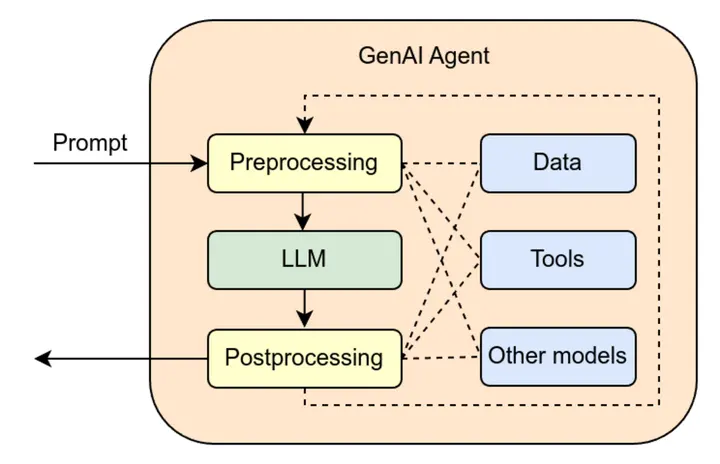
When more than one AI agent works together, it is called 'agent orchestration.' Various methods are used in this, such as 'prompt chaining,' where the output of one agent becomes the input for another. Another important method is 'planner-critic,' where one agent creates a plan and another agent critiques it to suggest improvements. This type of collaborative framework helps in automating complex business processes.
Due to this technology, there is also a major transformation occurring in the role of the data analyst. According to a Snowflake survey, 60% of executives believe that in the next two years, the primary job of an analyst will be the orchestration of teams of AI agents. Currently, analysts spend most of their time preparing data and creating reports, but in the future, they will spend their time verifying the accuracy of AI-generated insights and providing feedback to improve the system. This role will be about managing and governing analysis rather than performing it.
% એક્ઝિક્યુટિવ્સનો મત
A major obstacle in the success of agentic AI is 'insight overload.' In 52% of organizations, AI agents provide so many suggestions that it becomes impossible for humans to evaluate them all. Currently, only 24% of companies are able to review all the suggestions provided by their agents. As a solution to this problem, 53% of executives believe that in the future, other AI agents will be used to evaluate AI agents. This automated evaluation method is expected to become mainstream by 2026.
In conclusion, agentic AI is not just a new feature, but a new way of working with enterprise data. Although the technology is advancing rapidly, its success will depend on data quality and an understanding of business context. Only those companies that implement a semantic layer and robust governance in their data architecture will be able to truly leverage these autonomous agents. In the future, AI will not just perform calculations, but will help in decision-making as an active business partner.