AI's Insatiable Hunger: How Much Electricity Is Consumed to Answer a Single Query of Yours?
When you ask AI a question, thousands of processors perform billions of calculations behind the scenes. In this article, we take an in-depth look at this technology's power consumption and its environmental impact.

When we use artificial intelligence (AI) programs like ChatGPT or Google Gemini on a smartphone or computer, it seems to us that all of this is happening very easily in the digital world. But the reality is that behind the answer to every question, thousands of processors in massive data centers located thousands of miles away perform billions of calculations in a hundredth of a second. A tremendous amount of electricity is required to perform these calculations, which is becoming a major challenge in the age of modern technology.
Artificial intelligence, or AI, is the capability of computational systems to perform tasks typically associated with human intelligence. This includes learning, reasoning, problem-solving, and decision-making processes. According to Wikipedia reports, the purpose of AI research is to enable machines to understand their environment and take intelligent actions to achieve prescribed goals. But this intelligence does not come for free; a huge energy cost is hidden behind it.
Energy Consumption and the Laws of Physics
Whenever any electronic device operates, it consumes electricity. According to the laws of physics, energy cannot be destroyed, but it can be transformed from one form into another. When a computer processor performs calculations to answer an AI query, it converts electrical energy into thermal energy, or heat. This is precisely why large data centers become very hot and require extra electricity to keep them cool.
In electrical engineering, to understand energy consumption, it is necessary to grasp two main terms: power and energy. Power is the rate of energy consumption, measured in watts (W). Energy, on the other hand, is the total energy consumed over a period of time, measured in watt-hours (Wh) or kilowatt-hours (kWh). Its formula is E = P × t, where E is energy, P is power, and t is time. The longer and the more intensively AI models operate, the more their electricity consumption increases.
- Input ProcessingYour question is broken down into tokens and sent to the processor.
- Neural Network ActivationBillions of parameters in the GPU are activated and calculations begin.
- Data RetrievalThe model selects the most appropriate words based on its training data.
- Output GenerationThe selected words are combined and converted into sentences that humans can understand.
The Rise of Artificial Intelligence and Graphics Processing Units
The field of AI began in 1956 as an academic discipline. In the early years, researchers created algorithms that simulated human reasoning. However, in the 1980s and 1990s, these methods proved limited because they were very slow in solving complex problems. A major revolution came in this field after 2012, when Graphics Processing Units (GPUs) began to be used to accelerate neural networks.
A graphics processing unit is a special type of processor designed to perform multiple calculations simultaneously. Previously, it was used only for video game graphics, but now it has become the backbone of AI. In 2017, the transformer architecture was invented, which gave AI unprecedented success in understanding language and generating text. It is due to this progress that we can see models like ChatGPT today, but running this complex architecture requires many times more electricity than previous models.
| Characteristic | Power | Energy |
|---|---|---|
| Definition | Rate of energy consumption | Total energy consumed |
| Unit | Watt (W) or kilowatt (kW) | Watt-hour (Wh) or kilowatt-hour (kWh) |
| Measurement | Shows instantaneous consumption | Shows consumption over a period of time |
Training versus Inference: Where is Energy Consumed?
There are two main stages of energy consumption in the lifecycle of AI: training and inference. Training is the process in which an AI model is taught by feeding it data from billions of books, articles, and websites. In this process, thousands of GPUs run continuously for months. For example, training large language models (LLMs) consumes enough electricity to power hundreds of homes for an entire year. According to Wikipedia sources, companies like OpenAI, Google, and Meta now aim to create Artificial General Intelligence (AGI), which has efficiency equal to that of humans. The cost and energy consumption of training such models are continuously increasing.
The second stage is inference, which means the process of the model answering a user's question. Although the electricity consumed in answering a single question is much less compared to training, when millions of people use AI multiple times a day, this total consumption becomes very large. Generally, an AI search query can consume about 10 times more electricity than a traditional Google search, because a search engine only retrieves information from an index, whereas AI understands that information and generates sentences anew.
Data Centers: The Massive Power Plants of AI
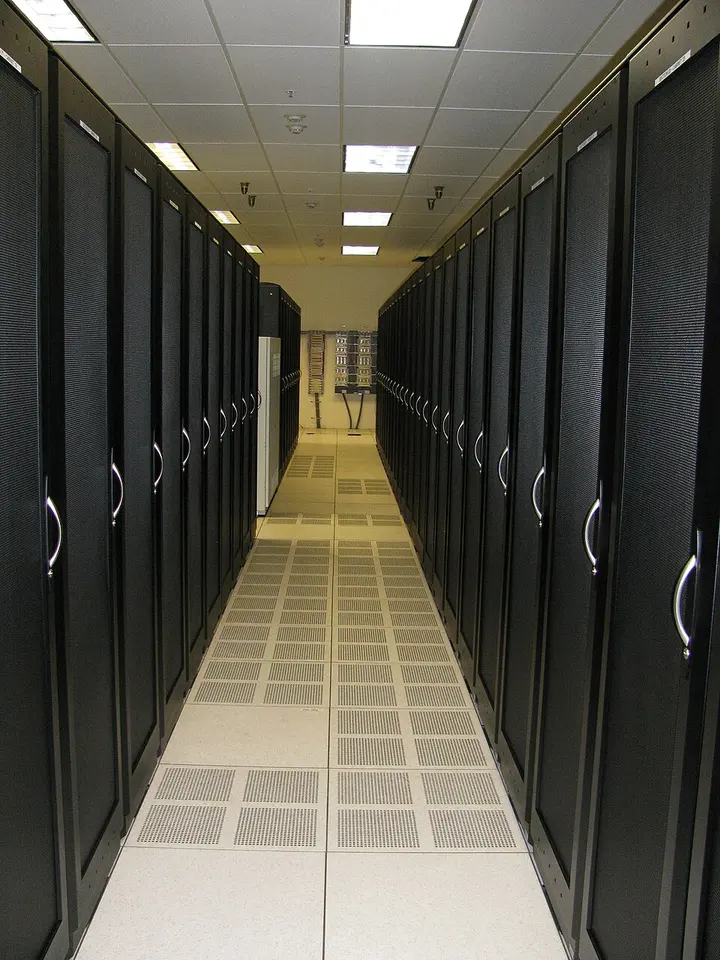
All these tasks of AI take place in data centers. A data center is a massive building that houses thousands of servers and storage devices. To run these servers, not only electricity is required, but millions of liters of water and air conditioning systems are also needed to keep them cool. Platforms like Amazon Web Services (AWS), Google Cloud, and Microsoft Azure operate such massive data centers worldwide.
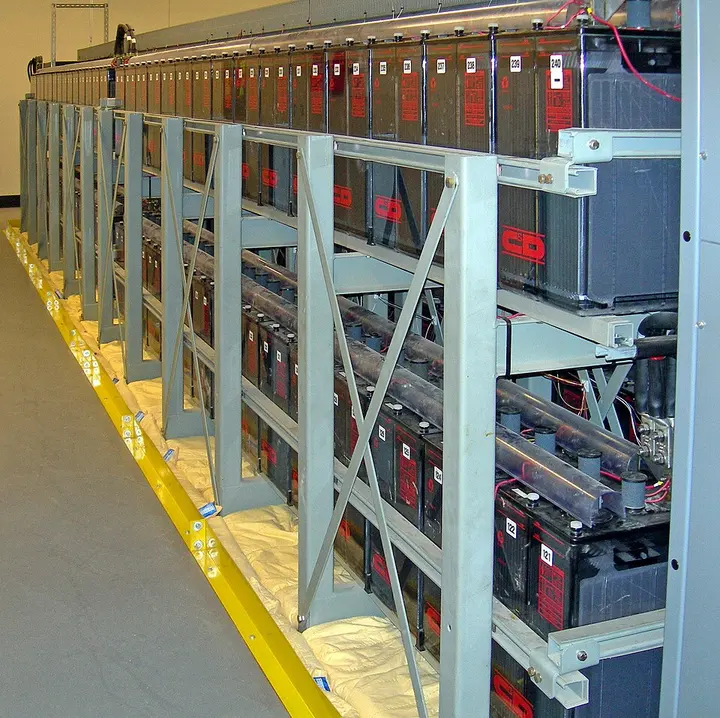
These data centers feature rows of server cabinets, with each server operating continuously. Battery banks and diesel generators are also arranged there to ensure that the power supply is not disrupted. As the usage of AI continues to grow, the number of these data centers and their electricity demand are also increasing. According to some estimates, in the next few years, the electricity consumption of data centers could account for a significant share of the world's total electricity consumption.
Environmental Impact and the Way Forward
This growing appetite of AI is a matter of concern for the environment. If this electricity is generated from fossil fuels such as coal or gas, it increases carbon emissions, which are responsible for climate change. This is why many tech companies are now trying to power their data centers through renewable sources such as solar energy or wind energy.
Research is underway to make AI more energy-efficient in the future. This includes the design of new low-power chips and smarter algorithms that can deliver accurate answers with a minimum of computations. New machine learning methods, such as transfer learning, help models learn with less data and less energy by utilizing prior knowledge.
In conclusion, while we enjoy the conveniences of AI, we must also remain mindful of the energy and resources expended behind it. The development of technology is inevitable, but it is equally essential that it be sustainable. In the times to come, the success of AI will depend not only on its intelligence, but also on how little electricity it can operate on.