Airbnb to Introduce Your Own AI Travel Agent: The Way We Plan and Book Trips is Set to Change
Airbnb is working on an 'AI-native' experience that is not just a chatbot, but will dynamically transform the entire interface based on your needs.

Planning a trip has always been a complex process. Finding a hotel, matching flight times, making a list of sights to see, and fitting all of this into a budget is no less than a challenge. Until now we used different websites and apps for this work, but now Airbnb is about to change this entire process through Artificial Intelligence (AI). According to the company, they are developing such an AI travel agent that will not only answer questions, but will also completely plan and book travel on your behalf.
According to a report by The Verge, Airbnb plans to launch this new AI agent in the first six months of 2027. The company's co-founder and CEO Brian Chesky has described this project as an 'AI-native' experience. This means that this system has been built from the ground up keeping AI in mind, which will be quite different and much more powerful than a traditional chatbot. The company believes that AI will prove to be the best thing yet for Airbnb.

The Difference Between a Chatbot and an AI Agent
Generally when we talk about AI, a chatbot like ChatGPT comes to mind, where we ask a question and it answers in text. But according to Wikipedia data, an AI agent goes far beyond that. An agent is a program that can make independent decisions, achieve specific goals, and perform tasks without human intervention. While a chatbot merely gives information, an agent actually 'works'.
This agent from Airbnb will work on the principle of 'agentic AI'. This means that it will not just show you a list of places to stay, but will help choose the best option by understanding your preferences, budget, and the needs of people travelling with you. It will be able to perform multi-step tasks by itself, such as checking dates, talking to the host, and finally completing the booking.
- Goal settingThe AI agent sets its goal by understanding the command given by the user.
- Planning and reasoningThinking of the steps required to complete the task by using a Large Language Model (LLM).
- Tool usageThe agent gathers information by using tools such as external APIs, maps, and databases.
- ExecutionBased on all the information, the agent performs direct actions such as booking or planning.
New Interface: Not Text, But a Living Experience
Airbnb has made it clear that they do not believe in traditional chat windows. According to the company's shareholder letter, they are building a custom-designed interface that will adapt itself based on your query. For instance, if you are looking for a place to stay in Paris, the agent will not just provide text, but will simultaneously organize and present maps, photos, price comparisons, and calendars right before you.
For this process, the company has a library of hundreds of travel-specific interface elements. When you ask a question, the AI agent combines these elements in real time to generate a new page. This will make the user feel as though an expert travel agent is sitting right across from them, explaining things through maps and photos. This system will be powered by Large Language Models (LLMs), which can understand human language deeply.
| Year | Important event |
|---|---|
| 2008 | Website launched as AirBed & Breakfast |
| 2009 | Name changed to Airbnb and reached 10,000 users |
| 2011 | Won the 'App' award at the South by Southwest (SXSW) conference |
| 2014 | New logo and design introduced |
| 2020 | Listing as a public company on Nasdaq (IPO) |
Technology Structure and Working Methodology
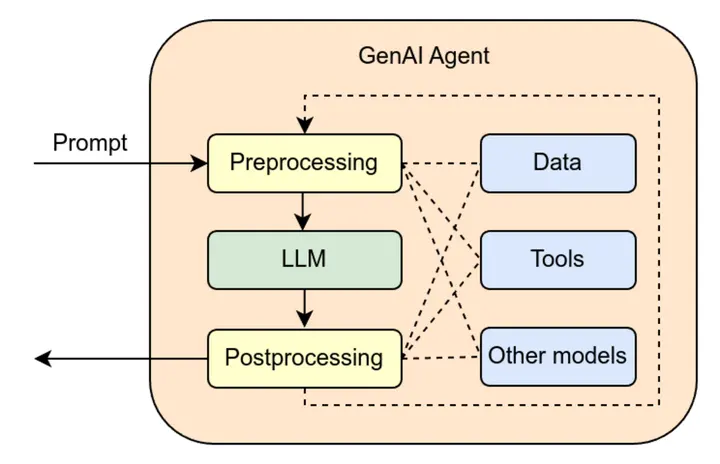
It is interesting to understand how any AI agent works. According to Wikipedia's technical description, these agents are surrounded by a software layer called an 'agent harness' or scaffold. This layer connects the AI to the outside world. It allows the agent to use a web browser, check databases, and communicate with other services through Application Programming Interfaces (APIs).
Airbnb's agent will work in this very manner. It will not only use Airbnb's own data, but may also connect with other travel services. A process called 'orchestration' is used for this, in which multiple small AI agents work together. One agent might be checking photos, another comparing prices, and a third reading host reviews. By coordinating all of these, an accurate result is presented to the user.
History and Evolution of Airbnb
To understand this new technology, it is necessary to understand the origins of Airbnb. When Brian Chesky, Nathan Blecharczyk, and Joe Gebbia started this company in 2008, the idea was merely to rent out an air mattress. According to Wikipedia, the site was initially named 'AirBed & Breakfast'. In 2009, its name was shortened to Airbnb, and at that time it had only 2,500 listings.
Today Airbnb is one of the largest travel companies in the world. In 2014 the company changed its logo and in 2020 it became a publicly listed company. Over time the company has added services like 'experiences' and luxury rentals instead of just renting out rooms. Now through AI agents the company wants to revolutionize the travel industry once again. The company believes that it has years of data and relationships between hosts and guests, which will give it an advantage over other tech companies.
$ Billion
What does this mean for ordinary people and India?
This technology can prove to be extremely useful for Indian travelers. Often, difficulties arise in booking due to language barriers or a lack of familiarity with foreign destinations. The AI agent will be able to communicate in your mother tongue and provide suggestions keeping your cultural preferences in mind. For example, if an Indian family is traveling abroad and wants a home with a vegetarian kitchen nearby, the AI agent will verify all these details and provide precise results.
However, there are also certain challenges associated with this technology. Privacy, meaning the security of personal information, is a major issue. When you allow an AI agent to make bookings on your behalf, it uses your payment details and personal preferences. In addition, AI can sometimes 'hallucinate' and provide incorrect information. Airbnb will have to work on these levels of security and accuracy in order to maintain user trust.

The Direction of the Future: Will Human Agents Be Needed?
The advent of AI agents also raises the question of whether human travel agents will be needed in the future. Experts believe that AI will be able to handle routine and ordinary tasks very quickly, but humans will still be needed in cases of complex problems or where human sensitivity is required. Airbnb's aim is to simplify the process, so that travelers can enjoy the journey rather than wasting time on planning.
According to the company's 2026 third-quarter shareholder letter, AI is bringing about a major transformation not only in products but also in the company's operations. The use of agentic AI will increase everywhere, from software development to customer support. When this feature is launched in 2027, it will be interesting to see how it permanently changes people's travel habits.