Blue Origin's 'NorthStar' Engine: Paving the Way for a Low-Cost Revolution in Space Science
Jeff Bezos's company Blue Origin has announced its new 'NorthStar' engine, which will be 75% cheaper and more powerful than older engines.
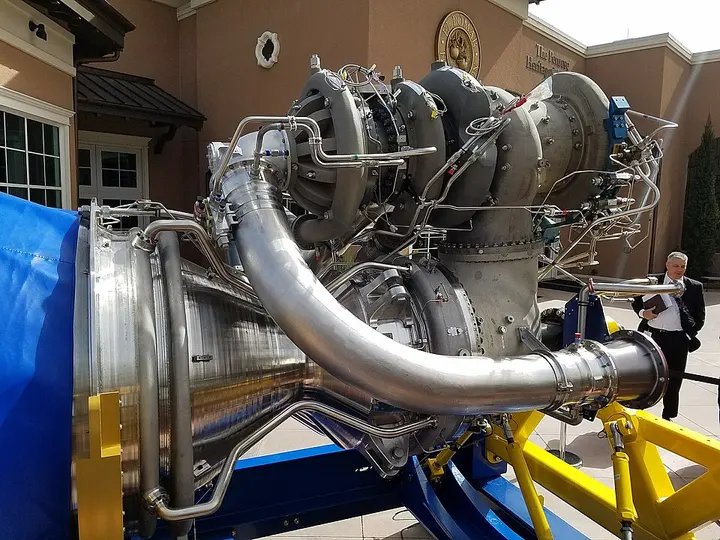
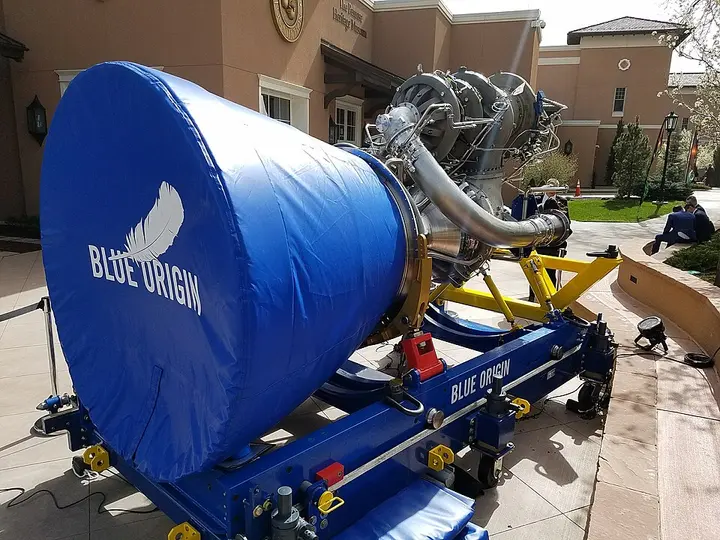
A new race is currently underway in the field of space science: how to send rockets into space at lower costs and with greater speed. In this direction, Jeff Bezos-owned company Blue Origin has made a major announcement. During the UP.Summit conference held in Florida, company Chief Executive Officer (CEO) Dave Limp stated that they are building a new and highly efficient rocket engine named 'Northstar'. This engine is not only powerful, but the cost of building it will be a fourth, that is about 75% lower than current engines. This development comes at a time when the demand for launching satellites worldwide has increased unprecedentedly.
Blue Origin's goal is to launch their New Glenn rocket more than 1,000 times a year. Such a massive number of launches is only possible if rocket engines are inexpensive and can be manufactured very quickly. According to Dave Limp, the Northstar engine is a simpler and more powerful version of Blue Origin's current BE-4 engine. The BE-4 engine is currently used in the first stage of the New Glenn rocket and also powers the United Launch Alliance (ULA) Vulcan rocket. The Northstar engine will eventually replace the BE-4, proving to be a major step for the company toward reducing costs.
BE-4 Engine History and Its Role
To understand Northstar, it is necessary to know about its predecessor, the BE-4 (Blue Engine 4). The BE-4 is a liquid rocket engine developed by Blue Origin, which uses liquefied methane and liquid oxygen as propellant. Methane is the liquid form of natural gas, considered a clean and efficient fuel for rockets. The BE-4 engine operates on an 'oxygen-rich staged combustion cycle'. This is a complex process in which fuel and oxygen are partially burned in a pre-burner before combustion, enabling the engine to generate more power.
According to Wikipedia reports, the development of the BE-4 began in 2011 and it was officially announced in 2014. This engine produces 2,800 kilonewtons (kN) or 640,000 pounds of thrust at sea level. Thrust means the force generated by the engine to push the rocket upward. Using the BE-4 engine, the Vulcan Centaur rocket made its first successful flight on January 8, 2024. Blue Origin's own New Glenn rocket also entered orbit for the first time with this engine on January 16, 2025.
Northstar: Radical Design Changes and 3D Printing
The biggest feature of the Northstar engine is its simplicity. According to Dave Limp, the number of parts in this new engine has been halved compared to the BE-4. In any machine, the fewer parts there are, the lower the chance of failure, and the easier it is to assemble. Additionally, Northstar is 30% lighter than the BE-4. The reduction in weight allows the rocket to carry more payload, meaning satellites and other equipment, into space. Payload is the heavy cargo carried into space by a rocket.
3D-printing technology has been extensively used in the manufacturing of this engine. 3D-printing is a process in which complex parts are built by adding metal layer by layer based on computer design. Nearly 65% of the Northstar engine's parts will be made using this technology. This will reduce production time so significantly that in the future the company will be able to assemble an entire engine in less than a day. At present, making a rocket engine takes months, compared to which this is a revolutionary change.
- Design SimplificationThe design is simplified by reducing the number of parts by 50% compared to BE-4.
- 3D-printingAbout 65% of the complex parts of the engine are quickly manufactured using 3D-printing technology.
- AssemblyDue to fewer parts, the entire engine can be assembled in less than a day.
- TestingThe capacity of the manufactured engine is verified by ground test firing.
The Game of Numbers: A Major Difference in Capacity and Cost
When we talk about capacity, Northstar proves to be superior to the BE-4. The BE-4 engine delivers 6,40,000 pounds of thrust, while Northstar's initial capacity will be 7,15,000 pounds of thrust. This means it will be able to push heavier cargo into space. Like the BE-4, this engine will also use methane and liquid oxygen, and it will employ a single-shaft turbopump architecture. A turbopump is the part of the engine that sends fuel into the combustion chamber under very high pressure.
From a cost perspective, Blue Origin believes they will be able to build Northstar at 25% of the cost of the BE-4. This is a major economic advantage, because the biggest cost in space travel is the production of engines and rockets. If the engine becomes cheaper, the cost of launching satellites may also decrease. The company has already begun test firing the Northstar, which is the process of testing its capability by running the engine on the ground. These tests have been successful, indicating that this technology could become operational soon.
GS3 Stage and the Hydrogen Tank Challenge
Not just the engine, Blue Origin is also developing a new third stage for the New Glenn rocket, named GS3 (Glenn Stage 3). This stage will provide the rocket with the extra power needed to go far beyond Earth's orbit or to the Moon. The GS3 will use Blue Origin's BE-7 engine, which runs on liquid hydrogen and oxygen. Hydrogen is a very efficient fuel, but it is difficult to store because it is the smallest atom and can leak even through tiny cracks.
To solve this problem, the company has built a tank out of composite material. Composite means an extremely strong and lightweight material made from a mixture of two or more substances. Usually, hydrogen tanks are made of metal, but composite tanks are much lighter in weight. Blue Origin recently successfully tested a 5.5-meter diameter composite hydrogen tank at Launch Site One in Texas. This tank was tested for 10 minutes at 150% higher pressure than the maximum expected pressure during operation, and it passed successfully.
Its Importance for India and Ordinary People
This development is important for India as well. India's own space agency ISRO is also known for launching satellites at a low cost. When private companies like Blue Origin reduce costs by 75%, it creates new competition in the global space market. In the future, this will make internet satellites, weather forecasting tools, and research missions cheaper. For ordinary people, this means that satellite-based services will become cheaper and more accessible in the future.
Blue Origin CEO Dave Limp said, "To reach space at a low cost, we must pay attention to every part of the vehicle. This will prove to be a game-changer." The company aims to launch its first mission with the GS3 stage for a government customer in 2028. If the Northstar engine and the GS3 stage succeed, this will be a major step towards Jeff Bezos' dream of millions of people living and working in space. Right now, the whole world's eyes are on Northstar's upcoming tests.
What is Still Unknown?
Although the NorthStar engine's figures are encouraging, its reliability during an actual launch remains to be seen. During the development of the BE-4 engine as well, the company faced explosions and turbopump issues. In 2023, a BE-4 engine exploded during a test, damaging the test stand. While reducing the number of parts in NorthStar has decreased complexity, how long the 3D-printed parts will withstand the extreme pressure and temperature of space will only be known after long-term testing. Blue Origin is currently working day and night to overcome these challenges.