A Unique Bacterial Defense System: Discovery of 'Type VI Retrons' That Operate Against Nature's Rules
Scientists at the Gladstone Institutes have discovered a remarkable molecular mechanism in bacteria that combats viruses by functioning in a manner entirely contrary to all previously known defense systems.
In the fields of microbiology and genetics, discoveries are frequently made that reveal the profound complexity of nature. Scientists at the Gladstone Institutes have discovered an extraordinary bacterial immune system that functions in a manner completely contrary to all biological defense mechanisms known to humanity thus far. This research, published on October 13, 2026, in the scientific journal 'Molecular Cell', reveals the molecular mechanism of a special class of bacterial resistance known as 'type VI retrons'.
This discovery is not merely a biological curiosity; it opens a new direction for creating more efficient DNA-editing tools for human health and the treatment of various diseases. According to Dr. Seth Shipman, senior author of the study and an investigator at the Gladstone Institutes, this is the most bizarre among the retron systems observed to date. This system operates with a 'Rube Goldberg'-style molecular complexity, utilizing actions that the human mind could never have imagined.
Bacteria's Suicidal Protective Shield and Retrons
For millions of years on Earth, an incessant battle for survival has been raging between bacteria (single-celled microorganisms) and phages (viruses that attack bacteria). Phage viruses enter a bacterial cell, hijack its molecular machinery, replicate themselves, and burst the cell. To protect themselves against these viral attacks, bacteria have evolved various types of immune weapons. One such highly powerful weapon is 'retrons'.
Retrons are molecular tools that identify viral infection and induce the infected bacteria to commit suicide. By destroying itself, a single bacterial cell saves the entire surrounding colony of bacteria from the spread of the virus. Scientists have long been experimenting with using this retron system to precisely alter pathogenic mutations in human cells, as retrons are highly efficient at producing single-stranded DNA.
After decades of research, the common understanding among scientists was that all retrons operate on a specific principle. In a normal or uninfected bacterial cell, a toxin (a protein toxic to the cell) is continuously present due to the retron, but it remains suppressed or inactive by small fragments of single-stranded DNA. When a phage virus attacks the cell, it disrupts this DNA arrangement, causing the DNA to release the toxin and the cell to die.
- 1. Entry of virus (phage)The phage virus enters the bacterial cell and injects its genes.
- 2. Rapid synthesis of single-stranded DNAIn response to viral entry, Type VI Retron begins to rapidly synthesize single-stranded DNA.
- 3. Removal of RNA blockerThe newly formed DNA binds to the RNA that was inhibiting the production of toxin.
- 4. Toxin production and suicidal cell deathAs the block is removed, toxin protein is produced, which breaks the cell membrane and destroys the cell so that the virus cannot spread further.
'Type VI Retrons': Molecular machinery that works exactly opposite to the rules
However, Karen Zhang, a PhD student in the Shipman Lab at the Gladstone Institutes and lead author of this study, observed something quite different in 'Type VI retrons'. Typically, scientists look for signatures of this single-stranded DNA to detect the presence of retrons in uninfected cells. But in cells containing Type VI retrons, no such DNA was visible. Scientists initially suspected that this bacterial defense system might be broken or inactive.
But when bacteria containing Type VI retrons were attacked by phage viruses in the laboratory, the bacteria were successfully defending themselves. This result initiated a long molecular quest for the researchers. All conventional experiments typically used to study retrons failed here, forcing the researchers to devise new methods.
| Characteristic | Standard Retrons | Type VI Retrons |
|---|---|---|
| DNA in uninfected cell | Present in clearly higher amounts | Extremely low or negligible |
| Status of toxin (toxic protein) | Already present (but suppressed) | Produced anew only after infection |
| Role of single-stranded DNA | Inhibiting the toxin (Repressor) | Turning on the toxin (Activator switch) |
| Response during viral attack | DNA is released and toxin is freed | DNA is formed and removes RNA inhibition |
After in-depth experiments, a surprising truth emerged. Unlike other retrons, Type VI retrons do not produce significant amounts of DNA or toxin in an uninfected cell. Instead, it is only when a virus enters the cell that this retron becomes active and begins to produce single-stranded DNA.
Once this DNA is produced, it interacts with the RNA (RNA: molecular messenger molecule) present in the cell. This RNA had previously been working to prevent the production of a toxic protein (toxin). This reaction between DNA and RNA removes the inhibition, and toxin begins to form very rapidly in the cell. This small toxic protein that is formed embeds itself into the cell wall or cell membrane, causing the cell to become unstable and perish.
- Viral entryWhen phage virus enters the bacterial cell, the Retron system is activated.
- DNA synthesisRapid production of single-stranded DNA begins inside the cell.
- Interaction with RNAThis DNA binds to the RNA present in the cell, which was preventing the production of toxin.
- Activation of toxinAs the block is removed, toxic protein (toxin) is produced and gets arranged in the cell membrane.
- Cell destructionThe cell becomes unstable and dies, so the spread of the virus is stopped.
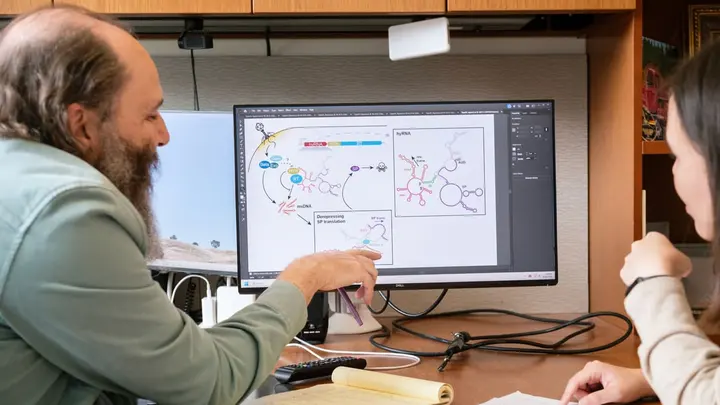
According to Karen Zhang, this is a mirror-image version of the traditional retron system. Here, the DNA acts as an activation switch to turn on the toxin rather than suppressing it. It is extremely interesting to understand how such a complex arrangement might have evolved during the evolution of bacteria.
The scientific adventure behind the discovery and 'Spacer-seq'
To understand this unique mechanism of Type VI retrons, the researchers devised innovative experiments. Initially, all attempts to detect DNA in uninfected cells using standard methods had failed. Scientists had almost given up hope that any DNA was being formed in uninfected cells.
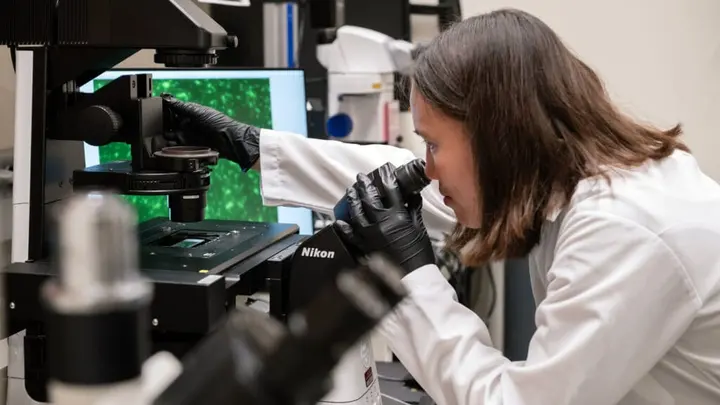
To solve this problem, the team turned to a special method previously developed by the Shipman Lab called 'Spacer-seq'. This technology keeps a record of genetic activity within the cell by utilizing the molecular components of the bacteria's other immune system, 'CRISPR-Cas'. With the help of this method, the researchers were able to detect the formation of DNA at trace levels even in uninfected cells.
Following this success, the experiments were advanced, and it was proven that the production of this DNA reaches a protective level only after the entry of the virus. This discovery demonstrates the diverse pathways that exist in nature for the development of immune resistance.
Future new technology and medical applications
The unique structure of Type VI retrons is inspiring the development of new synthetic sensors and switches in the Shipman Lab. These new DNA and RNA-based molecular switches can regulate gene activity, which could revolutionize experiments in treating diseases and understanding disease mechanisms.
Furthermore, the powerful small toxins produced by Type VI retrons could be used to develop new antimicrobial therapies. These toxic proteins could become a vital weapon for targeting and destroying harmful, antibiotic-resistant bacteria that spread disease in the human body.
In addition to the Gladstone Institutes, this international research study involved scientists from the University of Copenhagen and UC San Francisco, such as Matías Rohas-Montero, Darshini Pulla, Alejandro González-Delgado, Guillermo Montoya, Rafael Pinilla-Redondo, and Kliment Verba. This research received financial support from leading organizations such as the National Science Foundation (NSF), the Lundbeck Foundation, and the European Research Council. Drawing inspiration from the profound mysteries of nature, science is now opening doors to more precise and revolutionary medical technologies for humanity.