South Korea's 'Jang Bogo-N' Mission: A New Chapter in Nuclear-Powered Submarine Technology
South Korea has approved plans to construct its first indigenous nuclear-powered submarine by 2027, a move set to exponentially enhance its strategic maritime capabilities.
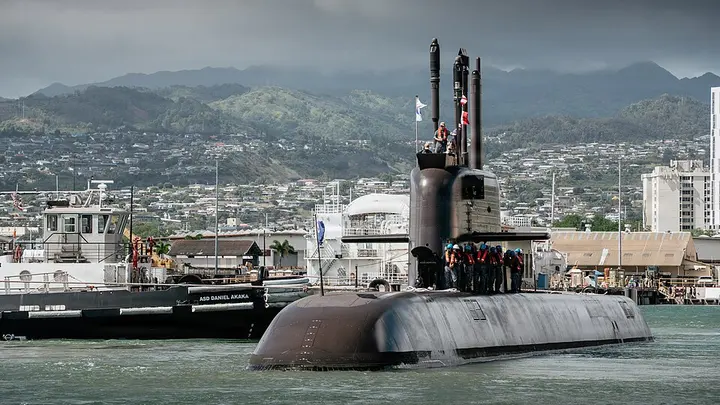
A historic turning point has arrived in South Korea's defense capabilities. The review committee of the country's state arms agency has officially approved the basic plan for South Korea's first nuclear-powered submarine program. This project has been named 'Jang Bogo N', which will provide an unprecedented boost to the South Korean Navy's power. This decision was taken by the Defense Acquisition Program Administration (DAPA) under the Ministry of National Defense, and it will officially become operational from 2027.
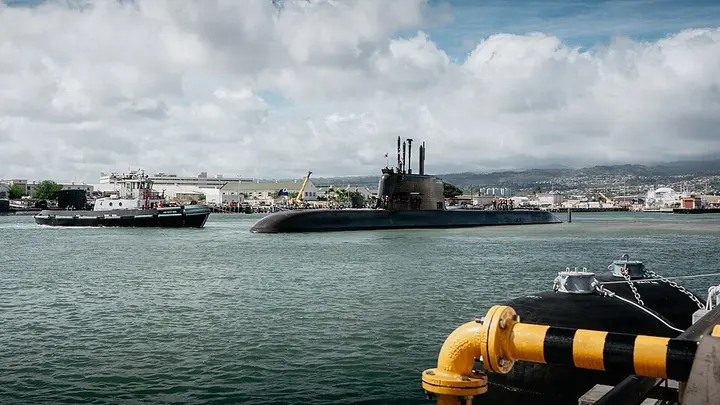
A nuclear-powered submarine is a submarine that is powered by a nuclear reactor. This does not mean it is equipped with nuclear weapons, but rather that its energy source is nuclear fission. The advantages of this technology compared to conventional diesel-electric submarines are numerous. Diesel submarines have to surface frequently to recharge their batteries because they require oxygen. In contrast, nuclear energy does not depend on air, which gives the submarine the ability to remain underwater for months.
According to this South Korean plan, the first submarine will be launched in the mid-2030s and will be inducted into the Navy by the end of the 2030s. This project has been exempted from a preliminary feasibility study, which is generally required for the acquisition of weapons. Due to this exemption, the government will be able to accelerate the construction process. According to DAPA officials, for highly classified projects, the Minister of National Defense or the head of DAPA can request such an exemption.
- Nuclear fissionThe nuclear reactor inside the submarine generates immense heat through the fission of uranium.
- Steam productionThis heat is used to heat water to create high-pressure steam.
- Turbine rotationHigh-pressure steam turns the steam turbine, which generates mechanical energy.
- Propulsion and electricityThe turbine turns the submarine's propeller and also generates electricity for other systems of the ship.
It is interesting to understand the operating mechanism of this submarine. A Small Modular Reactor (SMR) will be installed in it. This reactor generates heat, which is used to create steam. This steam turns a steam turbine, which powers the submarine's propeller or generates electricity. A nuclear reactor produces so much energy that the submarine can travel at high speeds for long periods. Its range is practically unlimited, as it does not need to be refueled for decades.
- Energy productionHeat is generated through nuclear fission in a Small Modular Reactor (SMR).
- Steam generationSteam is made from water using this heat.
- Motion and electricitySteam turns the steam turbine, which powers the propeller and generates electricity for the submarine.
South Korea has reached an important agreement with the United States for this submarine. Seoul has obtained the consent of the U.S. to build submarines powered by Low-Enriched Uranium (LEU) with an enrichment level of less than 20 percent. Uranium enrichment is the process in which the proportion of the Uranium-235 isotope is increased so that it can function as fuel. Most civilian nuclear reactors use LEU, which reduces concerns regarding nuclear proliferation.
| Detail | Information |
|---|---|
| Project name | Jang Bogo N |
| Official start | 2027 |
| First submarine launch | Mid-2030s |
| Estimated weight | 8,000 tons |
| Fuel type | LEU (less than 20% enriched) |
| Total estimated cost | 28.9 trillion won ($21.3 billion) |
From a strategic perspective, this project is critically important for protection against North Korea's nuclear and missile threats. According to DAPA, this submarine will become a key component of the country's 'Kill Chain' pre-emptive strike system. The Kill Chain is a defense system designed to detect and destroy enemy missile launchers before an attack occurs. Hidden in the depths of the sea, a nuclear-powered submarine can remain invisible to the enemy and launch a counter-strike at any time.
Media reports suggest that South Korea aims to build at least three 8,000-ton nuclear-powered submarines. The estimated cost of this entire program is believed to be 28.9 trillion won (approximately 21.3 billion dollars). However, the total budget has not yet been officially finalized. DAPA plans to select a submarine manufacturer through open bidding in the first half of next year and sign a formal contract by the end of 2027.
Nuclear submarines provide not only energy but also life-support facilities for the crew. They can produce oxygen through electrolysis of seawater and pure drinking water through desalination. This means the duration a submarine can remain underwater is limited only by the crew's food supply. However, it also has some vulnerabilities. Continuous use of seawater to cool the reactor leaves a trail of warm water, known as a thermal wake. This wake can be detected by thermal imaging systems.
Looking at the history of the South Korean Navy, this is a major leap. Starting in 1945 with only 36 patrol boats, the Republic of Korea Navy (ROKN) is today one of the most modern navies in the world. In the 1970s, under the 'Yulgok Operation', the country began manufacturing indigenous weapons. In the 1980s, South Korea proved its capabilities by building Ulsan-class frigates and subsequently Chang Bogo-class submarines with the help of Germany.

Globally, only six countries currently possess nuclear-powered submarines: the United States, Russia, the United Kingdom, France, China, and India. Countries like Brazil and Australia are also working in this direction. South Korea is set to join this exclusive club. This project is a symbol not only of military power but also of the country's engineering and nuclear technology capabilities. In particular, the use of Small Modular Reactors (SMR) could also pave the way for future energy needs.

Along with this project, the committee has also approved several other defense projects. These include the Korean Tactical Surface-to-Surface Missile-I (KTSSM-I) Block-II. This missile is designed to rapidly neutralize North Korea's long-range artillery. In addition, a plan to replace the old presidential helicopter with Lockheed Martin's S-92A Plus helicopter has also been approved. All these steps are moving South Korea toward building a robust 'blue-water navy'.