Metals Will Not Fracture Even in Deep Cold: A New Discovery Defies the Rule of Embrittlement at -253 Degrees Celsius
Scientists at Oxford and Berkeley have discovered a niobium and titanium alloy that prevents cracking even at temperatures close to absolute zero.
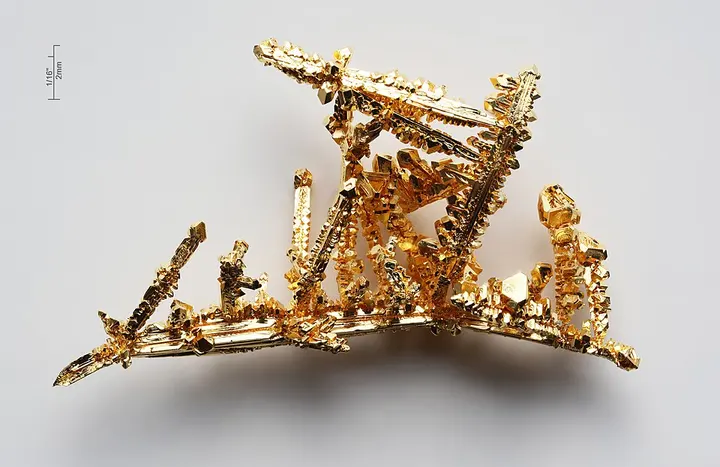
Working with metals at extremely low temperatures has been one of the greatest challenges in modern engineering. It is an established rule of science that as any metal is cooled, while its strength increases, it also becomes extremely brittle like glass. Metals that bend under pressure at normal temperatures suddenly fracture in extreme cold. In metallurgy, this physical limitation is known as the ductile-to-brittle transition. A recent study has posed a major challenge to this centuries-old scientific belief.
According to a research report published on October 14 in the renowned research journal Nature, scientists have discovered two experimental alloys made from niobium and titanium that retain their strength without becoming brittle at all, even at temperatures as extremely low as 20 kelvin, which is -253 degrees Celsius (-424 degrees Fahrenheit). This international research was jointly led by a team from the University of California, Berkeley, Lawrence Berkeley National Laboratory, and the University of Oxford.

Why do body-centered cubic metals fracture in the cold?
To understand this discovery, it is necessary to understand the internal crystal structure of metals. Generally, the arrangement of atoms in metals exists in three main frameworks: body-centered cubic (BCC), face-centered cubic (FCC), and hexagonal close-packed (HCP). Among these, important structural metals such as iron, tungsten, and chromium possess a BCC structure, in which an atom is located at the center of a cube formed by eight atoms. Under normal circumstances, when these metals change shape under pressure, microscopic defects in their crystals known as dislocations (imperfections in the sliding of atomic layers) shift and absorb the stress.
However, when the temperature drops and approaches absolute zero, the movement of these dislocations almost halts due to the lack of thermal energy. Atoms cannot slide over one another. Consequently, if there is even a small fissure or crack anywhere in the metal, the stress concentrated there does not allow the metal to bend; instead, it directly propagates the crack and breaks the metal into two pieces. This problem has proven to be extremely hazardous for rocketry, cryogenic fuel tanks, and deep space equipment.
What happened inside? A new path of nanoscale twinning and displacement
The two alloys tested by the researchers at Oxford and Berkeley exhibited a process completely contrary to the norm. Even at a temperature of -253 degrees Celsius, there were no signs of them becoming brittle. To combat stress, this material had abandoned its traditional method and adopted an entirely new atomic strategy.
Researchers discovered that when dislocations could not move in extreme cold, a process called nanoscale twinning (the formation of mirror-like structures at the nanometer scale) was initiated in the metal crystal. In this process, small portions of the crystal lattice rearranged locally into a mirror-image structure, while a local phase transformation also occurred in the original structure of the crystal.
- 1. Freezing of traditional defectsAt an extreme cold of -253°C, the movement of normal dislocations in metal stops.
- 2. Initiation of nanoscale twinningUpon stress, micro-parts of the crystal structure change phase by taking a mirror-image-like structure.
- 3. Pressure on crystal boundariesThese new mirror-like structures collide with the boundaries of surrounding crystals and increase local stress.
- 4. Creation of new dislocationsThis concentrated stress produces new fresh defects instead of cracking, allowing the metal to bend without breaking.
When these newly formed regions collided with neighboring grain boundaries, immense stress was concentrated there. Normally, such stress would fracture the metal, but here that stress generated fresh, new dislocations within the metal. The researchers compare this process to a snow-covered highway. Just as traffic finds other streets and diversions when the main road is blocked by ice in winter, this alloy created new pathways within itself to absorb the stress.
A Unique Experiment with Neutron Beams in Oxfordshire
To examine how this atomic drama was playing out inside the metal, the researchers used the Engin-X instrument at the ISIS Neutron and Muon Source of the Science and Technology Facilities Council located in Oxfordshire, UK. This experiment was extremely complex and rigorous.
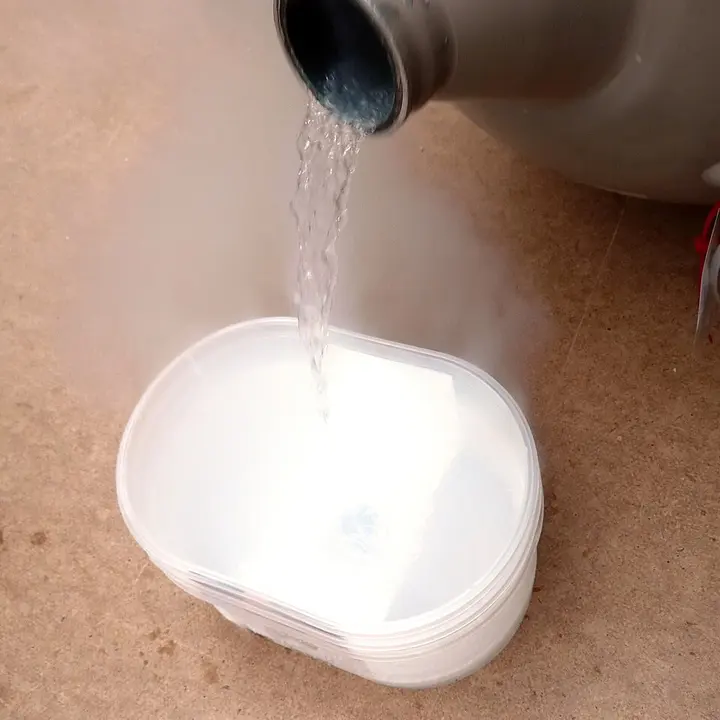
The metal samples were cooled to -253 degrees Celsius by a stream of gaseous helium. Under these freezing conditions, the metal was subjected to immense stress by pulling it from both ends using a specialized testing machine. At the same time, a powerful neutron beam was passed through the metal sample so that moment-to-moment movements at the atomic scale could be recorded. Following the test, the distribution of each element and the nanoscale changes around the cracks were examined using advanced electron microscopes and atom-probe tomography.
| Metal / Alloy | Crystal Structure | Density (g/cm³) | Condition at cryogenic temperature |
|---|---|---|---|
| Iron | Body-Centered Cubic (BCC) | 7.9 | Becomes brittle and breaks due to ductile-to-brittle transition |
| Titanium | Lightweight structural metal | 4.5 | Provides strength and elasticity in alloys |
| Niobium-Titanium Alloy | Special BCC-based alloy | Experimental | Resists stress without becoming brittle even at 20 Kelvin (-253°C) |
Dr. David Cook, the lead author of the study (who was at UC Berkeley at the time of the study and is now at the University of Cambridge), stated that for decades scientists focused only on how easily pre-existing defects in metals could move. However, these results show that the ability to generate new defects at grain boundaries is equally crucial. According to Professor Dong Liu of the Department of Engineering Science at the University of Oxford, the new plasticity produced by the combination of twinning and phase transformation opens up new directions for designing robust metals for extreme cold environments.
The Significance of This Discovery for the Industrial and Scientific World
According to the definition given by the International Institute of Refrigeration (IIR) in 1971, temperatures below -153.15 degrees Celsius (120 Kelvin) are considered cryogenic. In such environments, metals used for storing rocket fuels like liquid hydrogen and liquid methane, building transport tankers, or preparing superconducting magnets have to withstand extremely harsh conditions. The metals used until now carried a major risk of developing sudden cracks.

These new experimental alloys of niobium and titanium could prove revolutionary in the future for deep space exploration probes, liquefied natural gas (LNG) transport valves and pumps, as well as fusion energy reactors. Most importantly, this research has provided metallurgists with a new 'blueprint': if a metal's microstructure is properly prepared, it can automatically generate new atomic pathways to protect itself even at brutal temperatures approaching absolute zero.