Data Center in Space: Google Runs Gemma 4 Model on TPU Chip in Orbit
Under Project Suncatcher, an AI chip was activated in a satellite to generate a haiku; the first step towards solar-powered space computing.
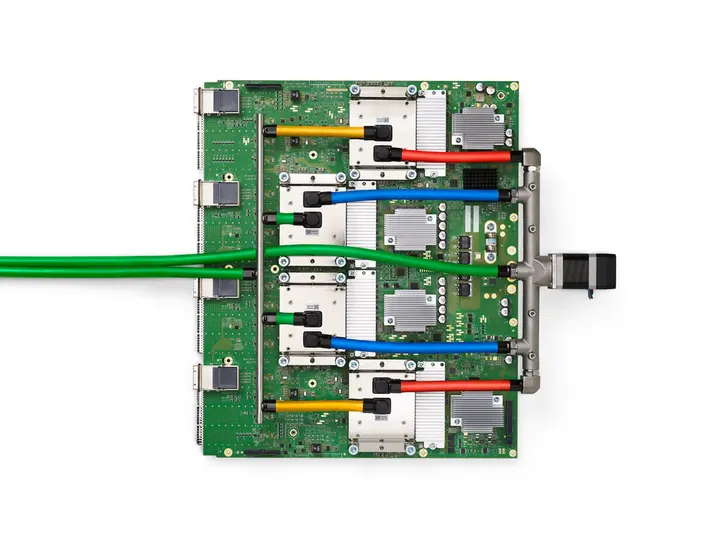
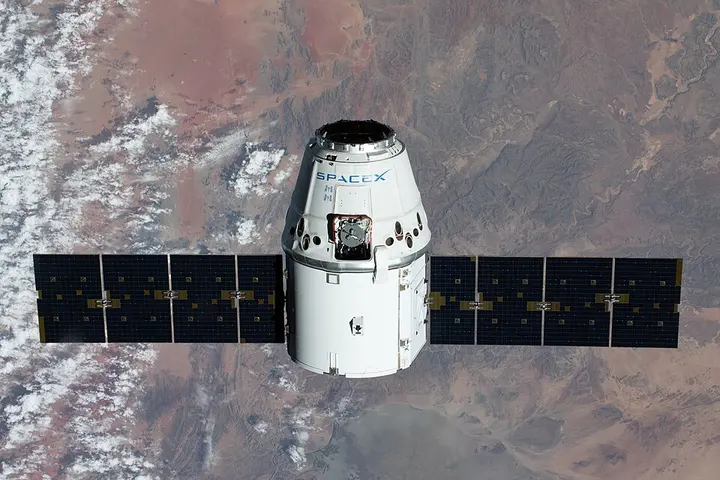
Running massive data centers on Earth requires an immense amount of electricity and water. Amidst the rising energy demand in the age of artificial intelligence (AI), Google has initiated a unique experiment: under Google's 'Project Suncatcher', a data center-class Tensor Processing Unit (TPU) chip has been deployed on a satellite floating in space. This prototype satellite was launched in October 2026 aboard a SpaceX Falcon 9 rocket, alongside more than 100 spacecraft. According to Travis Beals, Senior Director of Paradigms of Intelligence at Google, the first AI message from this satellite stationed in orbit has been successfully received.
This satellite came pre-installed with Gemma 4, the open model from Google DeepMind. Engineers from the ground station prompted it to write a short Japanese-style poem—a haiku—about existing in space. As the satellite passed over Svalbard, Norway, the poem was successfully transmitted back to Earth via downlink: "Blue marble below / Data streams in silent grace / Starlight feeds my core." With this success, Google's hardware has achieved the first 'Hello World' milestone in space.
- 1. Orbit LaunchA prototype satellite containing four TPU chips was placed into Earth's Low Earth Orbit by a SpaceX Falcon 9 rocket.
- 2. Subsystem CommissioningSafety checks of the satellite's power and TPU tray and other parts were conducted for about three weeks.
- 3. Prompt Uplink from EarthThe pre-loaded Gemma 4 model on the satellite was commanded from the ground station to compose a space-themed haiku poem.
- 4. Processing in OrbitThe AI model processed the prompt on the active TPU from the satellite's 1 kW power capacity.
- 5. Downlink and ConfirmationWhile passing over Svalbard, Norway, the satellite sent the poem back to the ground station, marking success.
Why an AI Data Center in Space?
According to Google's research report, the Sun continuously radiates 100 trillion times more energy than the total power generation of all human civilization combined. Solar panels placed in the appropriate orbit around Earth can generate 8 times more electricity than on Earth. Particularly in a 'dawn–dusk sun-synchronous' low Earth orbit, a satellite remains in sunlight almost continuously, thereby reducing the need for heavy batteries. To alleviate the pressure on Earth's natural resources and harness limitless solar energy, space could become the largest center for AI computing in the future.
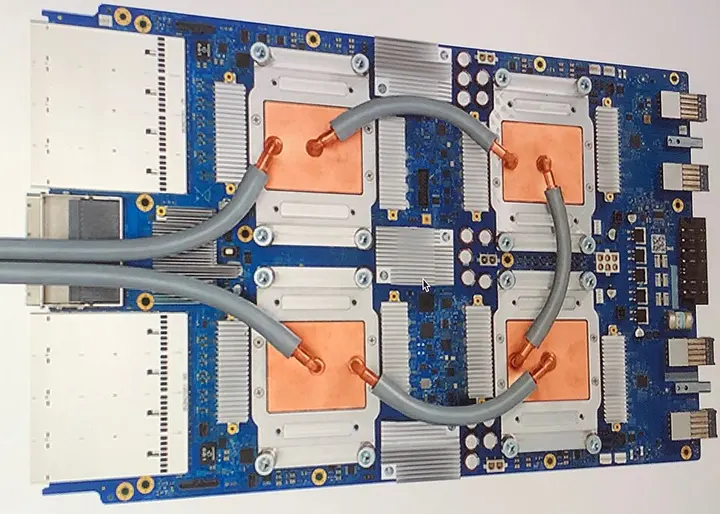
However, sending a supercomputer into space is not easy. The prototype satellite sent so far houses four Google TPU chips and generates a maximum of about 1 kilowatt (kW) of electricity. This chip consumes so much power that only a single TPU can be run for about 20 minutes at a time. Data must be processed by communicating with the ground station strictly within this 20-minute window.

| Parameter | Detail |
|---|---|
| Launch Time | October 2026 |
| Rocket | SpaceX Falcon 9 |
| Onboard AI Model | Gemma 4 |
| Hardware | 4 Google TPU chips |
| Power Generation | 1 Kilowatt (kW) |
Chip Architecture and Radiation Testing
The Tensor Processing Unit (TPU) used as the processor is an ASIC (Application-Specific Integrated Circuit) developed by Google specifically for neural network machine learning. While graphics processing units (GPUs) are used in most computers on Earth, TPUs are capable of delivering higher speeds at lower power, specifically for matrix calculations. However, these chips face a major challenge from radiation and temperature extremes in space.
Charged particles in space can alter stored values in memory, a phenomenon known in computer science as a 'bit flip'. This corrupts data. Google tested its Trillium (v6e) TPU chip on Earth by exposing it to a 67 MeV proton beam. In this test, the high-bandwidth memory (HBM) subsystem proved to be the most fragile, but even it exhibited abnormal behavior only after a cumulative dose of 2 krad(Si). This capacity is nearly three times greater than the 750 rad(Si) expected during a five-year mission. No major hardware faults were recorded up to 15 krad(Si), indicating that these chips can withstand the space environment.
Close-flying Satellites and Laser Links
Google's plan is not limited to just a single satellite. Model training and large-scale inference (the process of making predictions using a model) require hundreds of satellites to be interconnected. To achieve speeds comparable to terrestrial data centers, data transfer between satellites at terabits per second (Tbps) is essential. Google's scientists have planned to use optical links (communication via laser beams).
Since signal power decreases inversely with the square of the distance, large distances cannot be maintained between satellites. In the design prepared by Google, a cluster of 81 satellites will orbit Earth at an altitude of 650 km within a radius of just 1 kilometer, maintaining distances of only 100 to 200 meters from one another. Google has successfully tested a bidirectional transmission speed of 800 Gbps (1.6 Tbps total) using a single transceiver pair in a bench-scale experiment.
| Detail | Specification |
|---|---|
| Launch Date | 1 October 2026 |
| Rocket Platform | SpaceX Falcon 9 |
| Total Onboard Processors | 4 Google TPUs |
| Simultaneously Working Capacity | 1 TPU (approx. 20 minutes) |
| Total Power Generation | Up to 1 kW |
| Installed AI Model | Gemma 4 (Google DeepMind) |
| Next Mission Goal | 2027 (Two interconnected satellites) |
Upcoming Milestones and Economic Equations
The next major milestone for Project Suncatcher will arrive in 2027. Google has partnered with Planet, under which two prototype satellites will be launched in early 2027. These twin satellites will coordinate with each other via lasers while in orbit, sharing and completing machine learning tasks.
Launch costs have been the biggest barrier to establishing data centers in space. According to Google researchers, rocket launch costs could drop below $200 per kilogram by the mid-2030s. If this happens, the cost of establishing and operating a data center in space will become comparable to the annual energy cost of a terrestrial data center. However, this will require fully reusable rockets like SpaceX's under-development Starship, which may need to fly approximately 1,800 times to reach this cost level.
The satellite sent into space has not only composed poems, but has also successfully transmitted orbital status and telemetry data. In the future, challenges such as thermal management (heat dissipation) and high-bandwidth communication with Earth will have to be overcome, but this experiment has proved that the boundaries of Earth are no longer mandatory for AI.