Gemini Intelligence Expands in India: New AI Capabilities Reach Non-Pixel Android Devices
Google has expanded Gemini Intelligence in India, bringing advanced task automation and multimodal assistance to standard Android smartphones.

Google has taken a major step forward in the race of artificial intelligence (AI). According to a Business Standard report, Google has expanded the reach of its 'Gemini Intelligence' services in India. The most notable feature of this expansion is that features previously limited to Google's own Pixel smartphones are now becoming available on Android devices from other companies.
This move will provide millions of ordinary smartphone users in India with the convenience of task automation directly on their devices. This new technology greatly simplifies daily chores, information retrieval, and application management. Since India possesses a massive consumer base in the global technology market, this step is considered highly strategic.
History and Background: From Search Engine to AI Revolution
Google was founded in January 1996 as a research project by Stanford University PhD students Larry Page and Sergey Brin. They developed the 'PageRank' algorithm, which counted links to other pages to determine the usefulness of a web page. The company had its formal beginning in August 1998 with an initial capital of $100,000 from Sun Microsystems co-founder Andy Bechtolsheim.
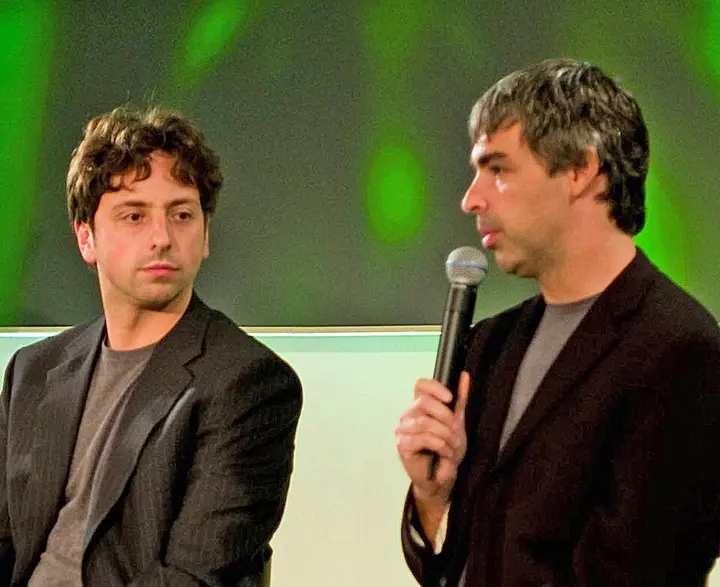
Over time, besides its search engine, the company developed vast platforms such as the Android operating system, Gmail, Maps, and YouTube. However, when OpenAI released its GPT-3 based ChatGPT to the general public in November 2022, a major challenge arose against the existence of Google Search. This was an unprecedented situation in the company's history, and the management directed the entire system to pivot toward AI.
Founders Larry Page and Sergey Brin, who had stepped down from their roles at Alphabet in 2019, were also called back to emergency meetings. In February 2023, Sergey Brin asked for permission to directly access the company's computer code again after many years. Following this entire struggle, the company announced the LaMDA-based Bard chatbot in February 2023, which was named after the storyteller term in Celtic languages.
How Gemini Works: Architecture and Mechanism
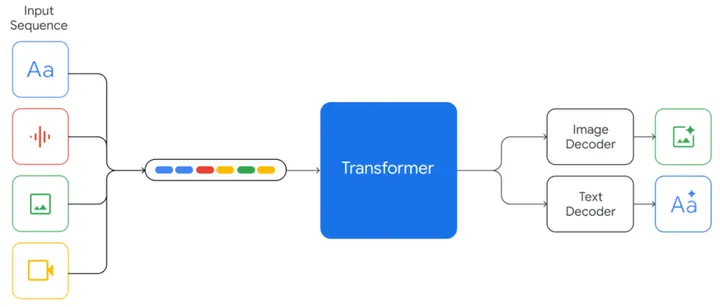
In December 2023, Google announced the renaming of Bard to Gemini and designed it as a truly multimodal large language model. Multimodal simply means that this model can understand and process not just text, but computer code, images, audio, and video simultaneously. While traditional systems required separate software for each medium, in Gemini, all of this is handled through a single transformer network.
- Multimodal input acceptanceText, voice, image, or application data is accepted simultaneously from the user.
- Tokenization processAll types of inputs are divided into mathematical tokens that neural networks can understand.
- Transformer analysisThe model understands the deep meaning of the context and user command to determine the necessary processing.
- Task automation implementationThe desired task is automatically completed in various phone apps by the local device or cloud model.
For example, just as an intelligent person can read a book, look at a picture in front of them, and listen to a conversation to make an instant decision all at the same time, Gemini divides various forms of data into small mathematical pieces. These pieces are called tokens. All of these tokens pass through a massive neural network where the system understands the context and makes automatic decisions.
To automate tasks on mobile devices, Google has divided the model into various sizes. This ensures that efficiency is maintained even in phones with ordinary processors, eliminating the need to depend on expensive cloud servers.
| Model Variant | Target Device / Platform | Key Feature |
|---|---|---|
| Gemini Nano | On-device (Mobile / Tablet) | Fast processing without internet using low resources |
| Gemini Flash | High-throughput cloud systems | Low cost and extremely high efficiency |
| Gemini Pro | General and developer applications | Balanced capability and extended research support |
| Gemini Ultra | High-compute servers | Ultra-complex tasks and deep analysis |
Statistics and Model Range: From Nano to Ultra
Google has divided the Gemini model into four main tiers according to various needs. The smallest variant is 'Nano', which is designed to process data directly on a mobile device without a data network. The mid-tier 'Flash' is useful for high speed and low cost, while 'Pro' analyzes complex tasks, and the largest 'Ultra' is used for extremely complex computations.
Adding such advanced chatbots to a search engine was financially extremely costly for the company. According to financial analysis by Reuters, adding such AI features to search could cost Google an additional $6 billion by 2024. Meanwhile, according to estimates by semiconductor consulting firm SemiAnalysis, this additional cost was likely to be around $3 billion annually.
$ અબજ
During the Paris livestream demonstration of Bard in February 2023, inaccurate information was provided about the James Webb Space Telescope. Due to this technical error, Google's market value dropped by 8 percent in a single day, which was an economic loss of nearly $100 billion. The company has succeeded in reducing this type of misleading information, i.e., hallucination, by introducing advanced models of the Gemini 1.5 and Gemini 3 series during 2025.
Strategic Expansion and Technology Acquisition
Under the leadership of Google's Chief Executive Officer Sundar Pichai, the company has made a strong foothold in the mobile sector. In the past, the company acquired DoubleClick for $3.1 billion in 2007 and Motorola Mobility for $12.5 billion in May 2012 in order to secure patent protection and distribute Android worldwide for free. Subsequently, in January 2014, it strengthened its artificial intelligence capabilities by purchasing an AI research organization named DeepMind for approximately $400 million.
$ અબજ
The ultimate result of all these investments was that Google built its own vast hardware and software ecosystem. In 2025, 73 percent of the company's revenue came from advertising, which includes AdMob, AdSense, and DoubleClick. Now, by expanding AI assistants widely on smartphones, Google is further strengthening its search and services platform.
What this means for India and everyday users
India is the world's largest market for Android-based smartphones. Previously, many of Gemini's advanced task automation capabilities were restricted only to Google Pixel devices. But according to a Business Standard report, these services are now reaching Android smartphones of other brands, which means millions of Indian users will be able to manage messages, schedule appointments, transfer data between apps, and have complex instructions executed automatically right from their local phones.

This step will save people a lot of time in their daily digital work. Instead of a user having to open each app manually and give commands, the entire process can be completed with just a simple command. Since phones with various languages and diverse hardware specifications are used on a large scale in India, the offline on-device integration of a lightweight model like 'Nano' will prove helpful in reducing the digital divide.
Challenges and unresolved questions
Despite this modern expansion, ethical and privacy-related challenges remain for Gemini. In the early stages, due to unbalanced answers given by the model and inconsistencies in historical facts, the company had to temporarily suspend the feature for generating human images. Obstacles arose in its rollout due to data protection regulations in the European Union.
A significant question is how well data security will be maintained when task automation is provided by directly scanning a user's personal data, messages, and location on the smartphone. Although Google has claimed to have introduced strict security standards, independent researchers and consumer protection groups are closely monitoring these new smartphone automation systems.