A New Path for Artificial Intelligence: Nvidia and South Korean Firms Form Alliance for Heterogeneous Computing
Nvidia, SK Telecom, and Rebellions are collaborating to build a powerful system combining GPUs and NPUs, significantly enhancing AI data center capabilities.

To keep pace with the rapidly growing demand for processing power in the world of artificial intelligence (AI), a single type of chip is no longer sufficient. Recently, during the 'AI Day Seoul' event held in the South Korean capital of Seoul, an important Memorandum of Understanding (MOU) was signed. According to this agreement, American chipmaker Nvidia, South Korean telecom giant SK Telecom (SKT), and AI chip startup Rebellions will jointly develop a 'heterogeneous computing system'.
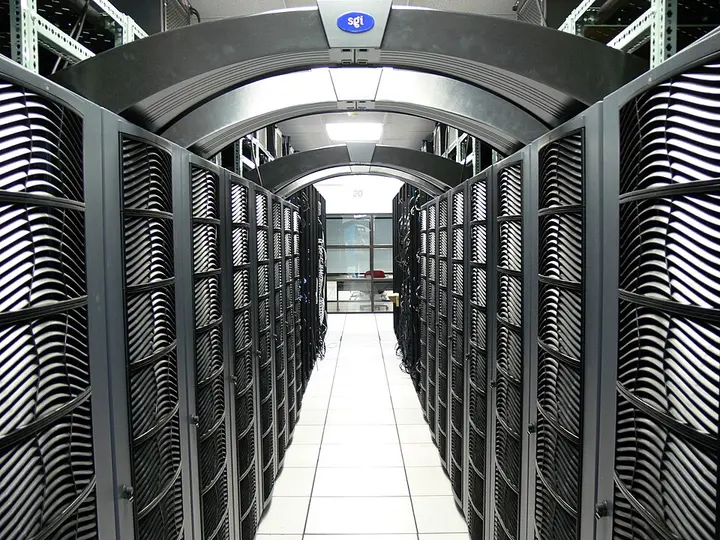
Heterogeneous computing refers to a system that utilizes more than one type of processor or core. Under this alliance, Nvidia's Graphics Processing Units (GPUs) will be integrated with Neural Processing Units (NPUs) designed by Rebellions. This combined system will be used to build SK Telecom's AI data centers, laying the foundation for future technology.
This partnership will be based on Nvidia's 'NVLink Fusion' program. The program allows hyperscalers (companies operating large-scale data centers) and custom chip designers to connect their own AI processors directly into Nvidia's rack-scale infrastructure. This will enable different types of chips to communicate and exchange data with each other at extremely high speeds.
- The role of Nvidia GPUsNvidia's powerful GPUs will handle complex parallel processing and AI model training.
- Integration of Rebellions NPUNPUs specially designed by Rebellions will complete specific neural network tasks with higher efficiency.
- Connection via NVLink FusionThese two different types of processors will be connected into a single infrastructure through Nvidia's NVLink Fusion program.
- SK Telecom Data CenterThis joint system will be installed in SK Telecom's AI data centers so that customers can get faster AI services.
What is heterogeneous computing and why is it important?
Typically, computing systems use processors of the same type, which is called a homogeneous system. However, heterogeneous computing brings together different types of processors such as CPUs, GPUs, and NPUs. These systems increase efficiency not just by increasing the number of processors, but by utilizing specialized processors for specific tasks.
According to Wikipedia reports, heterogeneous systems can have different instruction-set architectures (ISAs). The ISA is the set of languages that a processor understands. When the main processor uses one type of language and other processors use another, the system becomes more complex yet much more powerful. By leveraging this diversity, the system can achieve better performance and energy savings.
Research shows that heterogeneous architectures can deliver 21% better performance than homogeneous architectures. In addition, they help save about 23% in energy. At a time when electricity consumption in data centers is a major concern, this kind of energy efficiency proves to be extremely important.
ટકાવારી (%)
The roles of Nvidia, SKT, and Rebellions
In this tripartite alliance, each company brings its own specialty. Nvidia is the world's largest GPU manufacturer, whose chips are considered the gold standard for training AI models. Rebellions is a South Korean startup that designs NPUs specifically for AI tasks. An NPU is a chip custom-built for artificial neural networks, which can be faster and cheaper than GPUs for certain specific tasks.
SK Telecom will deploy both of these technologies in its data centers. With the support of South Korea's Ministry of Science and ICT, this partnership aims to expand the use of local advanced semiconductors. This will give South Korean companies an opportunity to make their mark in the global market. Jesse Clayton, Principal Manager of AI Infrastructure at Nvidia, stated that this collaboration will help accelerate innovation in Korea.
However, during this event, questions were asked about some controversies surrounding Nvidia CEO Jensen Huang's family and personal life, but the company dismissed them as unrelated to the event and refused to answer. Despite these controversies, Nvidia's technological grip and its partnerships appear unbroken.
History of Nvidia and its place in the AI revolution
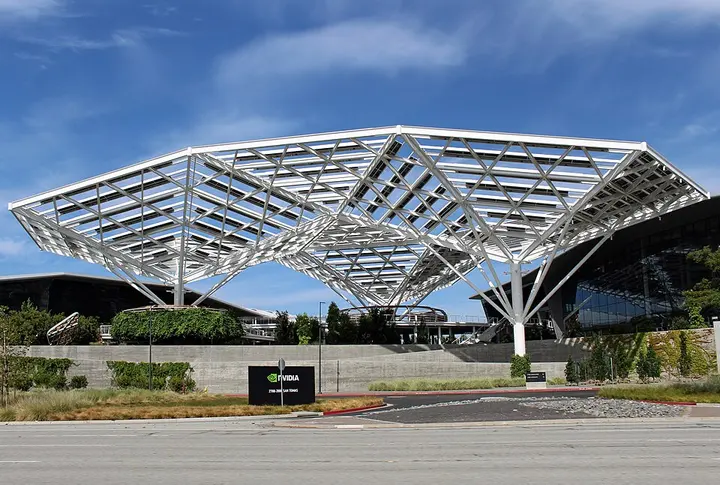
Nvidia was founded on April 5, 1993, by Jensen Huang, Chris Malachowsky, and Curtis Priem. Initially, the company's focus was solely on graphics cards for video games. The founders saw that video games were one of the most difficult problems in computing and presented major sales opportunities. With this idea, they began revolutionizing the world of GPUs.
In the early 2000s, Nvidia invested over 1 billion dollars to develop a software platform named CUDA. CUDA allowed developers to use GPUs not just for graphics, but for complex scientific calculations and AI. This proved to be a masterstroke. By 2024, there are over 5 million CUDA developers worldwide, and Nvidia controls over 80% of the market for training AI models.
The company's success can be gauged from the fact that in 2025 Nvidia became the world's first company to surpass a 5 trillion dollar market capitalization (market value). Due to the surging demand for AI data center hardware, Nvidia's stock price has seen a massive surge. Today, Nvidia's GPUs are so valuable that armored cars are used to transport them to data centers.
| Year | Market Capitalization (USD) |
|---|---|
| ૨૦૨૩ | 1 Trillion Dollars |
| ૨૦૨૪ (માર્ચ) | 2 Trillion Dollars |
| ૨૦૨૫ | 5 Trillion Dollars |
Challenges of heterogeneous systems
Although heterogeneous computing is more efficient, implementing it is not easy. The biggest challenge is software development. When you have different types of processors, programmers have to use different tools and compilers for each. This increases system complexity.
The second major challenge is memory management. Different processors may read data differently or have different cache structures. Coordinating all of this is a difficult task for engineers. Data partitioning is also difficult; that is, deciding which task the GPU will handle and which the NPU will handle is a mathematically complex problem.
| Area of challenge | Detail |
|---|---|
| ISA Compatibility | Different processors having different instruction languages. |
| Memory Hierarchy | Differences in cache memory and data access. |
| Software Tools | Need for separate compilers and editors for each processor. |
| Data Partitioning | Complexity of distributing tasks among different processors. |
Future Direction and Impact on India
Such alliances indicate that in the future, AI infrastructure will become more specialized. Rather than relying solely on general-purpose processors, companies will now use specific chips for specific tasks. This will reduce the cost of running AI models and increase their speed.
For countries like India, where AI startups and data centers are developing, this technology is extremely important. If Indian companies also adopt this type of heterogeneous computing model, they will be able to provide more powerful AI services at a lower cost. This agreement between Nvidia and South Korean companies marks the beginning of a new era for AI hardware globally.
In conclusion, this alliance between Nvidia, SK Telecom, and Rebellions is not merely a commercial agreement, but a glimpse into the future of computing. This merger of GPU and NPU will take AI capabilities to new heights, the impact of which will be seen in our daily lives in the coming years.