Nvidia and South Korea Alliance: A New Revolution in Agentic AI and Heterogeneous Computing
From semiconductor simulation to factory floor robotics, South Korea has taken steps toward global leadership in sovereign AI through Nvidia's NVLink Fusion, Dynamo, and software ecosystem.
What Happened and Why It Matters
The era of artificial intelligence (AI) is no longer limited to text written on screens or chatbots. During the 'AI Day Seoul' conference held in Seoul, global chip giant NVIDIA and South Korea's technology sector announced a epoch-making partnership. According to official reports from NVIDIA and a report by Yonhap News, South Korea is combining its world-class manufacturing, semiconductor, and robotics industries with NVIDIA's hardware and software platforms to drive a major explosion in the fields of Physical AI (autonomous robots and systems working in the physical world) and Agentic AI (AI systems that execute complex processes by making autonomous decisions without human instruction).
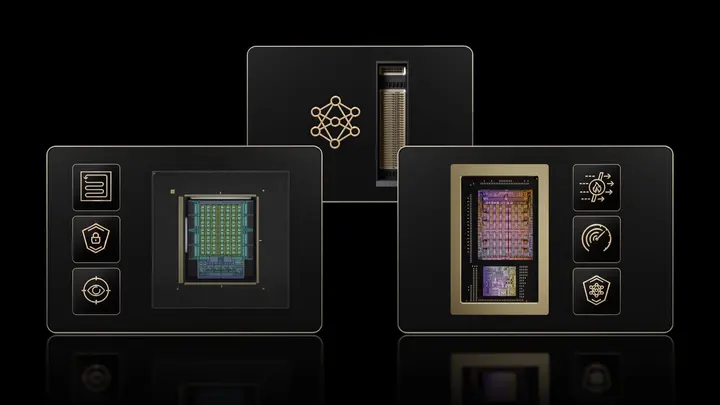
The most critical aspect of this initiative is heterogeneous computing (the integration of different chip architectures such as GPUs and NPUs together). With the support of South Korea's Ministry of Science and ICT (MSIT), a tripartite memorandum of understanding (MOU) has been signed among NVIDIA, SK Telecom, and the local AI chip startup Rebellions. Under this partnership, NVIDIA's Graphics Processing Units (GPUs) will be integrated with Rebellions' Neural Processing Units (NPUs) to develop an organized heterogeneous system for local data centers. This technological alliance will be based on NVIDIA's NVLink Fusion program, which gives local custom chip designers the autonomy to connect their processors directly to NVIDIA's rack-scale infrastructure.
| Company | Role / Contribution |
|---|---|
| NVIDIA | Providing Graphics Processing Unit (GPU) and NVLink Fusion infrastructure |
| SK Telecom | Managing local data center and AI ecosystem |
| Rebellions | Design and development of Neural Processing Unit (NPU) |
Background: NVIDIA's Historic Vision and the CUDA Revolution
To understand this current gargantuan supercomputing era, it is necessary to know the foundational history of NVIDIA. Sitting in a roadside diner named 'Denny's' in San Jose on April 5, 1993, Jensen Huang, Chris Malachowsky, and Curtis Priem founded NVIDIA with a capital of just 40,000 dollars. Their initial idea was to improve 3D graphics for video games. In 1999, the company launched the GeForce 256 for the first time, which was considered the world's first official GPU.
However, in the mid-2000s, Nvidia invested over a billion dollars to develop the CUDA (Compute Unified Device Architecture) software platform. CUDA transformed ordinary GPUs from mere gaming processors into parallel supercomputers capable of performing complex mathematical calculations. While there were 1 million CUDA developers worldwide in 2018, this number grew to 5 million by 2024. By 2025, Nvidia dominated over 80% of the world's AI model training GPU market, and more than 75% of the world's TOP500 supercomputers were powered by Nvidia chips. Today, Nvidia is no longer just a chip-selling company, but has become a software-hardware platform managing the entire data center and AI ecosystem.
મિલિયન ડેવલપર્સ
How Heterogeneous Computing and NVLink Fusion Work
To put it simply, until now most data centers used either exclusively Graphics Processing Units (GPUs) or Neural Processing Units (NPUs) for specialized tasks. However, due to the increasing burden of AI inference (the process of obtaining answers or results through a trained model), the need for their combined use has arisen. Heterogeneous computing is a system where different processors share work according to their specific capabilities.
This process can be understood through the example of a grand orchestra. Here, NVIDIA GPUs play the role of the principal violinist for complex and heavy mathematical calculations, while local NPUs such as Rebellions act as specialized soloists for specific and lighter tasks. If there is a lack of communication between the two, latency occurs in the exchange of information. NVIDIA NVLink Fusion solves this problem. It acts as a high-speed connector and software protocol that directly links third-party NPUs to Nvidia's high-speed NVLink interconnect. As a result, data transfer becomes extremely fast and the boundaries between processors disappear.
- Division of workComplex mathematical calculations are handled by NVIDIA GPU and lighter specific tasks by Rebellions NPU.
- NVLink Fusion connectorIt acts as a high-speed connector to directly connect third-party NPU with Nvidia's rack-scale infrastructure.
- Fast data transferLatency in data exchange is reduced and boundaries between processors disappear.
Physical AI and Industrial Simulation: Samsung and LG Experiments
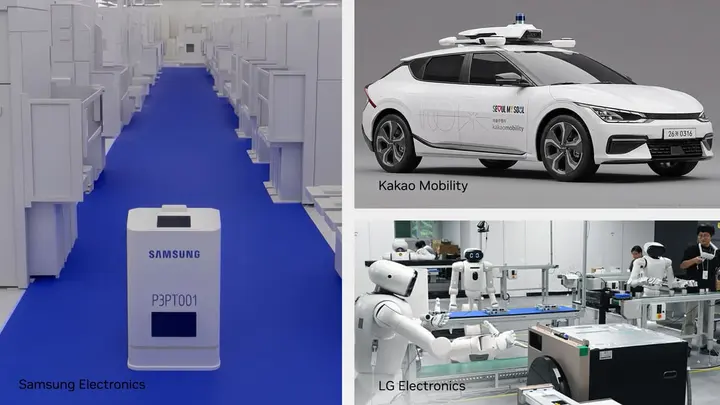
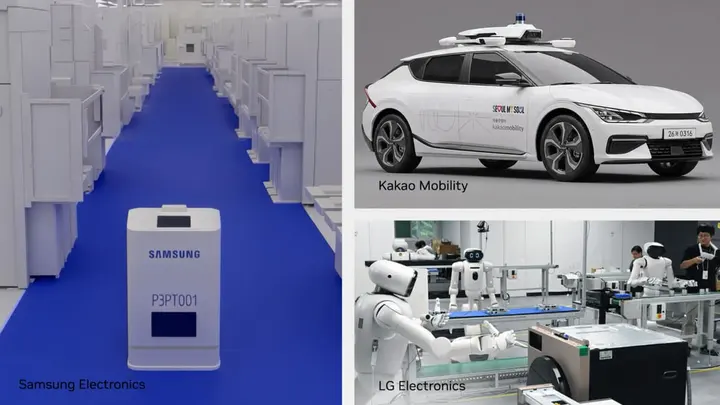
Leading companies in South Korea are using this advanced ecosystem to revolutionize everything from factory lines to robotics. Samsung Electronics is using Nvidia software tools such as cuISS, cuDSS, and PhysicsNeMo in semiconductor manufacturing design and materials research. Samsung's sMOL platform has made quantum chemical calculations 5 times faster with the help of NVIDIA cuEST.
Samsung has achieved unprecedented results using NVIDIA PhysicsNeMo for chip-scale thermal and mechanical analysis. In Samsung's AI homogenization case, a fine-grid solve that previously took a massive 18 hours on a traditional 32-core CPU was completed in just 41 seconds through the combination of NVIDIA's GPU-accelerated coarse-grid solve and AI modeling. This improvement has yielded a 1,600x speedup for Samsung, pointing to revolutionary savings in time and cost within semiconductor design.
On the other hand, LG Electronics and NVIDIA have jointly demonstrated the successful deployment of LG's CLOiD robot in a factory production environment. This robot is powered by the NVIDIA Isaac GR00T model, NVIDIA Cosmos data augmentation, and the NVIDIA Jetson AGX Thor onboard computing processor. Through this technology, a 'Physical AI Data Flywheel' has been created, which gathers real-world data and uses simulation to make the robot more capable and autonomous. In addition, Kakao Mobility is utilizing the NVIDIA Hyperion framework and the NVIDIA DRIVE AGX Thor processor to develop Level 4 autonomous driving (autonomous vehicles operating without a human driver) in Seoul's Gangnam district.
Harmony of Sovereign AI, Security, and Open Models
Another important aspect of South Korea's initiative is Sovereign AI (an indigenous AI infrastructure based on local language, culture, and data). To empower local models, NVIDIA has introduced the 'NVIDIA Dynamo' software framework. When an AI model becomes too large, it must be distributed across multiple GPUs. Dynamo is an open-source distributed inference-serving framework that organizes the routing of information between model fragments at a data center scale. Thanks to Dynamo recipes optimized for NVIDIA B200 GPUs, the performance of South Korea's leading open models—such as SK Telecom's A.X K2, LG AI Research's K-EXAONE 2.0, Upstage's Solar Open 2, and Motif Technologies' Motif-3—has directly increased by a 2x speedup.
| Open Model | Developer Company |
|---|---|
| A.X K2 | SK Telecom |
| K-EXAONE 2.0 | LG AI Research |
| Solar Open 2 | Upstage |
| Motif-3 | Motif Technologies |
As Agentic AI becomes increasingly autonomous, its security also becomes imperative. When AI agents work with enterprise data, there is a risk of data leaks or malicious commands. To address this, NVIDIA has launched the 'NVIDIA OpenShell' runtime, which is part of the Open Agent Safety Platform. OpenShell provides sandbox security and policy-based controls for agents. South Korean security company AIM Intelligence is integrating its Starfort platform with OpenShell. Additionally, Hyundai Motor Group is also evaluating NVIDIA NemoClaw blueprints and OpenShell for secure AI agents. To ensure that Korean cultural contexts are preserved, LG AI Research has used the Nemotron-Personas-Korea dataset, which includes 7 million synthetic personas based on official Korean statistics.
Future Direction and Lessons for India
This collaboration between NVIDIA and South Korea serves as a blueprint for countries worldwide. Instead of relying solely on foreign models or software, nations can partner with global hardware giants while maintaining their own domestic chip designs (NPUs), language-specific open models, and data sovereignty. Industrial automation, 1,600-times-faster semiconductor design, and secure agentic systems prove that the right integration of software and hardware can unlock the true value of AI.
However, maintaining low-latency across diverse architectures in heterogeneous computing, ensuring real-time safety in robotics, and placing ethical controls on the autonomy of AI agents remain major challenges. Countries like India, which are developing their own sovereign AI ecosystems, also need to learn from these types of heterogeneous hardware and sandbox security frameworks.