Neuromorphic Computing: The Future Silicon Revolution Inspired by the Human Brain
An in-depth analysis of how neuromorphic chips and spiking neural networks, breaking the limits of traditional computing, are transforming the world of technology.
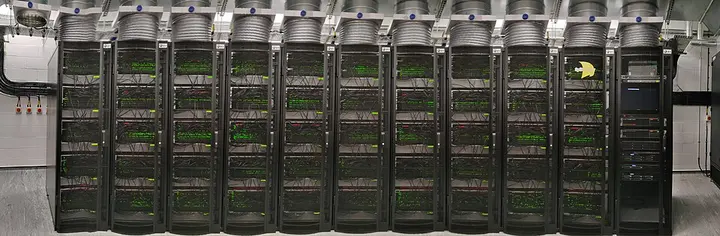
In today's digital age, the use of artificial intelligence (AI) is at its peak, but the computing energy and processing capacity used behind it are becoming a major challenge. Traditional computing systems are based on the 'von Neumann architecture', in which the processor and memory are separate. To overcome this limitation, scientists are now drawing inspiration from the structure and functioning of the human brain. This approach is called neuromorphic computing. Neuromorphic systems process information using artificial neurons and synapses, performing complex tasks like understanding the environment, motor control, and integrating multiple senses, much like the human brain.
These systems are implemented on analog, digital, or mixed-mode VLSI (Very Large Scale Integration) hardware. Much like the brain, these systems perform distributed processing in small computing elements, which significantly increases energy efficiency and learning capacity. Neuromorphic engineering is an interdisciplinary field combining biology, physics, mathematics, computer science, and electronic engineering.
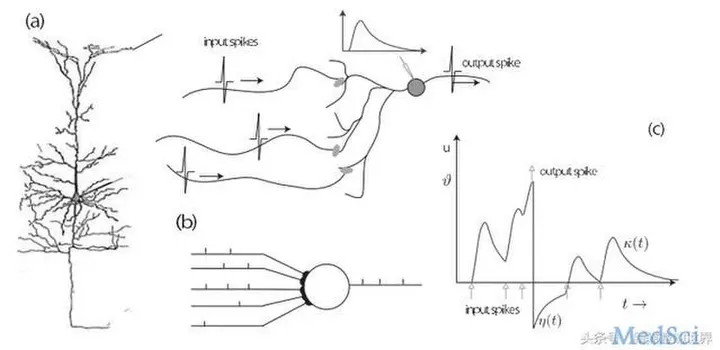
- Signal receptionIncoming spikes (electrical impulses) raise or lower the membrane potential of the neuron.
- Potential accumulationOver time, electrical charge accumulates in the neuron, which is calculated by the Leaky Integrate-and-Fire (LIF) model.
- Threshold touch and firingWhen the membrane potential reaches a certain threshold value, the neuron fires and emits a spike.
- Signal transmission and resetThe emitted signal goes to subsequent neurons and the potential of the original neuron is reset to a lower value.
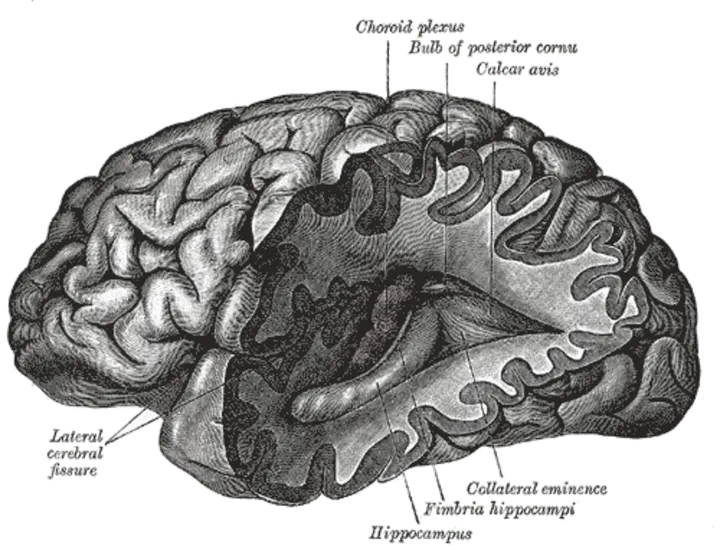
History and Revolutionary Milestones of Neuromorphic Computing
The concept of neuromorphic engineering was first proposed by Carver Mead in the late 1980s. Following this, rapid research began in this field. In 2006, researchers at Georgia Tech developed a Field Programmable Neural Array that modeled the ion channel characteristics of neurons on a silicon-based chip. In 2011, MIT researchers built a chip that replicated synaptic communication using standard CMOS technology and 400 transistors.
In 2012, researchers at HP Labs demonstrated that Mott memristors exhibit volatile behavior at low temperatures, making it possible to create neuristors that could mimic neuron behavior. That same year, researchers at Purdue University presented an energy-efficient chip design using lateral spin valves and memristors. Detailed digital models of the rat brain were created through the Blue Brain Project, which began in 2013. In 2014, 'Neurogrid' was developed by Stanford University's Brains in Silicon group, which simulated 65,536 neurons with high energy efficiency using 16 NeuroCore chips. That same year, IBM's TrueNorth chip and the BRAIN Initiative also made major contributions to this field.
In 2016, the 'BrainScaleS' hybrid supercomputer developed at Heidelberg University was capable of operating 864 times faster than biological neurons. In 2017, Intel announced its 'Loihi' chip, which was suited for online learning and inference using asynchronous artificial neural networks. That same year, IMEC's OxRAM-based self-learning chip demonstrated learning from menuets and composing music.
In 2018, researchers at ETH Zurich and the University of Zurich developed the DYNAP-SE processor, which had 4 cores, with each core containing 256 adaptive exponential integrate-and-fire neurons. In 2022, MIT researchers created proton-based artificial synapses for analog deep learning. In 2019, the European Union funded neuromorphic quantum computing, and in 2022, the Max Planck Institute developed an organic artificial spiking neuron. Most recently in 2024, chemical systems in liquid solution have succeeded in recognizing sound of various wavelengths, while research is also underway on ferroelectric FETs (FeFETs) for ultra-low energy consumption.
| Year | Development / Project |
|---|---|
| 2012 | Research on memristors by HP Labs |
| 2014 | 'Neurogrid' by Stanford University |
| 2017 | Intel announced 'Loihi' chip |
| 2018 | DYNAP-SE processor by ETH Zurich |
Biological Inspiration and Spiking Neural Networks (SNN)
Information exchange in the human brain takes place through chemical and electrical signals. Spiking Neural Networks (SNN) are used for this process in neuromorphic systems. While traditional Artificial Neural Networks (ANN) transmit information at every cycle, in SNNs information is sent via 'spikes' (electrical impulses) arriving at specific time intervals.
Each neuron in an SNN has an internal 'membrane potential'. Only when this potential reaches a certain limit, i.e., a 'threshold', due to incoming inputs, does the neuron fire and generate a spike. This model is called the Leaky Integrate-and-Fire (LIF) model. Biologically, the Hodgkin-Huxley model was introduced in 1952, followed by the FitzHugh-Nagumo (1961-1962) and Hindmarsh-Rose (1984) models, but LIF is used more widely because it is computationally simpler.
Biological research shows that the human brain processes at incredible speeds. For example, the task of recognizing an image by passing through layers from the retina of the eye to the temporal lobe of the brain is performed by human neurons in just a 10 millisecond (ms) time period per layer. Rate-based coding is not possible in such a short time, which makes time-based temporal coding important. Special methods are used to encode information in SNNs, such as temporal coding, rate coding, direct coding, phase coding, and burst coding.
A major problem with SNNs is that spike-based activation is not differentiable, which prevents the direct use of traditional gradient descent backpropagation. To solve this problem, researchers use local learning rules, surrogate gradients (SG), and Spike Frequency Adaptation (SFA). With the help of SFA, high-performance deep SNNs can operate efficiently with as few as 0.3 spikes per neuron.
Hardware Architecture, Memristors and Sensors
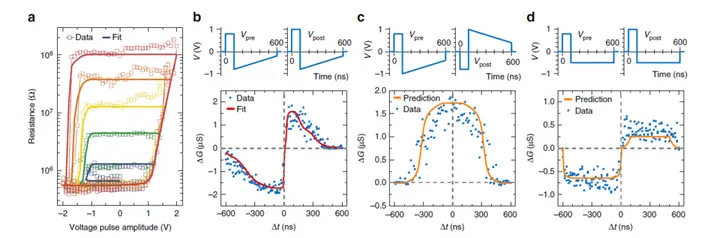
For the hardware construction of neuromorphic systems, oxide-based memristors, spintronic memory, threshold switches, and specialized transistors are used. Neuromemristive systems use memristors to implement neuroplasticity. These systems can replace traditional digital logic gates in speech recognition, face recognition, and object recognition.
In addition to hardware, neuromorphic elements are also used in sensors. For example, retinomorphic sensors or event cameras mimic the human eye. Instead of continuously recording entire frames like ordinary cameras, event cameras process data only for those pixels where a change in brightness has occurred. This leads to a massive reduction in power consumption.
Specialized software tools are also available for simulating neuromorphic SNNs, including Brian (developed by ENS), GENESIS (Caltech), NEST, NEURON (Yale/Duke), RAVSim, and snnTorch (PyTorch-based). Hardware platforms include SpiNNaker from the University of Manchester, TrueNorth from IBM, Loihi from Intel, and the European BrainScaleS.
Ethical and Legal Controversies: Questions of Machine Consciousness and Ownership
As neuromorphic systems come closer to the human brain, some serious ethical and legal debates have also begun. Researcher Daniel Lim has expressed concern over whether advanced AI systems powered by neuromorphic technology could develop 'machine consciousness.' If a machine attains consciousness, the question arises as to whether it should be granted civil rights or specific security protocols.
Complex questions have also arisen in the legal sphere. For example, in legal cases such as *Acohs Pty Ltd v. Ucorp Pty Ltd*, a dispute arose over who owns the work automatically generated by a neuromorphic system. If a creation is not made by a human, there is still a lack of global clarity on whether copyright can be claimed over it under current laws.