From Liquid Chemical to Solid Crystal: The Internal Architecture of Lithium Batteries and the Solid-State Revolution
A deep technical review of how lithium-ion batteries power everything from smartphones to electric vehicles, and why future solid-state technology could transform the automotive industry.
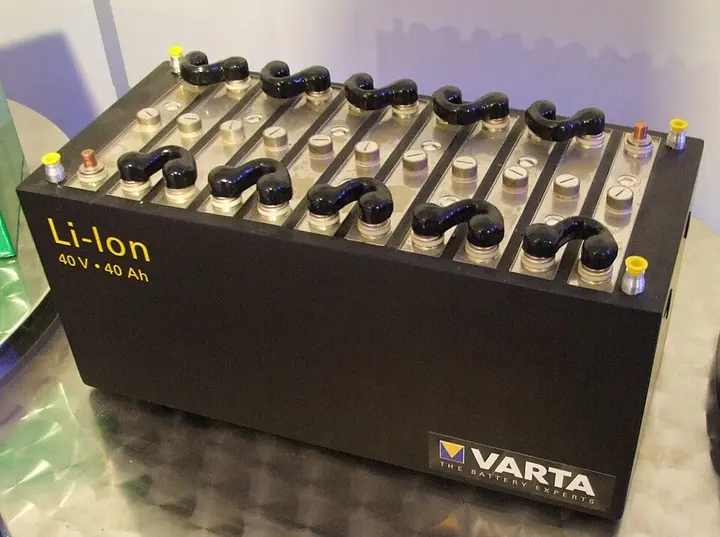
Modern human civilization depends on energy storage. Behind every revolution from the smartphone in your pocket to the electric car running on the street, a single invisible driving force is at work: the lithium-ion battery. In 1991, when the team from Sony and Asahi Kasei under the leadership of Yoshio Nishio launched the first commercial lithium-ion cell in the market, in the three decades from then until today, the volumetric energy density of these batteries has increased threefold, while their manufacturing cost has decreased tenfold. By the latter half of 2024, global demand had surpassed an annual 1 terawatt-hour (TWh), while global manufacturing capacity had been recorded at twice that.
The roots of this technology lie in the research of M. Stanley Whittingham in the 1970s, who created the first rechargeable cell based on a titanium disulfide cathode and a lithium-aluminium anode. Subsequently, in 1980, the discovery of the lithium cobalt oxide cathode by John Goodenough, and in 1985, the development of a carbon-based anode by Akira Yoshino laid a strong foundation for the modern lithium-ion battery. For this landmark contribution to the scientific world, these three scientists were awarded the 2019 Nobel Prize in Chemistry. Providing a nominal voltage of typically 3.6 or 3.7 volts (V), these cells have today become the backbone of industries.
Internal Structure and 'Rocking-Chair' Mechanism of Lithium-Ion Batteries
A lithium-ion battery is often called a 'rocking-chair' or 'swing' battery in European industrial parlance, because during the storage and release of energy, lithium ions continually swing like a hammock between the two electrodes. The battery has two main poles: the positive pole, which is the cathode, and the negative pole, which is the anode. Both these electrodes possess a crystalline lattice structure into which lithium ions can enter and exit; this physicochemical process is called intercalation.
In a commercial cell, the negative pole is mostly made of graphite, with silicon sometimes blended in to increase capacity. For the positive pole, compounds such as lithium cobalt oxide (LiCoO2), lithium iron phosphate (LiFePO4), or lithium nickel manganese cobalt oxide (NMC) are used. Thin metal foils are attached behind these electrodes as current collectors; copper is used for the anode because lithium does not alloy with copper, while aluminium is used for the cathode because it forms an inert protective layer upon contact with the electrolyte.
When a battery discharges, an oxidation half-reaction takes place at the anode, releasing lithium ions and freeing electrons. These electrons cannot pass through the battery's internal medium, so they flow through the external wiring to supply energy to a motor or a bulb. At the same time, positively charged lithium ions (Li+) pass through the separator and the liquid electrolyte, such as lithium hexafluorophosphate (LiPF6) dissolved in an organic carbonate solution, moving toward the cathode. During charging, an external power source reverses this process by applying an over-voltage higher than the cell's own voltage.
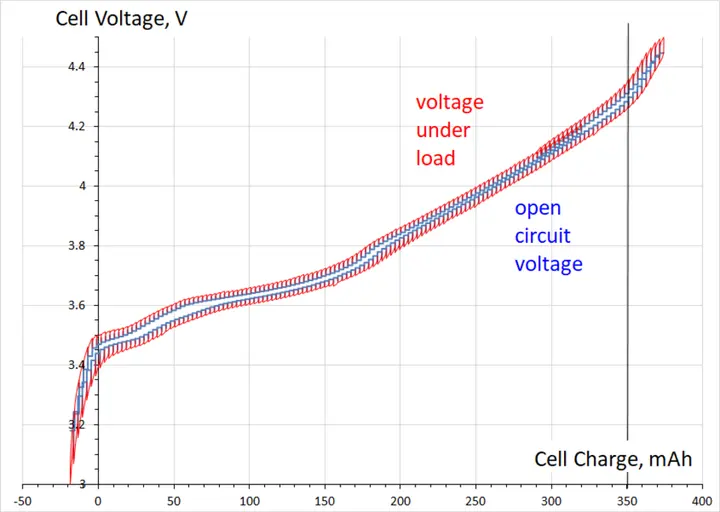
The standard charging method is called CC/CV (Constant Current / Constant Voltage). In the first stage, the charger supplies a constant current while the voltage gradually increases. When the cell reaches the maximum safe voltage, the system enters the constant voltage mode, where the voltage remains steady and the current gradually decreases until it reaches a minimum limit, completing the charging process.
Safety, Thermal Management, and Self-Discharge Statistics
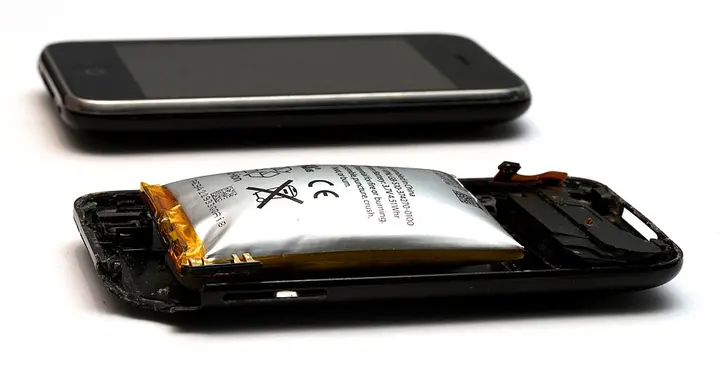
Lithium-ion batteries possess immense energy, but certain chemical limitations are also associated with them. According to the laws of chemistry, each gram of lithium represents 13,901 coulombs of charge. At a 3-volt level, this capacity equals 11.6 kilowatt-hours (kWh) of energy per kilogram of pure lithium, which is slightly higher than the heat obtained from the combustion of petrol. If the liquid electrolyte in a cell with such dense energy overheats, it poses a risk of fire or explosion because it is flammable.
Battery lifespan and efficiency are extremely sensitive to temperature. Lithium cells can be fast-charged optimally between 5 and 45 degrees Celsius. Between 0 and 5 degrees Celsius, the charging current must be reduced, whereas when charging below 0 degrees, the slight heat generated by internal resistance becomes beneficial. If charging continues for a long time at high temperatures exceeding 45 degrees Celsius, the internal structure of the cell rapidly degrades. Furthermore, if excessive overcharging reaches up to 5.2 volts, cobalt dioxide can detach from the cathode and trigger destructive reactions.
A battery left unused also loses energy on its own, which is called self-discharge. Manufacturers typically state the monthly self-discharge rate of lithium-ion batteries to be 1.5% to 2%. However, this rate is directly related to the ambient temperature.
According to a 1999 study, the monthly self-discharge at 21 degrees Celsius was recorded at 8%, which increased to 15% at 40 degrees and reached a concerning 31% at 60 degrees. Following technological improvements made by 2016, this rate has been controlled to between 2% and 3%, which is much better than the 10% of older nickel-cadmium (NiCd) batteries or the 30% of older nickel-metal hydride (NiMH) batteries.
| Battery type | Monthly self-discharge rate |
|---|---|
| Lithium-ion battery (modern) | 2% to 3% |
| Nickel-Cadmium (NiCd) battery | Approximately 10% |
| Older Nickel-Metal Hydride (NiMH) | Up to 30% |
The Solid-State Revolution: Why is Liberation from Liquid Electrolyte Necessary?
To overcome the flammable nature and upper limit of energy density in lithium-ion batteries, scientists have now turned towards solid-state batteries (SSBs). In a solid-state battery, a completely solid substance is used as the electrolyte instead of a liquid organic solution or gel. This solid electrolyte also acts as an ideal separator, which only allows lithium ions to pass through and prevents short-circuits.
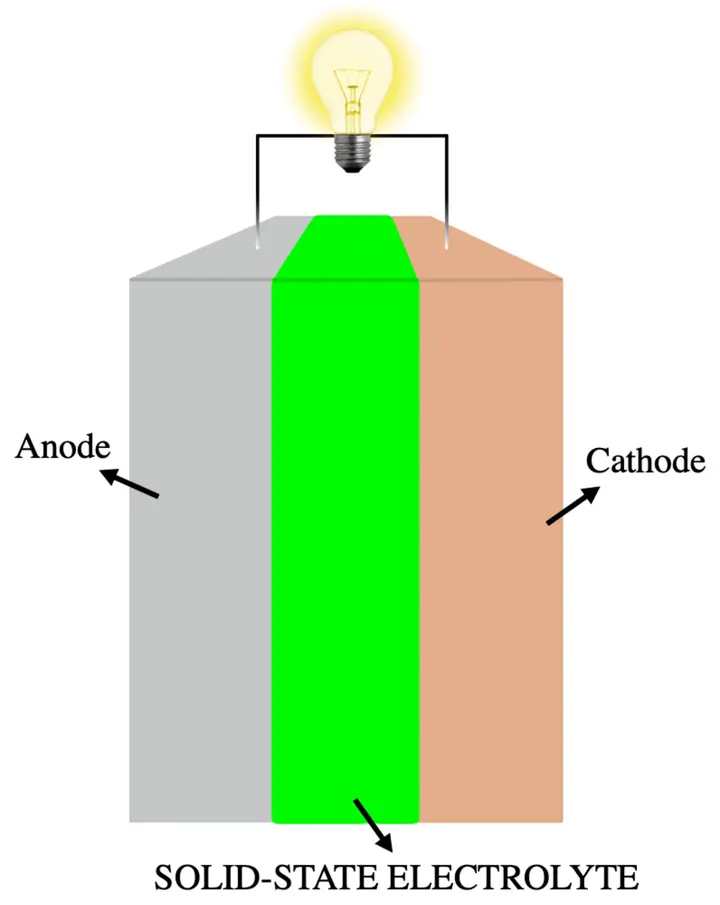
The history of solid electrolytes is interesting. Between 1831 and 1834, Michael Faraday discovered solid compounds such as silver sulfide and lead(II) fluoride, which became electrically conductive when heated. Subsequently, in 1967, work on the sodium/beta-alumina system was carried out by the Ford Motor Company and NGK of Japan, but this required temperatures higher than 300 degrees Celsius. In the 1990s, the Oak Ridge National Laboratory created the lithium phosphorus oxynitride (LiPON) solid electrolyte, which succeeded in thin-film batteries but had low capacity.
The actual transformation came in 2011 when Kanno and his team developed a sulfide-based solid electrolyte named Li10GeP2S12 (LGPS). This material was capable of providing ionic conductivity at room temperature equal to or even greater than liquid electrolytes. Following this discovery, practical research on solid-state batteries for electric vehicles accelerated.
Materials Science and Advanced Chemistry
Research is currently underway on solid electrolytes in three main categories: oxides, sulfides, and chlorides. In the oxide series, garnet-type LLZO (Li6.4La3Zr1.4Ta0.6O12), perovskite-type LLTO, as well as LATP and LAGP are well known. In terms of thermal stability against lithium metal, LATP exhibits better stability than LAGP, LLTO better than LATP, and LLZO shows the most outstanding stability.
In recent years, chloride superionic conductors have proven to be highly promising. The Li2InxSc0.666-xCl4 chloride electrolyte developed by Zhou and colleagues possesses a high ionic conductivity of 2.0 millisiemens per centimeter (mS cm−1), which can operate without an additional protective coating on the cathode. Similarly, the Li2ZrCl6 electrolyte, considered an inexpensive alternative, exhibits high moisture tolerance with a conductivity of 0.81 mS cm−1.
In cathode materials, the lithium-sulfur (Li-S) system theoretically offers a prodigious specific capacity of 1,670 milliampere-hours per gram (mAh/g), which is ten times higher than conventional LiCoO2. While sulfur proved useless in liquid batteries because it dissolves, it yields excellent results in a solid medium. In the anode region, Darren H.S. Tan and his team developed a solid-state cell using a 99.9% pure micro-silicon (\muSi) anode and an NCM811 cathode. Operating from -20 degrees to 80 degrees Celsius, this cell succeeded in retaining 80% capacity even after 500 cycles at a heavy current density of 5 mA cm-2.
- Quality components99.9% pure micro-silicon anode and NCM811 cathode are used.
- Solid electrolyteA safe medium is provided by adding a solid electrolyte (SSE) instead of liquid.
- Wide temperature capacityThis cell operates efficiently at temperatures ranging from -20 degrees Celsius to 80 degrees Celsius.
- High lifespanMaintains 80% capacity even after 500 cycles at a heavy current density of 5 mA cm−2.
The Automobile Industry and Commercialization Challenges
For electric vehicles (EVs), solid-state batteries will reduce the overall weight of the car due to being lighter and will massively increase the driving range on a single charge. Given this potential, vehicle manufacturing companies around the world have entered the race. Toyota, which has been a leader in this field since 2012, held the most solid-state battery patents by 2019. Volkswagen has joined hands with QuantumScape, while BMW and Ford have partnered with Solid Power. Honda announced the launch of an all-solid-state demonstration line in early 2024, and Nissan aims to launch EVs with its in-house cells by 2028.
However, there is a big gap between outstanding laboratory results and factory gigawatt-hour (GWh) scale production. Although companies like ProLogium, WeLion, QuantumScape, and StoreDot announced gigawatt-scale production between 2020 and 2024, large-scale commercial scalability had still not been fully achieved as of January 2026. Toyota also clarified in June 2023 that it would defer widespread commercial use in the near future.
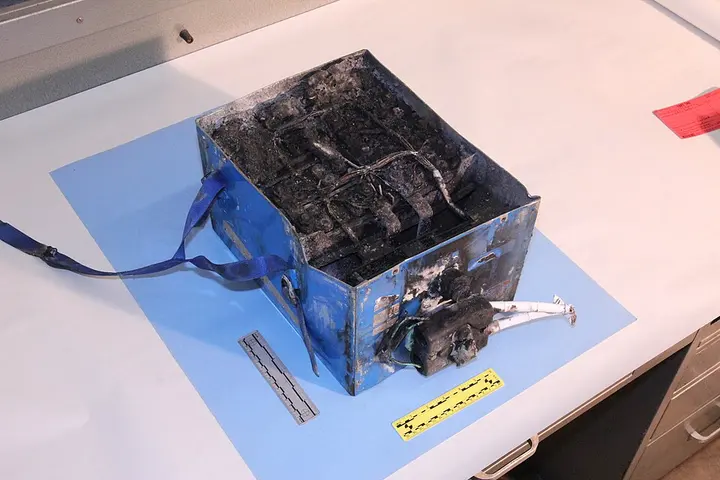
Behind this slow pace is the physical contact (interface resistance) between the solid electrolyte and the electrode. As the battery charges and discharges, the volume of the electrodes expands and contracts, causing cracks to form between the solid surfaces and obstructing the flow of ions. Until industrial manufacturing costs decrease and a mechanical solution to this interface problem is found, current liquid lithium-ion batteries will continue to rule the market. But given the progress of science, it is certain that tomorrow's clean energy revolution will advance precisely on the strength of solid crystals.