The Drone Revolution in Naval Warfare: Why Carrier-Launched UAVs Are Vital for India
A detailed analysis of the British Royal Navy's latest trials and their profound implications for the Indian Navy's future strategic doctrine.
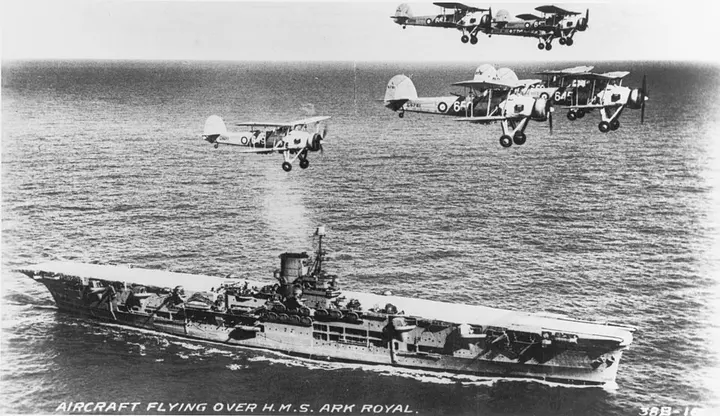
When a fighter jet takes off with a roar from an aircraft carrier—a giant city floating in the middle of the ocean—the sight becomes a symbol of power and technology. But this scene is about to change. In future wars, not just crewed aircraft, but state-of-the-art drones (unmanned aerial vehicles) will take off from these runways. A new experiment being conducted by Britain's Royal Navy could prove revolutionary in this direction, directly impacting the capabilities of the Indian Navy as well.
According to a report by the Times of India, Britain's Royal Navy is planning to test a drone named 'Talon Blue' from its aircraft carrier next year. This test is extremely important not only for Britain but also for India, because India's indigenous aircraft carrier INS Vikrant also uses the 'ski-jump' (an upward slope at the end of the runway) method, just like British ships. If Britain successfully launches this drone, it will pave the way for India to deploy drones on its own aircraft carriers as well.
- Preparation and inspectionFinal checks of the drone's sensors, engine, and control system are performed on the deck.
- Runway positioningThe drone is positioned at a precise point on the carrier's runway from where it will run towards the ski-jump.
- Engine thrustThe drone's engine generates maximum thrust so it can gain the required speed on a short runway.
- Ski-jump take-offUsing the slope at the end of the runway, the drone springs into the air and gains lift.
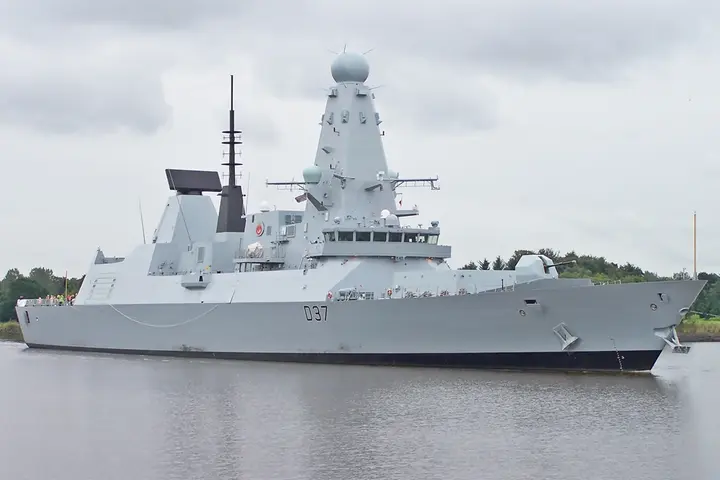
Historically speaking, the Royal Navy is one of the oldest and most powerful navies in the world. According to Wikipedia data, the origins of the modern Royal Navy lie in the English Navy of the early 16th century, making it the United Kingdom's oldest armed service. From the 18th century until World War II, it was the world's most powerful navy. Today, it still maintains a fleet of state-of-the-art ships, submarines, and aircraft, which includes two Queen Elizabeth-class aircraft carriers. It is on these very ships that drone technology is now going to be tested.
The main reason behind launching drones from aircraft carriers is to reduce risk and increase efficiency. Traditionally, crewed aircraft are expensive and carry the risk to human life. Drones (UAVs: Unmanned Aerial Vehicles) eliminate this risk. They can go into enemy territory to conduct surveillance and attack if necessary. According to the Royal Navy, providing security in the ocean and ensuring the stability of international trade is one of their six core tasks. Drones are helpful in performing these tasks with greater precision.
| Ship type | Number | Primary role |
|---|---|---|
| Queen Elizabeth-class carrier | 02 | Airstrike and drone launching |
| Vanguard-class submarine | 04 | Nuclear Deterrent |
| Astute-class submarine | 06 | Nuclear-powered attack |
| Type 45 destroyer | 06 | Guided missile defense |
| Type 23 frigates | 05 | Anti-submarine warfare |
Technically speaking, launching a drone from an aircraft carrier is not as simple as flying a drone from land. At sea, the ship is constantly in motion and wind speeds are also unpredictable. To fly a drone like the 'Talon Blue' from a ski-jump requires immense power in its engine and special modifications to the design of its wings. In the ski-jump method, the aircraft or drone runs down the runway under its own power and gets a boost into the air due to the ramp at the end. This method is different and simpler than the catapult method (machinery that pushes and launches an aircraft) used on American carriers.
Why is this technology important for India? India currently has two operational aircraft carriers, INS Vikramaditya and INS Vikrant. Both these ships use the ski-jump method. According to a report by the Times of India, the Indian Navy is also developing its own 'Naval Collab', which focuses on drone technology. If Britain's testing is successful, India can gain ready data and technological understanding from it, which will give a boost to India's own drone program.
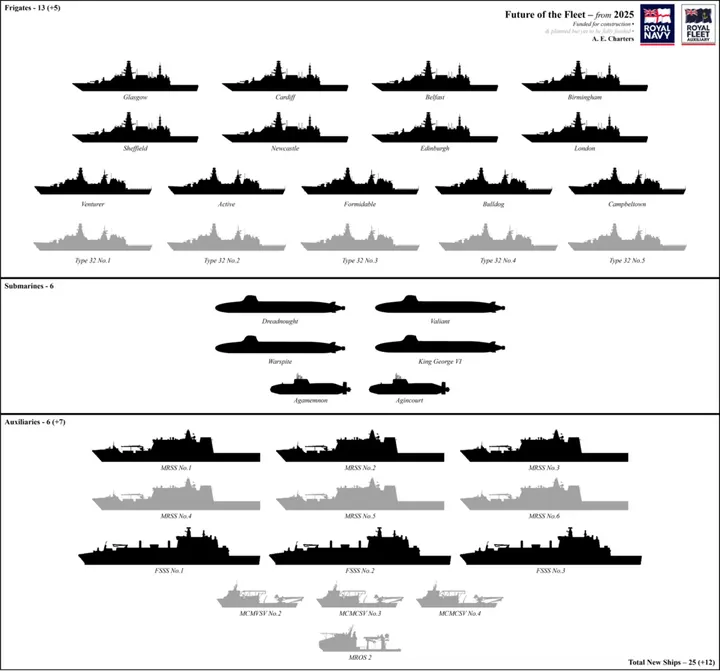
Speaking of the Royal Navy's fleet, by July 2026 it will have 60 active and operational ships. This also includes 4 Vanguard-class ballistic missile submarines and 6 Astute-class nuclear-powered attack submarines. To protect such a large fleet, drones act as a 'force multiplier'. They can keep an eye for hundreds of kilometers around the ship, a task that is expensive and limited for helicopters or jet aircraft.
જહાજોની સંખ્યા
The economic aspects of drone technology are also worth considering. The cost of a modern fighter jet runs into millions of dollars, whereas drones are much cheaper in comparison. Furthermore, drones can be kept airborne for a long time (endurance) because there is no issue of pilot fatigue. The Royal Navy's missions also include providing humanitarian aid. During natural disasters, drones can be used to quickly survey affected areas and find routes for delivering relief supplies.
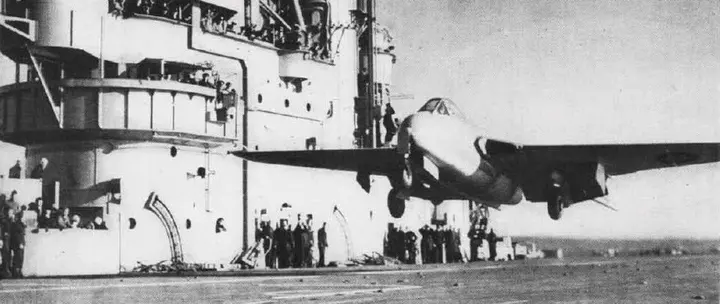
History bears witness that naval power has always depended on the ability to adopt new technologies. The Royal Navy, established by Henry VIII in 1546, ruled the seas for centuries because they continuously improved ship design and organization. In the 18th and 19th centuries, the British Navy excelled in financial systems, training, and logistics. Today, as the battlefield is becoming digital and unmanned, investing in drone technology is the need of the hour.
The challenge for the Indian Navy is how to counter China's growing presence in the Indian Ocean. China is also working hard to deploy drones on its aircraft carriers. In this situation, collaboration with Britain or learning from their experiments is strategically beneficial for India. The deployment of drones on INS Vikrant will further strengthen the security of India's maritime borders and enable it to detect enemy submarines or ships from a greater distance.
In conclusion, the launching of drones from an aircraft carrier is not merely a technical achievement, but a major paradigm shift in naval warfare strategy. When Britain's 'Talon Blue' drone takes flight next year, hidden beneath its wings will be the future not only of Britain's navy, but also of navies in countries like India. In this era of technology, the nation that understands this convergence of sea and sky at the earliest will rule the oceans of the future.