Neuromorphic Chips Mimicking the Human Brain: A New Computing Revolution Formed by the Convergence of Silicon and Neurones
Breaking the limitations of traditional processors, scientists are now building processors that work like brain neurones, capable of performing remarkably with extremely low energy.
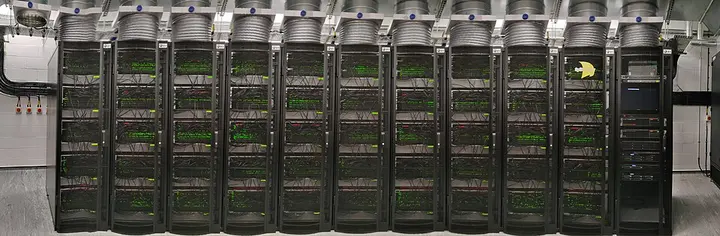
Neuromorphic computing is an emerging field of computer science that draws inspiration from the complex structure and functioning of the human brain. This technology performs calculations using artificial neurons. According to Wikipedia reports, by mimicking the brain, these systems can perform tasks such as visual capability, muscle control, and sensory integration with extreme efficiency. This is not merely a new type of chip, but a fundamental paradigm shift in the principles of computing.
Modern computers typically operate on the 'Von Neumann' architecture, where the processor and memory are separate. This requires data to be constantly moved back and forth between locations, consuming a significant amount of energy. In contrast, neuromorphic systems adopt a distributed processing methodology much like the brain. Here, data is stored and processed within small, localized computing elements. This approach attempts to replicate the morphology of the brain—its structural form—by synthesizing biology, physics, mathematics, and electronic engineering.
- Input receptionInformation is taken in the form of electrical spikes through sensors or data.
- Synaptic weightingMemristors strengthen or weaken connections based on the importance of information.
- Neuron firingWhen a signal crosses a certain threshold, the artificial neuron sends a message forward.
- Learning and adaptationThe system corrects its errors through real-time feedback and learns new information.
Origin and History of Neuromorphic Technology
The concept of neuromorphic engineering was first introduced in the late 1980s by Carver Mead. Since then, several significant milestones have been achieved in this field. In 2006, researchers at Georgia Tech developed a silicon-based chip that modeled neuron channel-ion characteristics. Subsequently, in 2011, researchers at MIT used 400 transistors and standard CMOS techniques to create a chip capable of emulating synaptic communication, which is the communication pathway between two nerve cells.
According to Wikipedia sources, in 2012 researchers at HP Labs reported on Mott memristors, which were capable of mimicking the behavior of neurons. In the same year, Purdue University presented a design for an ultra energy-efficient chip using lateral spin valves and memristors. In 2013, the Blue Brain Project created a detailed digital model of a rat's brain, which opened new directions for research in this field.
| Year | Project/Chip | Features |
|---|---|---|
| 2011 | MIT neuromorphic chip | Synaptic copy with 400 transistors |
| 2014 | Neurogrid (Stanford) | Capacity of 65,536 neurons |
| 2014 | IBM TrueNorth | 1 million programmable neurons |
| 2017 | Intel Loihi | Asynchronous learning capability |
| 2018 | DYNAP-SE | Mixed-signal processing |
In 2014, the 'Brains in Silicon' group at Stanford University developed Neurogrid. This system utilized 16 NeuroCore chips to simulate 65,536 neurons. During the same period, IBM introduced the TrueNorth chip, which is considered a major breakthrough in the neuromorphic field. In 2016, a hybrid supercomputer was built under the BrainScaleS project at the University of Heidelberg, capable of operating at 864 times the speed of biological neurons.
The Bridge Between Brain Function and Silicon
The primary objective of neuromorphic engineering is to understand the analog nature of the brain. Our brain processes information through chemical signals, which can be converted into mathematical functions. Neuromorphic systems attempt to translate these biological processes into electronic circuits. For this, brain maps obtained through electron microscopy are used so that the connections between neurons can be understood with precision.
These systems utilize oxide-based memristors, spintronic memories, and transistors as hardware. A memristor is a component that can remember its previous state even after the flow of electricity is cut off, which functions similarly to the brain's memory or neuroplasticity. Regarding software, these systems use spiking neural networks, which learn through the error backpropagation method.
ગણી ઝડપ
Neuromemristive systems specifically use memristors to implement neuroplasticity. These systems can be used in complex tasks such as speech recognition, face recognition, and object recognition. They can replace traditional digital logic gates and make multilayer learning algorithms faster. According to researchers, this technology will make artificial intelligence more human-like and efficient in the future.
Neuromorphic sensors and their characteristics
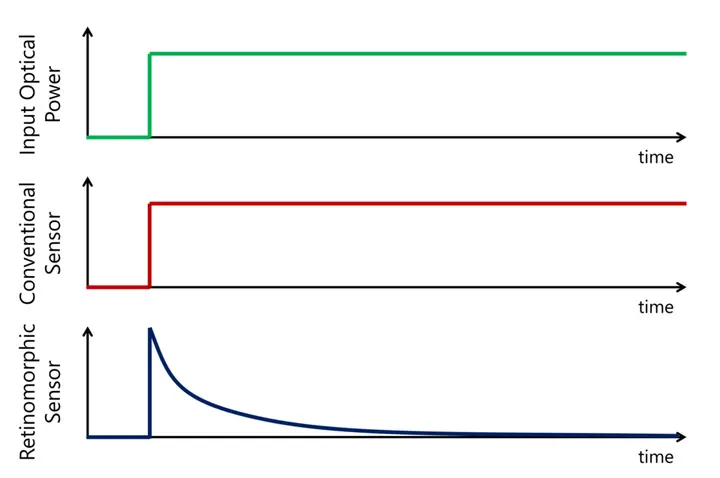
Neuromorphic principles are not limited to processing alone, but are also applied in sensors. The best example of this is the retinomorphic sensor or event camera. A normal camera records every frame of an entire scene, whereas an event camera, like the human eye, sends information only for those pixels where there has been a change in light. This leads to a drastic reduction in the amount of data and energy consumption.
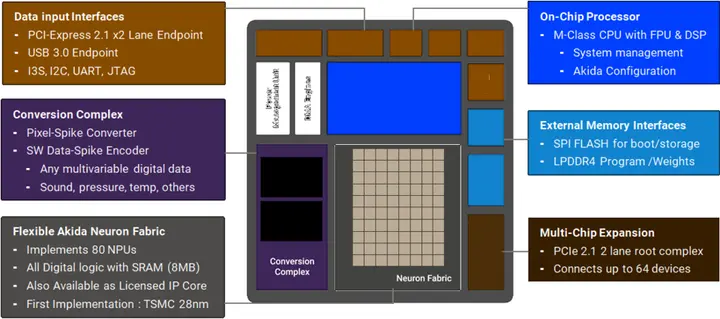
According to a Wikipedia report, in 2024, researchers also discovered that chemical systems in liquid solutions can detect sound of various wavelengths. This discovery opens new possibilities for neuromorphic applications. Furthermore, Ferroelectric FETs are also being used to mimic biological neurons, which can operate with extremely low energy consumption. These types of sensors can prove revolutionary for robotics and autonomous vehicles.
Modern chips and their capabilities
The Loihi chip introduced by Intel in 2017 was a major step in this field. It uses asynchronous artificial neural networks, which make the learning and inference process extremely efficient. That same year, a self-learning chip was created by IMEC, which demonstrated the ability to compose music on its own after listening to pieces of music. This shows that neuromorphic systems can perform not just computations, but creative tasks as well.

In 2018, a mixed-signal neuromorphic processor named DYNAP-SE was developed by ETH Zurich and the University of Zurich. It has four cores, and each core features 256 adaptive exponential integrate-and-fire neurons. This processor uses analog circuits to mimic the dynamics of biological neurons and possesses the ability to learn through real-time feedback. In 2022, MIT researchers created artificial synapses using protons, opening new doors for analog deep learning.
Ethical Questions and Future Concerns
As neuromorphic systems are becoming more advanced, numerous ethical questions are also arising. An expert named Daniel Lim has argued that if these systems mimic the brain this closely, it could lead to machine consciousness. If machines become conscious, should they be granted civil rights? This is a subject of serious debate.
In addition, legal complications are also coming to the fore. According to Wikipedia sources, cases such as 'Acohs Pty Ltd v. Ucorp Pty Ltd' raised the question of who holds the ownership rights over creations generated by neuromorphic systems. It remains unclear whether copyright can be granted for a work if it has not been generated by a human. Such legal and ethical challenges could become obstacles to the widespread adoption of this technology.
Neuromorphic computing is no longer limited to the laboratory. It is poised to revolutionize fields such as artificial intelligence, robotics, and sensory processing. For countries like India, where the need for energy conservation and efficient technology is greater, such chips could prove to be game-changers in the future. However, this technology is still in its developmental stage, and further research is required to fully harness its potential.