Artificial Intelligence at the Speed of Light: Optical Computing Poised to Replace Electronic Chips
An in-depth look at how technology that processes data via photons, breaking the limitations of traditional silicon transistors, could transform the world of AI.

In the modern era, the hunger for Artificial Intelligence (AI) is constantly growing. From chatbots to complex scientific calculations, there is a need for faster and more efficient processing power everywhere. Until now, we have relied on silicon chips and the billions of electronic transistors contained within them. However, this technology based on electrons is now reaching its physical limits. Heat accumulation and the limited speed of data transfer are now becoming obstacles in the development of AI. As a solution to this problem, 'optical computing' or photonic computing is emerging, which performs calculations using light rays instead of electricity.
Optical computing is a method of using light waves generated by lasers or other sources for data processing, storage, and communication. For decades, scientists have known that particles of light, called photons, possess much higher bandwidth, or data-carrying capacity, than electrons. Just as optical fiber cables changed the world of the internet, optical processors have the potential to change the world inside computers. According to a Wikipedia report, the main objective of this technology is to replace current electronic components with optical equivalents so that a fully optical digital computer can be built.
- Light sourceLight rays (photons) are generated by a laser or other source.
- Data encodingInformation is converted into the form of light intensity, phase, or wavelength.
- Optical processingCalculations are performed by interacting light rays using non-linear crystals or lenses.
- Data detectionThe final light signal is read by a photodetector and the result is obtained.
The basic unit of any computer is the transistor, which acts like a switch. In an electronic computer, this switch is turned on and off by an electric current. In optical computing, an 'optical transistor' is required to perform this function. These transistors are made using crystal optics, which utilize materials that have a non-linear refractive index. This means that the intensity of the light falling on the material determines how much light will pass through it. In this way, one light ray can control another, which helps in creating logic gates.
To make an optical computing system functional, four main components are required: an optical processor, optical data transfer (such as fiber-optic cables), optical storage, and a light source, i.e., a laser. Currently, most research is focused on hybrid systems, where optical components are combined with traditional electronic computers. However, a major problem in this is 'conversion'. When data is converted from light to electricity and back from electricity to light, about 30% of the energy is wasted, and the processing speed also slows down. All-optical computers can eliminate the need for this conversion and significantly reduce power consumption.
Optical computing could prove to be a boon for AI, and specifically for deep learning neural networks. AI operations frequently require 'tensor operations' and matrix multiplication processes. According to a 2025 research paper titled 'Direct Tensor Processing with Coherent Light,' researchers have developed an algorithm called 'Parallel Optical Matrix-Matrix Multiplication' (POMMM). This method can perform complex tensor calculations in just a single flash of light. In the future, this technology could replace GPUs (Graphics Processing Units), which are currently used to train AI models.
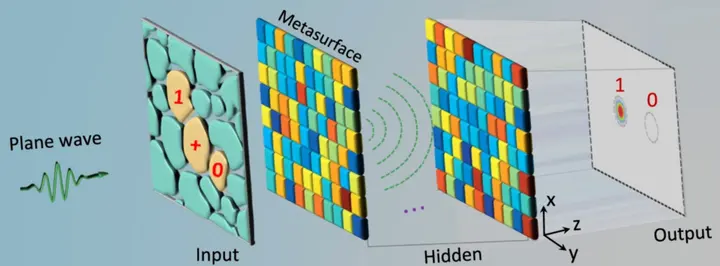
Despite the advantages of optical computing, the challenges it faces are not insignificant. Light is an electromagnetic wave. Two light waves do not interact directly with each other; they can only affect one another in the presence of electrons within matter. This interaction is much weaker compared to electronic signals. Consequently, optical processing components may require more power or their size may be larger than traditional chips. Furthermore, although the speed of light is much higher than that of electrons, maintaining signal accuracy and containing it within a small form factor remains a technical challenge.
| Characteristic | Electronic computing | Optical computing |
|---|---|---|
| Medium | Electrons (electricity) | Photons (light) |
| Potential speed | GHz (Gigahertz) | THz (Terahertz) |
| Bandwidth | Limited | Very high |
| Main challenge | Heat and resistance | Signal interaction and size |
Scientists are also trying some unconventional approaches for optical computing. One interesting method is 'time delay' computing. In this, data is passed through optical fibers and delayed for a specific duration. By splitting light and passing it through cables of different lengths, multiple solutions can be tested simultaneously. This method has been used to solve complex mathematical problems such as the 'Hamiltonian path' and 'subset sum'. Additionally, in 'wavelength-based computing,' multiple calculations are performed simultaneously by using different colors (wavelengths) of light.
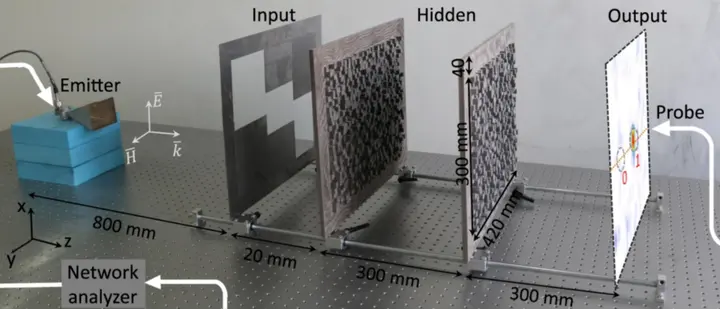
Significant movement in this direction is also being observed in the industrial world. IBM, Microsoft, and several startups such as Lightmatter and Q.ANT are active in this field. In 2025, the company Lightmatter reported in the journal Nature that they had built a photonic AI processor capable of running popular AI models like ResNet and BERT with the same accuracy as electronic chips. In November 2025, the company Q.ANT launched its second-generation photonic processor (NPU 2), which has been operational alongside CPUs and GPUs at Germany's Leibniz Supercomputing Centre since March 2026.

Another unique feature of optical computing is the calculations performed using 'lenses'. Lenses naturally possess the ability to perform a 'Fourier transform' of light. This is a mathematical process used to understand the propagation of heat or the transmission of waves. Where conventional computers require millions of steps for this calculation, an optical system can perform this task in an instant using lenses. In 2022, Wang and his colleagues even proved that certain steps of quantum algorithms can be executed using classical light.
- Graph structureA complex structure is prepared using optical cables and splitters.
- Light entryLight enters from the start node and is divided into different cables.
- Time delayLight reaches the destination node at different times according to the length of the cable.
- Result readingThe solution is found from the light fluctuations arriving at a specific time.
Looking to the future, it is unlikely that optical processors will be available to the general public before 2030. Currently, this technology is being developed primarily for supercomputers and specialized scientific tasks. Critics believe that it will be difficult for optical technology to compete with electronic transistors, which offer low costs and small sizes. However, as AI models grow larger and electricity consumption becomes a matter of concern, this light-based revolution will become inevitable. The computers of tomorrow may not be filled with wires, but with colorful laser beams.