Quantum Dots: Atom-Sized Particles Transforming the World of Display Technology
Made with the help of nanotechnology, these microscopic crystals are making TV and smartphone screens brighter and more colorful.

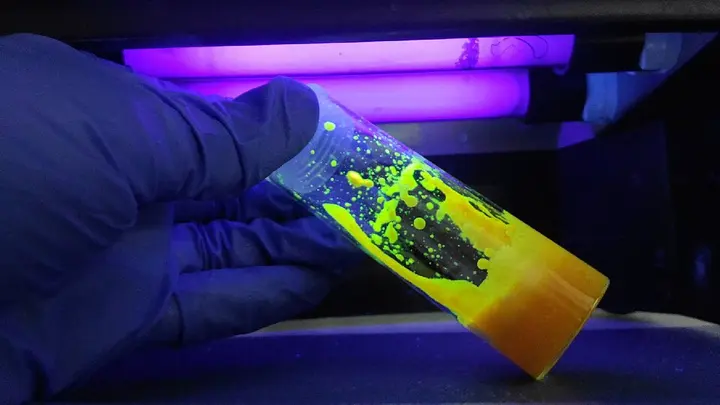
Today, when we look at the screens of high-definition TVs or smartphones, a remarkable scientific discovery is at work behind the vibrant colors we see: quantum dots. Quantum dots are extremely minute semiconductor particles whose size is only a few nanometers. One nanometer is one billionth of a meter. These particles are so small that the electrons inside them behave according to the laws of quantum mechanics, which is not observed in larger substances. This is the exact reason why they are also known as 'artificial atoms'. When light is shone on these particles or electricity is passed through them, they emit light of a precise color, which is used to manufacture state-of-the-art displays.
The greatest characteristic of quantum dots is that their color depends on their size. Generally, the color of a substance is determined by its chemical composition, but in quantum dots, it can be altered simply by changing their size. According to a Wikipedia report, if a quantum dot is about 5 to 6 nanometers in size, it emits red or orange light. If its size is as small as 2 to 3 nanometers, it produces blue or green light. To understand this process, a model called 'particle in a box' is used. The smaller the box, the higher the energy of the particle inside it, and higher energy means blue light of a shorter wavelength. It is precisely due to this accuracy that quantum dots are bringing about a revolution in display technology.
| Size (nanometers) | Wavelength | Emitted color |
|---|---|---|
| 2 to 3 nm | Short | Blue / Green |
| 5 to 6 nm | Long | Orange / Red |
To understand how these particles work, it is necessary to examine their internal structure. When ultraviolet (UV) light falls on a quantum dot, the electron inside it is excited and leaps from a lower energy level, namely the valence band, to a higher level, namely the conduction band. The distance between these two levels is called the band gap. When this electron returns to its original position, it releases the excess energy in the form of light. This process is called photoluminescence. The color of this emitted light depends on the size of the band gap, which can be controlled by the size of the quantum dot.

A 'core-shell' structure is most commonly used for the fabrication of quantum dots. In this, there is a central core with a shell of another semiconductor material coated around it. For instance, a shell of zinc sulfide (ZnS) is coated on a core of cadmium selenide (CdSe). The main reason for applying this shell is that it eliminates surface defects and enhances the efficiency of light emission. Without this shell, electrons may lose energy in the form of heat rather than emitting light. According to research, using a double-shell system can increase luminous efficiency by up to 70%. To keep these particles stable, organic molecules called ligands are also attached to their surface, which prevent them from clumping together.
The primary method for producing these remarkable particles is colloidal synthesis. This is a type of chemical process in which a solution is heated to a high temperature. The temperature must be high enough for the atoms to arrange themselves, but not so high that the crystals become too large. This process involves a phase called 'focusing', where all the particles become nearly uniform in size. According to Wikipedia, if about 3 million quantum dots with a diameter of 10 nanometers are arranged in a row, they would occupy a space equivalent to the width of a human thumb. Working at such a microscopic scale is a major achievement of nanotechnology.
- HeatingThe chemical solution is heated to a high temperature to release precursors.
- NucleationReleased atoms start aggregating to form tiny crystals.
- Focusing GrowthSmall particles grow rapidly at high monomer concentrations so all particles become of uniform size.
- DefocusingAs concentration decreases over time, differences in particle size begin to appear, which must be stopped at the right time.
At present, the largest application of quantum dots is in LCD TVs, which companies market as 'QLED'. In standard LCD TVs, white light coming from the back passes through a color filter, wasting a lot of energy. QLED TVs use a blue LED backlight with a quantum dot enhancement film (QDEF) placed in front of it. This film converts a portion of the blue light into pure red and green. The red, green, and blue colors obtained in this way are extremely pure, making the colors displayed on the TV appear more natural and vibrant. Companies like Samsung, Sony, and TCL are making extensive use of this technology.
The second major turning point in display technology has come in the form of QD-OLED. OLED displays are known for generating their own light, but they have limitations in the purity of red and green colors. QD-OLED uses a blue OLED panel and applies a quantum dot color converter (QDCC) over it. Displays made with this technology can show up to 90% of the colors of a color standard named Rec. 2020, whereas ordinary TVs can only reach up to 70-75%. This means you can see colors on the TV that were never possible before.
Speaking of the future, scientists are now working on 'electro-emissive' quantum dots (QDEL). In current TVs, quantum dots require another light to provide illumination, but in QDEL, each pixel will generate light by itself as soon as it receives electricity. This technology will be similar to OLED, but instead of organic materials, it will feature inorganic quantum dots, which will last longer and be brighter. However, since the lifespan of blue quantum dots is currently short, this technology is still in the laboratory stage. According to Nanosys estimates, such true QLED displays could hit the market by 2029.
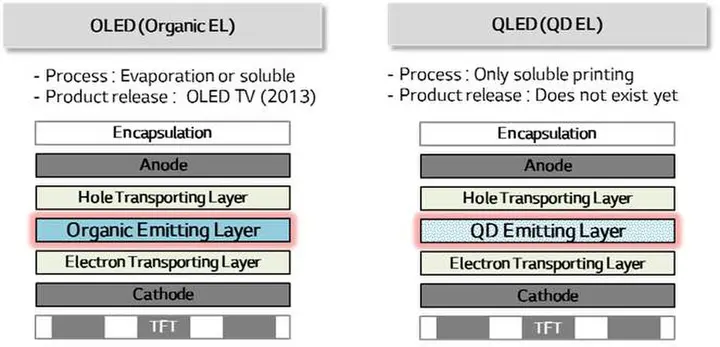
This technology is important for countries like India because the process of manufacturing quantum dots is also possible through inkjet printing. This method can be cheaper and faster than traditional semiconductor fabrication. Not just displays, but quantum dots are also being used in solar cells. They increase the capacity to generate electricity by absorbing different colors of sunlight. These particles are also used in medical imaging to identify cancer cells, as they can travel to specific locations in the body and glow brightly.

However, there are also some challenges facing quantum dots. Many quantum dots are made from toxic substances like cadmium, which are harmful to the environment. Therefore, research is now underway on cadmium-free materials such as indium phosphide (InP). Moreover, many TVs sold under the name 'QLED' are actually made by simply adding a film to older LCD technology, which can mislead consumers. Recently, a court in Germany ruled on just such a case against TCL. Nevertheless, from the perspective of science, quantum dots represent a major victory for mankind at the nano-scale, one that will forever change the way we see.