AlphaFold: Solving a 50-Year-Old Biological Mystery and Revolutionizing the World of Proteins with AI
A detailed explanation of how the Google DeepMind-developed AlphaFold system functions and why it achieved success leading to a Nobel Prize in the scientific community.

When the Nobel Prize in Chemistry was announced in 2024, the entire world's attention was drawn toward Artificial Intelligence (AI). Half of this prize was awarded to Demis Hassabis and John Jumper of Google DeepMind for 'protein structure prediction.' The technology behind this success is called AlphaFold. This is an AI program that has solved the most complex and 50-year-old 'protein folding' puzzle in biology. For the average person, protein might just be a component of food, but from a scientific perspective, proteins are the building blocks of life. Every process that occurs in our body, from muscle movement to the ability to fight diseases, depends entirely on proteins.
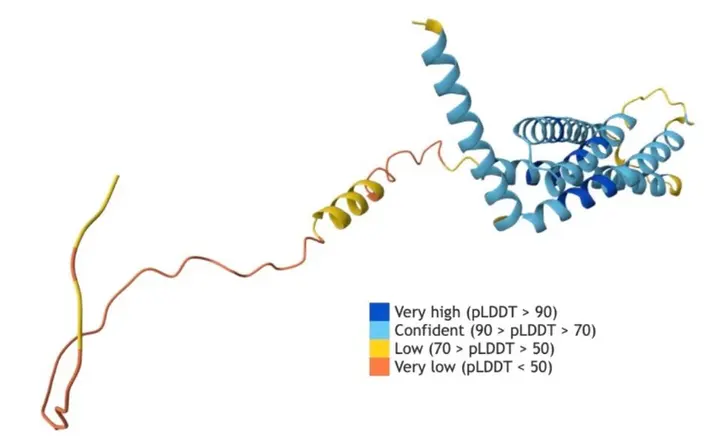
A protein is a long chain of amino acids. When this chain is formed in the body, it automatically arranges itself into a specific three-dimensional (3-D) shape, which is called 'folding.' This 3-D shape of the protein determines what function it will perform in the body. If there is an error in understanding this shape, it can lead to diseases such as cancer, Alzheimer's, or diabetes. For decades, scientists used expensive and time-consuming methods like X-ray crystallography to determine this shape. It used to take years to determine the shape of a single protein. AlphaFold has accomplished this task in mere minutes and with remarkable accuracy.

History and Challenge of Protein Structure Prediction
To understand protein structure, a competition called the 'Critical Assessment of Structure Prediction' (CASP) was started in 1994. The purpose of this competition was to challenge scientists to discover the 3-D shape of a protein based solely on its amino acid sequence. Until 2016, progress in this field was very slow. For the most difficult proteins, the 'Global Distance Test' (GDT) score could only reach 40 out of 100. GDT is a metric that indicates how close the shape predicted by AI is to the actual shape. A score of 100 means perfect accuracy. In 2018, DeepMind entered this competition for the first time with AlphaFold 1 and secured the first position. It achieved success specifically on proteins for which no prior templates were available.
Following the success of AlphaFold 1, AlphaFold 2 arrived in 2020, stunning the scientific world. In the CASP14 competition, AlphaFold 2 achieved a median GDT score of 92.4. This score was so high that it was considered as accurate as the expensive tests conducted in laboratories. According to a report in the journal Nature, the results of AlphaFold 2 were 'astonishing' and 'transformative.' This system proved that deep learning technology could solve complex biological problems. DeepMind used more than 170,000 protein structures from the 'Protein Data Bank' to train this model.
GDT સ્કોર
How does AlphaFold 2 work? An architectural understanding
AlphaFold 2 was built in a completely different way than its previous version. It is an 'end-to-end differentiable' model, which means the entire system learns simultaneously. Its main strength lies in the 'attention network.' This is a technology that helps AI understand which parts of a problem it should focus on. AlphaFold 2 has two main modules based on a 'transformer' design. These modules continuously refine information. It repeatedly examines the connections between amino acids and the relationships between protein sequences.
To understand this process, let's take an example: just as a person solves a jigsaw puzzle, AlphaFold first connects small pieces of amino acids and then gradually prepares the structure of the entire protein. In this process, the 'Evoformer' block plays an important role. It combines evolutionary data and spatial distance. This information is processed repeatedly, so that the shape of the protein becomes increasingly accurate. According to DeepMind, 100 to 200 GPUs (Graphics Processing Units) of processing power were used to train this model.
- Input and SearchThe amino acid sequence of the protein is taken and searched in a vast database to find similar proteins.
- MSA and Pair RepresentationEvolutionary information and a map of potential distances between amino acids are prepared through Multiple Sequence Alignment.
- Evoformer ProcessingTransformer-based blocks refine this information repeatedly, a process similar to solving a jigsaw puzzle.
- 3-D Structure GenerationThe final three-dimensional shape of the protein is created from the refined information and its accuracy is verified.
A deep understanding of architecture and data flow
Inside AlphaFold 2, a process called 'Multiple Sequence Alignment' (MSA) takes place. In this, the protein whose shape is to be determined is compared with other similar proteins that exist in nature. This allows the AI to know which amino acids are likely to be close to each other. This information is combined with 'pair representation,' which estimates the distance between two amino acids of the protein. Both these pieces of information go into the Evoformer block, where they are refined hundreds of times.
Finally, a 'structure module' takes all this information and creates the actual 3D shape of the protein. Interestingly, in the first attempt, this model may create bond angles that are physically impossible, but as it repeats this process (iteration), the errors are corrected. According to a DeepMind example, by the eighth iteration, the protein structure becomes perfectly accurate according to the laws of physics. In the final stage, the structure is slightly refined based on local physical constraints using a method called the 'AMBER force field'.
| Year | Version | Key feature | Accuracy (GDT) |
|---|---|---|---|
| 2018 | AlphaFold 1 | Distance map and deep learning | 68.5 |
| 2020 | AlphaFold 2 | Evoformer and attention mechanism | 92.4 |
| 2024 | AlphaFold 3 | Prediction of DNA, RNA and ligands | 50% more improvement |
AlphaFold 3: A journey beyond proteins
On May 8, 2024, DeepMind announced AlphaFold 3. This new version is not limited to proteins alone. It can also predict what structure will be formed when proteins bind with DNA, RNA, or other small molecules (ligands). AlphaFold 3 uses a new architecture called 'Pairformer', which is simpler than Evoformer. Additionally, it uses a 'diffusion model'. This is the same technology used in AI image generators (such as Midjourney). It prepares an accurate structure by gradually refining the positions of atoms.
According to the company's claims, AlphaFold 3 is 50% more accurate than previous methods in predicting protein interactions with other molecules. This capability could prove revolutionary for drug discovery. Now, scientists will be able to know how a specific drug will react with a protein, even without going to a laboratory. By November 2025, the AlphaFold 3 research paper has been cited more than 9,000 times, which demonstrates its popularity.
| Version | Key capability |
|---|---|
| AlphaFold 1 | Beginning of the protein folding puzzle |
| AlphaFold 2 | Accuracy equal to experimental methods |
| AlphaFold 3 | Prediction of interaction with DNA, RNA and other molecules |
Science and its importance for India
The biggest impact of AlphaFold is that DeepMind has made its database and software open source. To date, more than 200 million protein structures are available in this database. This means that a scientist sitting in any corner of the world, whether in a lab in a small village in India, can use this data for free. Work that previously required millions of rupees and years of time is now available for free via the internet. This is helping significantly in understanding antibiotic resistance and creating new vaccines.
However, some researchers believe that AlphaFold still does not fully explain the fundamental rules of protein folding or the physical processes behind it. It is merely a powerful pattern recognition tool. Nevertheless, its utility cannot be denied. Even though Google disbanded the team associated with this project in 2026 and moved them to Gemini or Isomorphic Labs, AlphaFold has etched its name in golden letters in the history of science.

Statistical Comparison and Achievements
To understand the success of AlphaFold, it is necessary to look at its CASP competition scores. The score of 92.4 achieved by AlphaFold 2 is considered a milestone in science. Generally, a score above 90 means accuracy equivalent to experimental methods. At the time of AlphaFold 1, this score was 68.5. This progress demonstrates the massive leap AI took in just two years. With an update called AlphaFold-Multimer, it has been successful 70% of the time in predicting protein-protein interactions.
Today, when we talk about modern medicine or biotechnology, it is incomplete without AlphaFold. It is not just software, but an excellent example of the convergence of human intelligence and machine learning. In the future, when we find precise treatments for cancer or other incurable diseases, the foundation will be the protein structures provided by AlphaFold. This 'Aavtikal' (tomorrow) of science has proven that AI is not just for creating chatbots, but is a powerful weapon for solving the deep mysteries of nature.