The Power of Supercomputers: The Colossal Engine Behind Modern Science and Artificial Intelligence
An in-depth look at how High-Performance Computing (HPC) integrates thousands of processors to complete seemingly impossible calculations in seconds, revolutionizing AI training.

A supercomputer is a machine with an extremely high level of performance compared to general-purpose computers. It is not just fast, but an entire system for performing complex calculations. Nowadays, supercomputers play an important role in the field of computational science, that is, calculation-based science. They are used for extremely complex tasks such as quantum mechanics, weather forecasting, climate research, oil and gas exploration, molecular modeling, and physical simulations. These machines help digitally understand matters ranging from the initial moments of the universe to the testing of nuclear weapons.
The performance of a standard desktop computer is measured in million instructions per second (MIPS), but the capability of a supercomputer is measured in floating-point operations per second (FLOPS). A floating-point operation means the calculation of numbers with a decimal point. Since the year 2022, exascale supercomputers have come into existence, which can calculate more than 1018 FLOPS. For comparison, a typical desktop computer operates in the range of hundreds of gigaflops (1011) to a few teraflops (1013). Since November 2017, all of the world's top 500 supercomputers run on a Linux-based operating system.
The history of supercomputing began in the 1960s. In 1960, UNIVAC built the Livermore Atomic Research Computer (LARC) for the US Navy, which is considered one of the first supercomputers. At that time, disk drive technology was new, so it used high-speed drum memory. Afterwards came the IBM 7030 'Stretch', built for the Los Alamos National Laboratory. This machine utilized foundational technologies such as transistors, magnetic core memory, and pipeline instructions. Although it could not achieve the expected 100-fold speed, it laid the foundation for future supercomputers.
Seymour Cray is considered the father of supercomputing. He designed the CDC 6600 in 1964, which marked the transition from germanium transistors to silicon transistors. Silicon transistors could run faster, and a refrigeration system was used in it to solve the heating problem. The CDC 6600 was 10 times faster than other computers of that time and cost 8 million dollars. In 1976, Cray introduced his Cray-1 machine, which ran at 80 MHz and became one of the most successful supercomputers in history. The Cray-2, released in 1985, broke the gigaflop barrier with a speed of 1.9 gigaflops.

| Model | Year | Speed / Feature |
|---|---|---|
| CDC 6600 | 1964 | Fastest with silicon transistors and refrigeration |
| Cray-1 | 1976 | Highly successful cylindrical machine with 80 MHz speed |
| Cray-2 | 1985 | 1.9 Gigaflops speed and liquid cooling |
There are mainly two approaches seen in supercomputer design: vector processing and parallel processing. Vector processors work simultaneously on large arrays of data, which dominated until the 1990s. On the other hand, in massively parallel processing, thousands of processors work together to solve different parts of the same problem. Seymour Cray once joked, "If you want to plow a field, which would you prefer? Two strong oxen or 1024 chickens?" His hint was towards a powerful single processor, but over time, 'chickens', meaning a cluster of thousands of small processors, proved to be more effective.
Modern supercomputers are now built from a mixture of thousands of commodity CPUs (commonly available processors) and Graphics Processing Units (GPUs). In 1998, David Bader built the first Linux supercomputer, which used standard off-the-shelf parts. This approach reduced the cost of building supercomputers and increased their scalability. Today, High-Performance Computing (HPC) is not limited to supercomputers alone, but also includes computer clusters and grid computing. A cluster means multiple computers connected together that work as a single system.
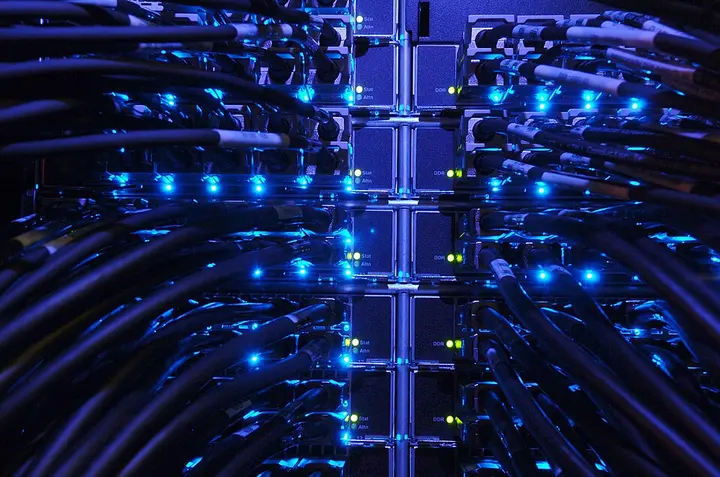
In HPC systems, the role of the interconnect is extremely important. When thousands of processors are working together, data exchange between them must happen very quickly. For this, high-speed and low-latency technologies such as Infiniband or Slingshot are used. These connections are so fast that they allow the entire system to work as a single massive machine. In AI engineering, HPC is used in conjunction with data analytics, which increases simulation capability.
In the era of Artificial Intelligence (AI), the role of supercomputers is changing. Training Large Language Models (LLMs) requires billions of parameters and immense data. This task could take years on ordinary servers, but supercomputers can complete it in a few weeks. General-Purpose Graphics Processing Units (GPGPs) have proved revolutionary in this regard. GPUs were originally created for gaming, but their parallel computing capability is ideal for AI training. In 2012, the Titan supercomputer took a major step in this direction by pairing GPUs with CPUs.

The list of the world's fastest supercomputers is released twice a year by TOP500. This list is based on the LINPACK benchmark. According to the June 2026 report, LineShine at the Shenzhen National Supercomputing Center is the world's fastest supercomputing machine. However, machines from America such as El Capitan and Frontier also possess exascale capability. El Capitan has a speed of 1.742 exaFLOPS and contains over 11 million cores. Japan's Fugaku supercomputer is known for its specialized A64FX processors along with 442.01 petaFLOPS.
exaFLOPS

India and other countries are also investing in this sector. Supercomputers are no longer limited only to government laboratories. Cloud services like Microsoft Azure also host supercomputers like Eagle, which uses NVIDIA H100 GPUs. This provides researchers and companies with the power of supercomputing without investing in expensive infrastructure. However, data privacy and security in the cloud remain a matter of concern.
Software development is a major challenge in the future of supercomputing. Most applications are not designed to run simultaneously across thousands of processors. Due to this 'scaling' problem, the full power of the hardware cannot be utilized. In addition, tremendous electricity is required to run these machines, and complex cooling systems are needed to cool the heat generated from them. For instance, in the Cray-2, liquid coolant (Fluorinert) was pumped throughout the architecture.
In conclusion, a supercomputer is not merely a tool for calculation, but a medium for expanding the boundaries of human knowledge. Whether it is discovering the molecular structure of a new medicine or building a more accurate AI model, HPC technology is the backbone of the modern world. As we move beyond exascale, new horizons will continue to open up in the fields of science and technology.