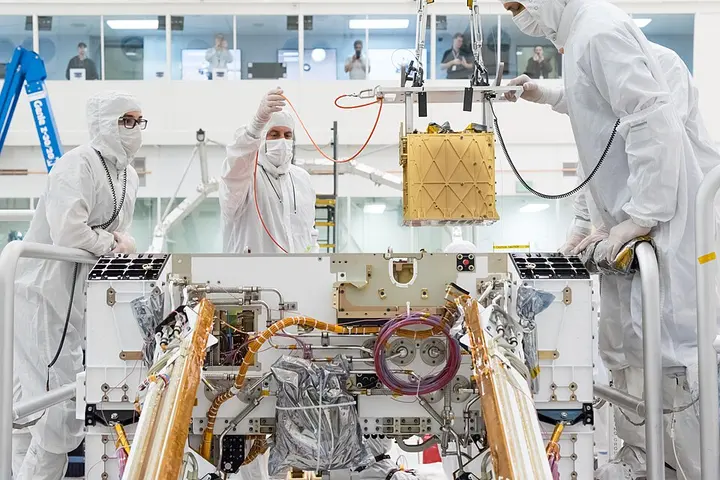
Hubble Space Telescope's Wide Field Camera 3: A Technological Marvel Peering into the Depths of the Universe
An in-depth explanation of the dual-channel architecture, optical design, and cooling mechanism of the Hubble Space Telescope's Wide Field Camera 3 (WFC3).

The contribution of the Hubble Space Telescope to the history of space science has been unparalleled. Hubble has proven to be a revolutionary instrument for capturing extraordinarily clear images of the universe from outside Earth's atmosphere. The most significant capability in Hubble's scientific mission has been provided by its fourth-generation instrument, the Wide Field Camera 3 (or WFC3). This camera is the final and most advanced visible-spectrum camera installed on the Hubble Telescope.
WFC3 was installed during Space Shuttle mission STS-125 (Hubble Servicing Mission 4) on May 14, 2009, by astronauts John M. Grunsfeld and Andrew J. Feustel, replacing the older Wide Field and Planetary Camera 2 (WFPC2). This instrument empowers Hubble to capture wide-field images across ultraviolet, visible light, and near-infrared wavelengths.
History and Necessity of the Space Telescope
The concept of a space telescope was first proposed in 1923 by Hermann Oberth, considered the father of rocket science. Subsequently, in 1946, a groundbreaking research paper by astronomer Lyman Spitzer outlined two main advantages of placing a telescope outside Earth. First, atmospheric motion and turbulence make stars appear to twinkle, a phenomenon known in astronomy as seeing. Earth-based telescopes were limited to an angular resolution of 0.5 to 1.0 arcsecond, whereas for a formal 2.5-meter space telescope, 0.05 arcsecond was possible. Second, Earth's atmosphere absorbs ultraviolet and infrared light, which can be easily observed by a space telescope.

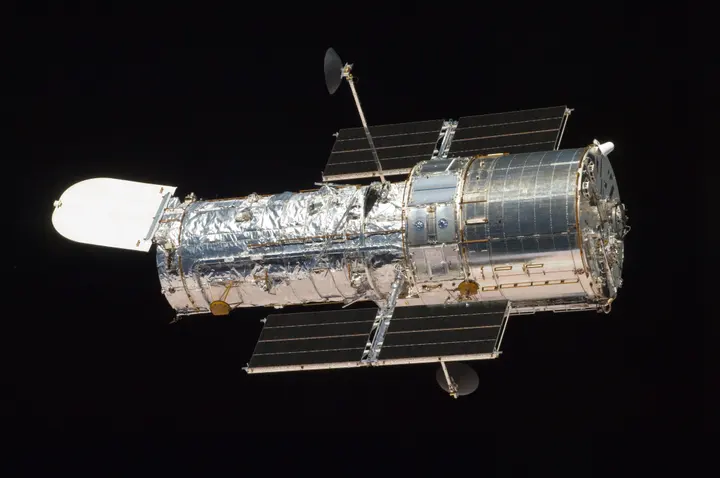
In this field, Nancy Grace Roman, who is known as the 'Mother of Hubble', played a vital role in shaping the project and securing funding from the U.S. Congress. Due to budget cuts in the 1970s, the diameter of the mirror was reduced from 3 meters to 2.4 meters, and a partnership was established with the European Space Agency (ESA). Finally, in 1990, Hubble was launched via mission STS-31. However, due to a manufacturing defect known as spherical aberration in its primary mirror, the optics were corrected during the 1993 STS-61 mission, making the mission a success.
Dual-Channel Architecture of WFC3
WFC3 has been designed as an extremely versatile camera. This device features two completely independent light paths or channels: the UV/Optical (UVIS) channel and the Near-Infrared (IR) channel. Both of these channels possess their own independent focal planes and detector isolations.
| Characteristic | UV/Optical (UVIS) Channel | Near-Infrared (IR) Channel |
|---|---|---|
| Wavelength Range | 200 nm to 1000 nm | 800 nm to 1700 nm |
| Detector Type | 2 × CCD Chips | 1 × IR Detector Array |
| Sensor Resolution (Grid Size) | 2048 × 4096 Pixels (each) | 1024 × 1024 Pixels |
| Field of View | 164 × 164 arcseconds | 135 × 127 arcseconds |
| Pixel Resolution | 0.04 arcseconds / pixel | 0.13 arcseconds / pixel |
The UVIS channel operates in the ultraviolet and visible wavelengths from 200 nanometers (nm) to 1000 nm. It features a pair of charge-coupled devices (CCDs - chip-based image sensors), with each CCD having 2048×4096 pixels. This channel has a field of view of 164×164 arcseconds (2.7×2.7 arcminutes), with a pixel scale of 0.04 arcseconds per pixel. This area is approximately 8.5% of the diameter of a full moon as seen from Earth.

On the other hand, the IR channel covers near-infrared wavelengths from 800 nm to 1700 nm. This channel uses a gallium-arsenide or mercury-cadmium-telluride-based infrared detector array of 1024×1024 pixels. This channel's field of view is 135×127 arcseconds (2.3×2.1 arcminutes) and the pixel scale is 0.13 arcseconds, which has provided a very large coverage compared to the older NICMOS instrument.
WFC3 Workflow and Light Path
To understand how the incoming light inside the camera is processed, its step-by-step workflow is as follows:
- 1. Entry of light from telescope mirrorLight captured by Hubble's 2.4-meter primary mirror enters the entrance aperture of WFC3.
- 2. Channel selection and routingDepending on the wavelength of light, it is directed to the UVIS (200-1000 nm) or IR (800-1700 nm) channel.
- 3. Filtering and spectroscopyLight passes through a filter wheel and is split into a spectrum by a specific wavelength or grism.
- 4. Thermoelectric cooling controlThe IR channel sensor is kept at an appropriately low temperature using a thermoelectric cooler to prevent thermal noise.
- 5. Detector capture and digitizationCCD or IR array converts light into digital data and sends it to Earth for processing.
One of the unique features of WFC3 is that older space hardware was reused in it to ensure durability and reduce costs. The outer structure and filter assembly of this camera are made from the original Wide Field and Planetary Camera (WFPC1), which was brought back during the 1993 servicing mission.
Thermoelectric Cooling and Optical Boundaries
The biggest concern in infrared sensors is that the heat emitted by the instrument itself blurs the infrared image. Previous instruments used cryogenic liquids (such as liquid helium) for this, which would deplete over time. However, the IR channel of WFC3 has been made insensitive to light beyond 1700 nm.

Because the structure of the Hubble Space Telescope is relatively warm, thermal background radiation is generated from this structure itself at wavelengths above 1700 nm. By setting this cut-off limit, WFC3 can be kept cooled using only a thermoelectric cooler without any consumable cryogens, which makes its lifespan unlimited.
Mission History and Scientific Contribution
WFC3 was developed by NASA's Goddard Space Flight Center (GSFC) and Ball Aerospace. After being installed in May 2009, this camera has revealed magnificent secrets of the universe.

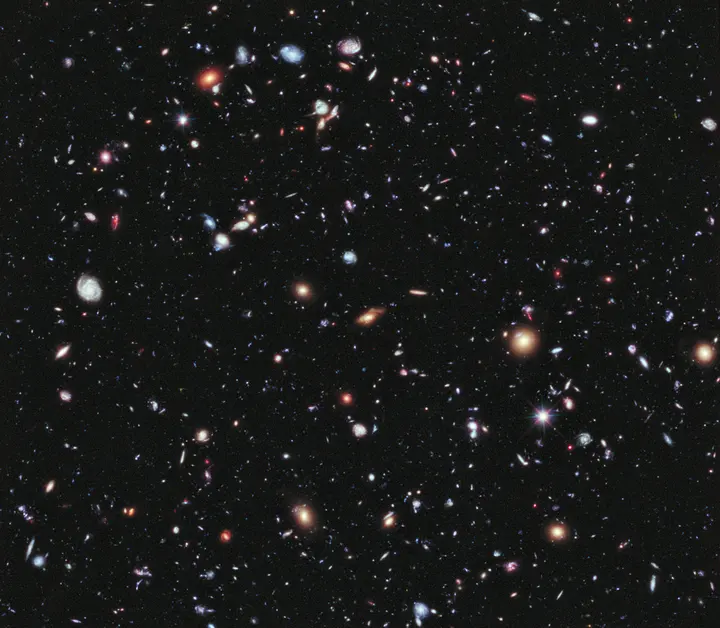
To celebrate the 25th anniversary of Hubble, a high-resolution visible and infrared image of the star-forming region 'Pillars of Creation' (Eagle Nebula) taken by WFC3 was released in January 2015. The earlier image taken in 1995 was captured by the older WFPC2 camera.
On January 8, 2019, due to a software-related issue in WFC3, the onboard computer suspended its operations, but NASA successfully reactivated it on January 17, 2019 by applying a software fix. The IR mode of WFC3 has proven to be a technological pathfinder for the James Webb Space Telescope (JWST) and remains Hubble's most capable eye to this day.