The Search for Ancient Life on Mars: The Science and Methodology of the Perseverance Rover's SuperCam Instrument
Equipped with two lasers and four spectrometers, NASA's Perseverance rover utilizes the SuperCam to analyze rocks from a distance. Explore how it functions to investigate Martian geology, hydrological history, and potential biosignatures.

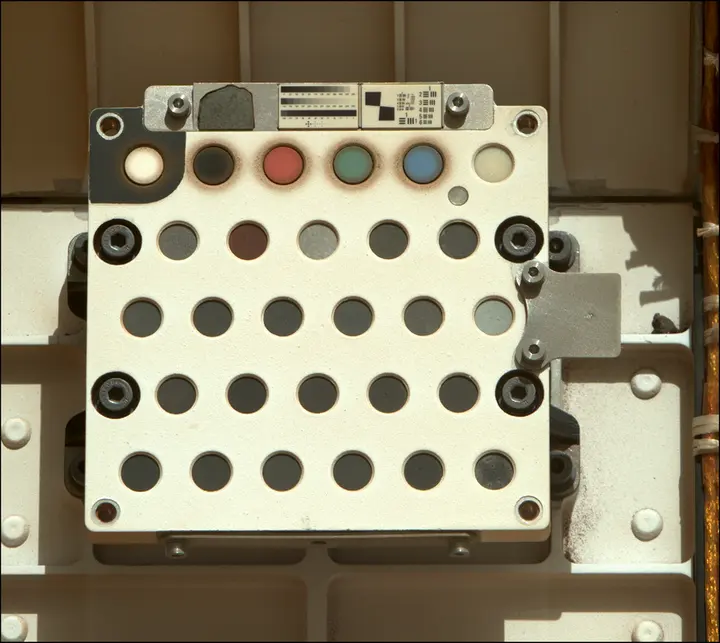
Searching for potential evidence of ancient microbial life, or biosignatures, on Mars has always been a major challenge for the scientific community. To accomplish this complex task, a special remote-sensing toolkit known as SuperCam has been deployed on NASA's Mars 2020 Perseverance rover mission. SuperCam is a multi-instrument suite that includes an optical camera, two different lasers, four spectrometers, and a microphone. With the help of these instruments, the rover can conduct in-depth chemical and mineralogical analysis of rocks and soil on the Martian surface from a distance.
Whenever the rover focuses on a rock or sample on Mars, SuperCam simultaneously collects relevant measurements using its spectrometers and lasers. Based on this collected data, scientists can directly determine the geochemistry and mineralogy of the samples. This suite of instruments includes Raman spectroscopy, time-resolved fluorescence spectroscopy (TRF), and Visible and InfraRed reflectance spectroscopy (VISIR). These spectrometers provide primary information and can directly measure organic compounds along with molecular structures.
- Laser beam emissionSuperCam fires an ultra-intense laser beam with a 1064 nm wavelength at a rock more than 7 meters away.
- Dust removal and vaporizationThe laser clears dust from the rock surface and vaporizes a tiny amount of the rock to create hot plasma.
- Light analysisThe colors of light emitted from the plasma are measured by a spectrometer, which determines the elemental composition of the rock.
Development of SuperCam and International Collaboration
SuperCam is a sophisticated and upgraded version of the ChemCam instrument that successfully operated on the previous Curiosity rover. Compared to ChemCam, SuperCam's capabilities have been significantly enhanced by adding two separate lasers and new detectors. The design of this advanced instrument is an excellent example of international scientific collaboration. It was jointly developed by the Research Institute in Astrophysics and Planetology (IRAP) at the University of Toulouse in France, the French Space Agency (CNES), Los Alamos National Laboratory, the University of Valladolid (Spain), the University of Hawaii, and Spain's University of the Basque Country and the University of Malaga.
The Principal Investigator for this entire mission is Roger Wiens of Los Alamos National Laboratory. Additionally, the SuperCam instrument works in conjunction with an autonomous targeting system named AEGIS (Autonomous Exploration for Gathering Increased Science). NASA robotics engineer Vandi Verma played a key role in developing this AEGIS program. The final assembly and testing phase of the instruments was completed in April 2018. Subsequently, its flight model was fitted into the Perseverance rover in June 2019, and this mission was launched into space on July 30, 2020.

LIBS Technique: Chemical investigation by vaporizing rocks
SuperCam uses a specialized laser-induced breakdown spectroscopy (LIBS) system to measure chemical composition. This LIBS system emits a laser beam with a wavelength of 1064 nanometers (nm). This laser is so precise that it can examine a target as small as a grain of rice from a distance of more than 7 meters from the rover. Due to this capability, the Perseverance rover can easily study rocks that are beyond the reach of its robotic arm.
| Instrument / Component | Laser wavelength | Maximum distance | Operating temperature |
|---|---|---|---|
| LIBS spectrometer | 1064 nm | More than 7 meters | Below 0 °C |
| Raman spectrometer | 532 nm (green laser) | Up to 12 meters | Below 0 °C |
| Infrared (IR) spectrometer | 1.3 to 2.6 micrometers | Near the rover mast | -100 °C to -50 °C |
| Optical camera & microphone | Visible light / sound | Surface and atmosphere | Below 0 °C |
When the 1064 nm laser beam hits a rock, it vaporizes a minute amount of the stone, creating an extremely hot plasma (plasma: ionized gas). At that same moment, SuperCam measures the colors of the light emitted from this hot plasma. The spectrum of this light reveals the composition of the fundamental elements present in the rock. Furthermore, this laser beam also has the ability to remove dust accumulated on the surface of the rock, allowing all other instruments of SuperCam to get a clear and accurate view of the target. The LIBS unit contains a total of three spectrometers, two of which handle the visible and violet parts of the VISIR spectra, while the infrared (IR) part is recorded in the rover's mast.

Raman and Infrared Spectroscopy: Analysis of the internal structure of rocks
Another important instrument in the SuperCam suite is the Raman spectrometer, which uses a green laser with a wavelength of 532 nanometers (nm). This Raman spectrometer can investigate targets at a distance of up to 12 meters from the rover. In the Raman spectroscopy technique, most of the green laser light is reflected back at the same wavelength at which it was sent. However, a very small portion of the light interacts with the molecules of the target. Due to this interaction, the wavelength of the light changes in proportion to the vibrational energy of the molecular bonds. By spectrally observing this returning Raman light, the specific minerals present in the rock can be identified.
મીટર
The infrared (IR) spectrometer provided by France is also very important for obtaining a detailed understanding of minerals. This instrument operates in the near-infrared range, which has a wavelength of 1.3 to 2.6 micrometers. This infrared spectrometer will study the clay minerals on Mars and help unravel the mystery of the history of liquid water on the planet. The types of clay minerals and their abundance provide important clues about the nature of water that existed on Mars in the past—such as whether that water was fresh or saline, whether its pH was acidic or neutral, whether it was icy or warm, and whether it existed for a long period of time. All these questions are very important to understand how conducive the Martian environment was to life in ancient times.
Optical camera, microphone, and temperature control
Apart from surface rocks, a high-capacity optical camera has also been installed in the SuperCam to understand the Martian atmosphere. This camera takes high-resolution color images of the samples under study, which helps in determining the geological structure of the surface. Furthermore, this camera studies how dust and water particles in the Martian atmosphere absorb or reflect solar radiation, which will be helpful in forecasting Martian weather in the future.
Another unique feature of the SuperCam is that a special microphone has been fitted into it to obtain the first audio recording from the surface of Mars. This microphone is the Knowles Corp EK model. Microphones of the same model were previously sent on the 1998 Mars Polar Lander and 2007 Phoenix lander missions, but both missions failed to record sound from Mars. The Perseverance mission has achieved the feat of recording the sound of Mars for the first time.
| Phase / Event | Period / Date |
|---|---|
| Final assembly and testing phase | April 2018 |
| Installation of flight model in the rover | June 2019 |
| Successful launch of the rover mission | 30 July 2020 |
To ensure that all these sensitive electronic instruments function properly in the extremely harsh and cold environment of Mars, a thermoelectric cooler system has been included. The detectors of all four SuperCam spectrometers are kept cool at temperatures slightly below 0 °C using thermoelectric coolers. Additionally, the photodiodes or detectors of the infrared (IR) spectrometer are kept continuously cooled by small thermoelectric coolers to ensure they function properly at all times between -100 °C and -50 °C. Due to this precise design and technology, SuperCam has become the most advanced instrument yet for searching for signs of ancient life on the planet Mars.


