The Hidden Engineering Behind the AI Revolution: The New Frontier of Specialized Steel and Liquid Cooling
Supercomputing required for artificial intelligence does not rely solely on chips; robust steel infrastructure and advanced liquid cooling systems have become indispensable for it.

The pace at which the scope of Artificial Intelligence (AI) is growing has created a worldwide need for extremely powerful data centers (data center: a specialized building for the storage and processing of digital information). Most people think only of processors or chips in the AI revolution, but the physical engineering required to keep these supercomputers secure and running continuously is equally complex. According to a report by the Korea Herald, an important Memorandum of Understanding (MoU) was signed between South Korea's leading steel manufacturer POSCO and the industrial conglomerate GS Group on November 11, 2026. This partnership will combine specialized steel and liquid cooling systems to reduce time and increase energy efficiency in the construction of AI data centers.
The agreement was signed in Seoul, South Korea, in the presence of POSCO President Lee Hee-geun and GS Group Vice Chairman Hong Soon-ky. Under this agreement, POSCO will implement its 'early vendor involvement' (early vendor involvement: a method of joining as a material supplier at the very beginning stage of construction) scheme. In this method, the steel manufacturer joins the construction sector from the first day of design rather than just supplying goods later. Profitability in data center development depends on two main factors: shortening the construction period and maximizing electricity and cooling efficiency. Faster construction allows operators to deploy advanced computing earlier and begin generating revenue more quickly.
Hyperscale Data Centers and the Major Energy Challenge
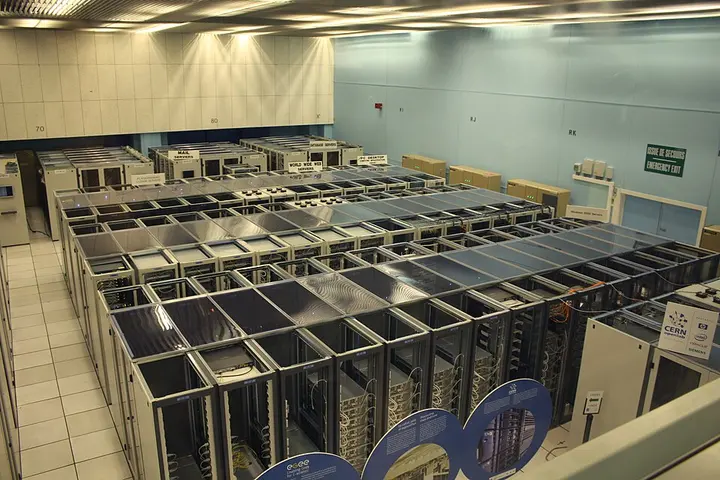
Over time, there has been a major shift in the form of data centers. In place of the traditional enterprise data centers (enterprise data center) owned by ordinary companies, hyperscale data centers (hyperscale data center: an extremely large facility consuming over 100 megawatts of electricity) are now becoming dominant. According to a report by the Lawrence Berkeley National Laboratory, the electricity consumption of enterprise data centers in the US was over 60% in 2014, which fell to below fifty percent, or just 10%, in 2023. On the other hand, the share of hyperscale and colocation (colocation: data centers that lease infrastructure facilities) centers has increased to 74%. By the end of 2024, 1,136 hyperscale data centers were operational worldwide, with 54% of that capacity in the US alone.
Running this massive complex requires a tremendous amount of electricity. According to data from the International Energy Agency (IEA), globally, data centers consumed 415 terawatt-hours (TWh) of electricity in 2024, which accounts for about 1.5% of the world's total electricity consumption. By 2030, this consumption is projected to double and reach 945 TWh. A standard data center uses as much electricity as 100,000 homes, while the new hyperscale campuses being built for AI demand 20 times more electricity than that.
Special Steel Engineering and Infrastructure
Because the computers housed in AI data centers operate in such large numbers and high density, the building's structure and materials must be extremely robust. POSCO will supply its specialized plates and steel products for these projects. This includes corrosion-resistant 'PosMAC' alloy plates, high-efficiency electrical steel, and special electromagnetic shielding materials. This special steel material prevents data-processing errors that can occur due to electromagnetic interference during data processing.
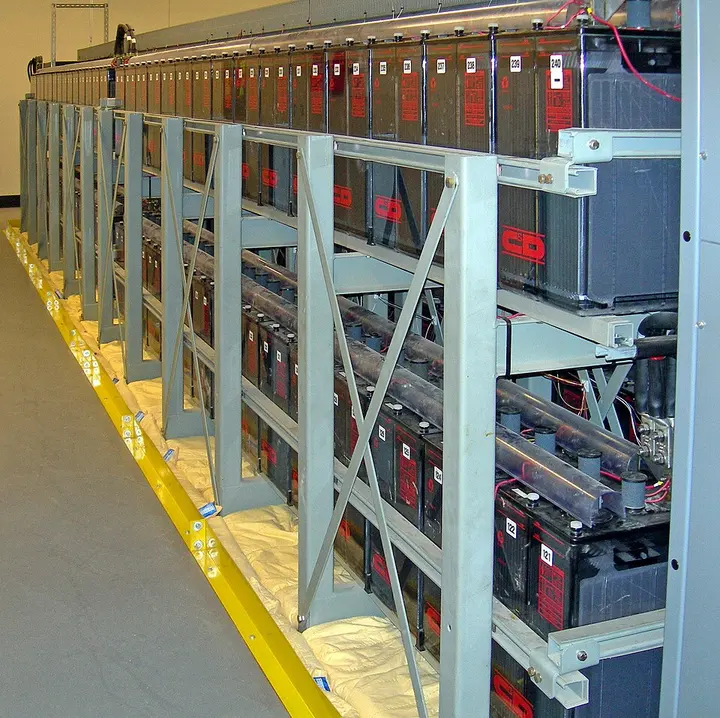
Established in South Korea in 1968, POSCO is the seventh-largest steel producer globally. Leveraging the company's steel manufacturing capacity and engineering expertise, GS Group will ensure the rapid construction of the building. GS E&C will handle the overall planning, power supply, and construction. Built on steel foundations, these sturdy racks provide safety for the servers weighing thousands of kilograms inside.
| Material / Solution | Company | Main function and benefit |
|---|---|---|
| PosMAC alloy plates | POSCO | For corrosion protection and long lifespan |
| Electromagnetic shielding | POSCO | To reduce data processing errors |
| High-efficiency electrical steel | POSCO | To increase energy efficiency and reduce costs |
| Liquid cooling system | GS Caltex | To control excessive heat of chips |
Liquid Cooling: New Liquid Technology in Place of Air
During the training of AI models, computing processors become extremely hot. Traditional air-cooling systems are no longer sufficient to dissipate this intense heat. Conventional enterprise data centers spend more than 30% of their total electricity just on maintaining cooling, whereas efficient hyperscale centers keep this cost around 7%. To solve this problem, GS Caltex will implement liquid cooling solutions.
In the liquid cooling method, a special heat-absorbing liquid is brought into contact with the server chips, or the servers are immersed in a dielectric liquid. This technology removes heat ten times faster than air. As a result, the data center's power consumption decreases and the operational stability of the servers improves.
- 1. Early design integrationSpecial steel materials are determined from the beginning under the Early Vendor Involvement Program.
- 2. Structural constructionA strong building is erected with power supply by GS E&C and shielding steel by POSCO.
- 3. Liquid cooling setupThe problem of chip heating is solved by setting up liquid cooling solutions by GS Caltex.
- 4. Global expansionAfter success in Korea, this model is applied to major AI markets like North America and Asia.

Global Opposition, Economy, and Future Direction
AI data centers are economically extremely beneficial. According to a 2021 figure in America, this sector contributed $486 billion to the GDP and supported 4.2 million jobs. However, in contrast, local opposition is also growing due to the excessive consumption of energy and water. According to a report by 'Data Center Watch', between May 2024 and March 2025, data center projects valued at $64 billion were stalled or delayed due to local opposition, out of which 6 projects were completely canceled.
After achieving domestic success in South Korea, POSCO and GS Group plan to target the AI markets of North America and Asia. This technology will be taken to the global level through the international network of GS Global. A joint working group will soon be formed by POSCO and GS Group. As the AI revolution advances, not only software companies, but also international conglomerates from the steel and energy sectors will become the main pillars of this infrastructure.