From a 1,000-Year-Old Viking King to the Digital Age: The Remarkable Evolution of Bluetooth Technology
Named after Denmark's ancient King Harald Bluetooth, the short-range wireless technology has today become the foundation of modern digital connectivity with over 4.7 billion chips worldwide.
In today's modern era, whether we want to connect wireless earphones to a smartphone, transfer files to a laptop, or play songs on a car's music system, we use 'Bluetooth' every day. But have you ever wondered why this wireless technology was named 'Bluetooth' instead of a scientific equation or a technical term? According to official reports from Aaj Tak and Wikipedia, a 1000-year-old Viking history and the unification tale of a great Scandinavian king are hidden behind this name.
A 1000-Year-Old Viking King and the Unification of Denmark
The history of the name Bluetooth is linked to the 10th-century ruler of Denmark, King Harald Bluetooth. In Old Norse, he was called 'Blåtand', which translates to Bluetooth in English. It is believed that he got this nickname because the color of his teeth was decayed or had a bluish tint. Around 965 AD, King Harald brought the small and large clans of Denmark under a single rule and politically unified Denmark and Norway by propagating Christianity there.
In the small town of Jelling, located 250 kilometers from Copenhagen, Denmark, two ancient stones of this king, namely runestones, still exist today. On the larger runestone among them, King Harald had his victory over Denmark and Norway engraved. In the year 1994, this site was declared a World Heritage Site by UNESCO. The sentiment with which King Harald worked to unite different clans is reflected in today's wireless communication.
Technology Naming and the Mythological History of the Logo
In the year 1997, a discussion on Viking history took place between Jim Kardach, an engineer at Intel, and Sven Mattisson, a Swedish engineer at Ericsson. Kardach had read about King Harald Bluetooth in a novel by Frans G. Bengtsson and a book by Gwyn Jones. He got the idea that just as King Harald united different regions, this new wireless technology would also connect computers and mobile devices of different companies together.
Initially, this name was kept only as a temporary codename. Names like 'RadioWire' or 'PAN' (Personal Area Network) were considered by the marketing team. However, the name 'PAN' was already in use in thousands of places on the internet, and the trademark checking for 'RadioWire' could not be completed on time. As a consequence, the name Bluetooth itself became official. The Bluetooth logo is also created based on the name of King Harald; in it, two characters of the old Viking script (Younger Futhark runes), 'Hagal' (ᚼ - H) and 'Bjarkan' (ᛒ - B), are bound together (bind rune) to prepare this iconic symbol. In the year 2023, on the completion of 25 years of the technology, engineer Jim Kardach reached Denmark's Jelling Museum and humorously apologized for using the king's name.
The Beginning of the Wireless Revolution: The Journey from 1989 to 1998
The technical foundation of this technology was laid in 1989 from the patents of Ericsson Mobile's Chief Technology Officer Nils Rydbeck and Johan Ullman. Nils Rydbeck assigned Tord Wingren, Jaap Haartsen, and Sven Mattisson to develop a short-link radio technology. By the year 1997, this team had a practical wireless solution ready. In that same year, IBM researcher Adalio Sánchez, collaborating with Ericsson, proposed creating an open standard to connect ThinkPad notebooks and mobile phones without wires.
In May 1998, five major companies—Ericsson, Intel, Nokia, Toshiba, and IBM—came together to establish the 'Bluetooth Special Interest Group' (Bluetooth SIG). This organization manages technology standards and patent licensing, and today it has over 35,000 member companies. In 1999, the first wireless Bluetooth headset was introduced at the COMDEX exhibition. In the first quarter of the year 2001, Ericsson launched the first commercial Bluetooth mobile phone named 'R520m', and in October 2001, IBM brought the first Bluetooth integrated laptop named 'ThinkPad A30' to the market.
How Does Bluetooth Work? The Mathematics of Frequency and Piconet
Bluetooth technology operates on the globally free 2.4 GHz ISM band (ISM band: 2.402 GHz to 2.480 GHz). It uses the Frequency-Hopping Spread Spectrum (FHSS) technique for wireless transmission. In this, the transmitted data is divided into small packets, and the signal changes frequency 1600 times per second across 79 different channels having a width of 1 MHz (adaptive frequency-hopping). This helps avoid interference from other wireless signals or Wi-Fi.
- 1. Frequency Hopping (FHSS)Data is divided into small packets and changes frequency 1600 times per second across 79 channels of the 2.4 GHz ISM band.
- 2. Piconet Master ConnectionA master device determines the timing clock (312.5 μs) and connects with a maximum of 7 slave devices.
- 3. Scatternet NetworkingDifferent piconets combine to form a scatternet in which a single device can play both master and slave roles simultaneously.
Bluetooth creates ad-hoc networks called piconets based on a master/slave architecture. In a piconet, one master device can connect with a maximum of 7 slave devices simultaneously. The master device controls the data slots with a clock tick of every 312.5 microseconds (μs). Two or more piconets can also connect with each other to form a scatternet, where a device can play the role of a master in one piconet and a slave in another.
Technical Statistics, Data Rates and Power Consumption
Most standard Bluetooth devices operate on an extremely low power of about 2.5 milliwatts (mW), due to which their typical range is up to 10 meters (33 feet). The initial Bluetooth Basic Rate (BR) provided a speed of 1 Mbit/s through GFSK modulation. Subsequently, with the advent of Bluetooth 2.0+EDR (Enhanced Data Rate), the speed increased to reach from 2 Mbit/s to 3 Mbit/s via π/4-DQPSK and 8-DPSK modulations. The HDR extension developed by Apple supports data rates up to 4 Mbit/s (HDR4) and 8 Mbit/s (HDR8) on 4 MHz channels.
Mbit/s

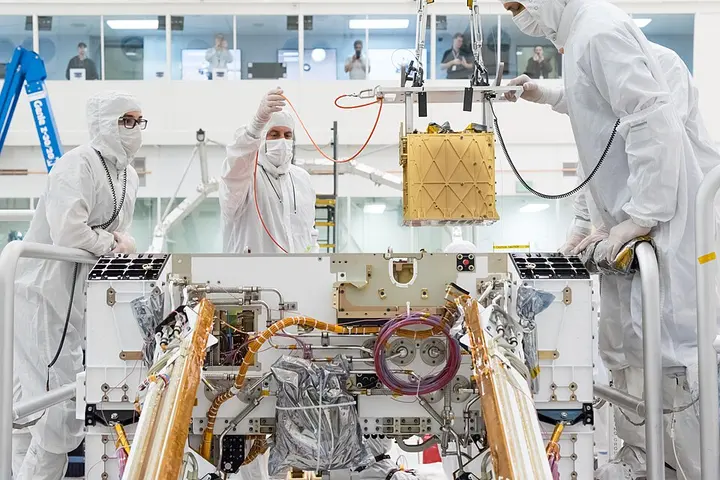
Bluetooth Low Energy (BLE), introduced in the Bluetooth 4.0 specification, uses 40 channels at a 2 MHz spacing, which is ideal for Internet of Things (IoT) devices like smart watches and security sensors with very low power consumption. According to official statistics, in a single year (in 2021), more than 4.7 billion Bluetooth IC chips were shipped worldwide. To test the capability of the Internet of Things, Bluetooth was successfully tested in space for the first time in 2024.
| Protocol Mode | Frequency Channels | Maximum Speed | Primary Use |
|---|---|---|---|
| Basic Rate (BR) | 79 channels (1 MHz) | 1 Mbit/s | Voice headset and early data |
| Enhanced Data Rate (EDR) | 79 channels (1 MHz) | 2 to 3 Mbit/s | High quality audio and file transfer |
| Bluetooth Low Energy (BLE) | 40 channels (2 MHz) | Low power (2.5 mW) | IoT, smart watch and sensors |
Modern Devices, India and the Wireless Future
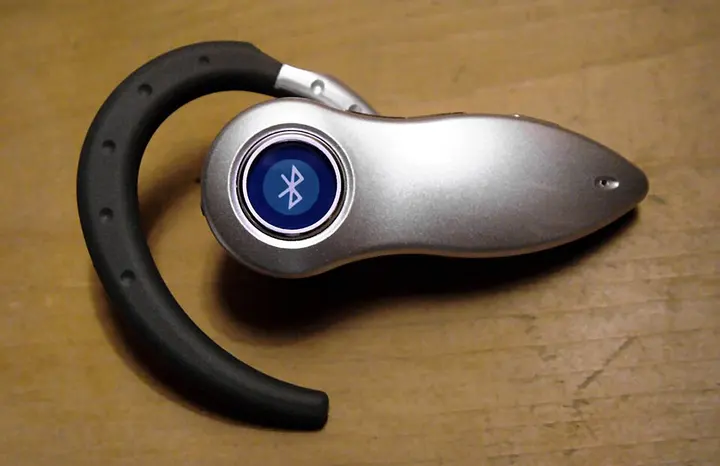
Today, Bluetooth has become indispensable in the field of smartphones and audio technology. In India too, the reach of smart speakers, wireless headsets, fitness bands and smart home devices is growing rapidly. Replacing wired headphones, Bluetooth speakers and earbuds have become a part of people's daily lifestyle.

The legacy of King Harald Bluetooth, who united the various tribes of northern Europe a thousand years ago, is today connecting billions of digital devices across the world with each other through invisible waves in the form of technology.