The AI Chip Crisis and Skyrocketing Memory Demand: Why Are Smartphones Continuously Becoming More Expensive?
The explosion of artificial intelligence has drastically increased the demand for high-bandwidth memory in AI data centers, driving up the cost of chips used in standard smartphones and placing a greater financial burden on Indian consumers.

In today's modern era, the smartphone has become an inseparable part of our daily routine. From online education to digital banking, shopping, and entertainment, we are dependent on smartphones for all our tasks. However, for some time now, buying a new smartphone has been weighing heavily on the average consumer's pocket. The same smartphones that were once available at reasonable prices with average features now require significantly more money to acquire. The most concerning aspect is that this price increase is not limited to expensive and premium smartphones, but has also widely affected consumers purchasing budget and mid-range phones.
According to a report by Amar Ujala and recent global research data, India has recorded the highest increase in smartphone prices so far in 2026 compared to other countries and markets in the world. The average retail price of smartphones in India has increased by as much as 21%. This increase has been recorded at 19% in the Asia-Pacific region, 18% in the Middle East and Africa, and 16% in Latin America. These figures clearly show that buying a new handset is proving to be the most expensive for Indian consumers on a global scale.
What happened and why is this a serious matter?
The main reason behind this sharp and continuous rise in smartphone prices is the rapid expansion of Artificial Intelligence (AI). Major global technology companies are building AI servers and massive data centers. To train these AI systems and perform complex calculations, there has been a tremendous surge in demand for memory chips such as ultra-fast High-Bandwidth Memory (HBM) and Dynamic Random-Access Memory (DRAM).
Leading global semiconductor companies that manufacture memory chips are now shifting most of their production toward these higher-profit chips used in AI servers. As a result, the production of standard memory chips used in smartphones has declined, creating a shortage in the market. Due to this shortage, the cost of components for mobile manufacturers has increased, and the final burden of this is falling on the consumers.
- Expansion of AI data centersTech companies increased demand for HBM and DRAM memory chips to build massive data centers.
- Changing production prioritiesChip manufacturers increased production of higher-profit AI server chips.
- Shortage of smartphone chipsSupply of memory chips for regular smartphones decreased and their prices increased sharply.
- Surge in production costsThe share of memory in the total cost of phones increased from 12% to 40-45%.
- Price increase on consumersCompanies increased prices, making cheap and budget smartphones the most expensive.
The foundation of chip manufacturing and the complexity of technology
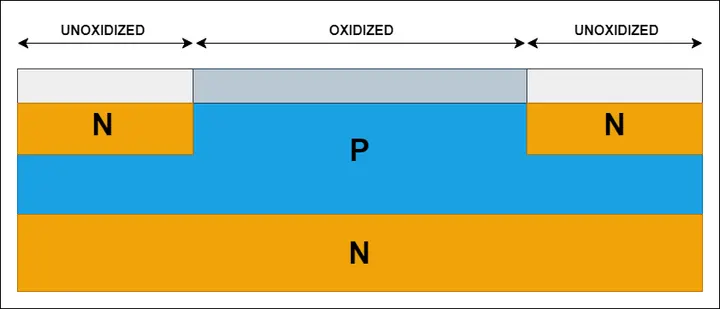
The heart of any mobile or computer is its semiconductor chip. In semiconductor materials like silicon, the flow of electric current is controlled by adding impurities through a process called doping. When phosphorus is added to silicon, an n-type semiconductor is formed, which increases free electrons, and by adding boron, a p-type semiconductor is formed, in which positive holes are created. Processors and memory chips are manufactured by etching billions of transistors onto a single silicon chip.
AI research, which began in 1956, saw a major surge following the advent of the Graphics Processing Unit (GPU) and transformer architecture. Large Language Models (LLMs) are trained on text from billions of websites. The hardware power and extremely high memory bandwidth required to run these massive models are what are currently drawing the entire semiconductor industry's attention.
| Period | Share of memory in production cost (%) |
|---|---|
| Before (Normal time) | 12% |
| Current (2026 crisis) | 40% to 45% |
The mathematics of production costs and the impact on the Indian market
Before the chip crisis, the share of memory chips in the total production cost of a smartphone was only about 12%. However, in the current situation, it is estimated that this share could rise to between 40% and 45%. When a single component of the production cost becomes this expensive, it becomes impossible for smartphone manufacturing companies to maintain previous price points.
The worst impact of this increase has been on the budget smartphone segment. Prices for smartphones priced under ₹10,000 have seen a major average increase of 32%. The main reason for this is that the percentage share of the memory chip in the total cost of cheaper phones is comparatively higher. Due to rising prices, a significant decline in the demand for cheap phones has been recorded. In the first half of 2026, sales of phones priced under ₹10,000 fell by up to 65% compared to the previous year.
Similarly, a 20% decline has been observed in the sales of mid-range smartphones priced between ₹10,000 and ₹15,000. On the other hand, sales of premium flagship smartphones priced above ₹20,000 have continued to grow. This is because, since the starting price of premium phones is already high, the impact of component price hikes on their percentage is lower. Additionally, because facilities like exchange offers and no-cost EMI are available to consumers, demand in the premium segment has remained steady.

Import costs and the future outlook
Although smartphones are assembled on a large scale in India, their critical components such as processors, displays, chipsets, and camera sensors are imported from other countries. Fluctuations in the value of the Indian rupee against the US dollar and rising import costs significantly increase the local production cost of phones.
In this era of the AI revolution, until there is stability in the demand for AI chips and memory for data centers, it is unlikely that the prices of affordable smartphones will normalize. Smartphone manufacturers now face the challenge of how to make affordable smartphones available for common and middle-class consumers amidst rising memory costs.