The Breath of AI Supercomputers: The Grand Architecture of Liquid-Cooled Data Centers and the Energy Revolution
With the rapid advancement of artificial intelligence and the surging global demand for powerful data centers, liquid-based cooling systems are becoming indispensable instead of air to keep servers cool.

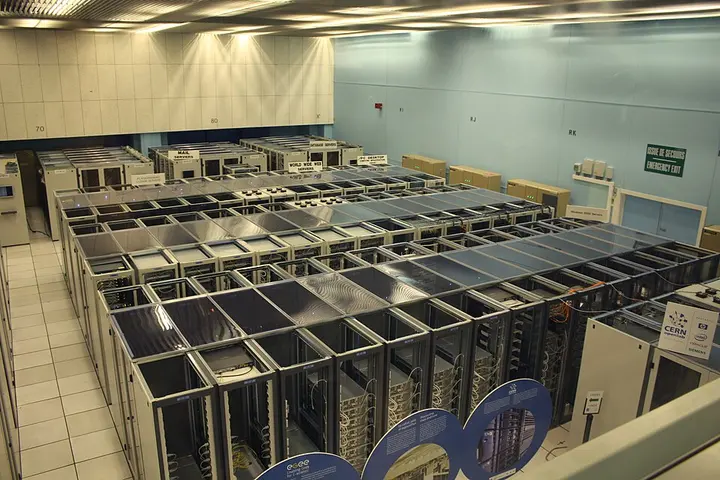
In today's modern era, when we ask a question to ChatGPT or another artificial intelligence model, the answer received in a fraction of a second is processed in a massive machine house located thousands of miles away. These locations are called data centers, which provide the physical infrastructure for the storage, management, and processing of digital information. Typically, thousands of servers—computers performing computing processing—and high-speed networking cables are arranged in these centers. The largest data centers span up to 1,00,00,000 square feet (approximately 9,30,000 square meters), collectively consuming as much electricity as entire cities.
According to a historical report by IBM, the history of data centers began in the 1940s with the United States military system ENIAC (Electrical Numerical Integrator and Computer). From then until today's era of artificial intelligence supercomputers, this technology has undergone a magnificent transformation. Graphics Processing Units (GPUs) used for AI processing generate excessive heat. Traditional air cooling—a method of providing coolness by blowing air through fans—is now failing to remove this ultra-dense heat. As a solution to this problem, liquid cooling—a technology that removes heat through the circulation of liquid—is changing the future of data centers.

To understand how this revolution works, it is necessary to know the rules of server technology and thermodynamics. Liquid cooling technology is based on the thermal conductivity of liquids. Water or special dielectric fluids—liquids that do not conduct electricity—can absorb heat much more efficiently than air. In the computing sector, this technique is primarily used in two ways: indirect or cold plate cooling, and direct or immersion cooling.
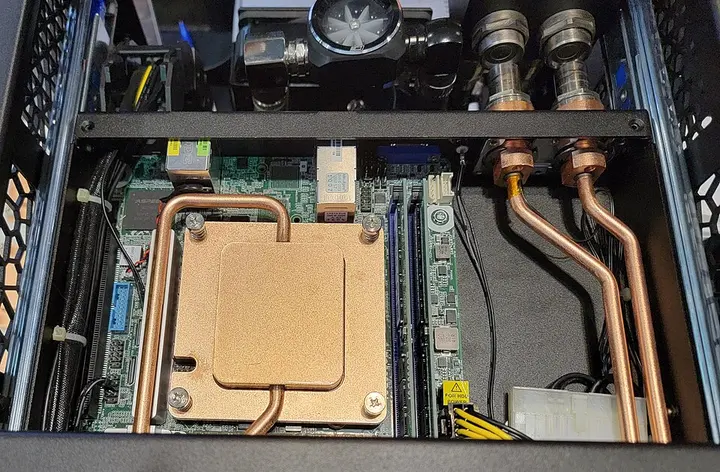
In the cold plate cooling method, a small block of copper is placed on top of the processor or chipset through which water or coolant constantly flows. This liquid absorbs the heat and takes it through tubes to a heat exchanger—a device that exchanges heat—located outside the server. On the other hand, in immersion cooling, entire server components are submerged in a tank filled with a special non-electrically conductive liquid. Because the liquid comes into direct contact with the hot components, a very high rate of heat removal is achieved. With this method, fan noise becomes zero and energy waste is drastically reduced.
| Type | Capacity / Scale | Main usage | Cooling power share |
|---|---|---|---|
| Hyperscale | Over 100 MW (1,136 centers) | Cloud and AI training | Only ~7% electricity for cooling |
| Colocation | Massive capacity (4,799 centers) | Rented space for multiple companies | High aggregate efficiency |
| Enterprise | Small to medium scale | Company internal data | Over 30% electricity for cooling |
| Edge | 1 to 10 MW | 5G, IoT and low latency | Local decentralized work |
Based on ownership, scale, and use, data centers are primarily divided into four categories. The first category is the enterprise data center, which is operated by a single company for its own internal needs. In 2014, these centers accounted for over 60% of total U.S. server energy consumption, which dropped to just about 10% by 2023. In enterprise centers, over 30% of the total electricity is consumed for cooling, which makes their efficiency considered low.
The second important category is the colocation data center. In these centers, the building, power, and cooling systems belong to a single owner, while various companies operate by renting server racks there. According to 2024 data, approximately 22% of the world's data center capacity is held by colocation centers, and 4,799 such colocation centers are operational worldwide. Global companies like Equinix, Switch, COPT, and Digital Realty are at the forefront of this sector.
The third and fastest-growing category is the hyperscale data center. These are ultra-large centers with a power capacity of over 100 megawatts (MW), operated by cloud and AI companies such as Amazon Web Services (AWS), Microsoft Azure, and Google Cloud. By the end of 2024, there were 1,136 operational hyperscale data centers worldwide, a figure that has doubled in the last five years. Out of the global hyperscale capacity, 54% is in the United States alone, and the top three companies (AWS, Azure, Google) hold a 59% share of the total hyperscale capacity.
The fourth type is the edge data center, which consists of small and decentralized units ranging from 1 to 10 megawatts. These centers are established close to users (such as near cell towers or industrial areas) so that 5G networks, autonomous vehicles, and the Internet of Things (IoT) can process data in a fraction of a second.
- Heat generationServer GPU and CPU chips generate massive amounts of heat during AI processing.
- Absorption by cold plateLiquid passing through copper cold plate placed on chip instantly absorbs heat.
- Fluid circulationHeated coolant liquid travels out of server to heat exchanger via hose tube.
- Cooling and recyclingHeat is expelled from liquid via chiller or cooling tower and sent back to server.
According to the 2024 U.S. Data Center Energy Usage Report by the Lawrence Berkeley National Laboratory, 74% of America's computer servers were deployed in hyperscale and colocation centers in 2023, a proportion estimated to reach 85% by 2028. Hyperscale centers are extremely efficient in terms of cooling; only about 7% of the total electricity is consumed for cooling there.
Global energy consumption statistics are extremely staggering. According to a report by the International Energy Agency (IEA), the total electricity consumption of datacenters worldwide in 2024 was recorded at approximately 415 terawatt-hours (TWh), which accounts for about 1.5% of the world's total electricity consumption. Over the last five years, this consumption has grown at a rate of 12% per year. The IEA estimates that by 2030, this consumption could double to reach 945 TWh, maintaining an annual growth rate of 15%. In 2024, the total energy consumption of all types of datacenters was 620 TWh, of which 80% of the consumption was concentrated solely in the U.S., China, and the United Kingdom.
A typical datacenter consumes as much electricity as 100,000 homes, but the next-generation hyperscale campuses currently being built for AI training are demanding 20 times more electricity, that is, over 3,000 megawatts of power. According to Gartner research, worldwide spending on datacenter infrastructure reached $200 billion in 2021, representing a 6% increase compared to 2020 despite the COVID-19 pandemic.
Datacenters are proving to be major engines of economic growth. According to PwC's economic impact analysis, in 2021 the datacenter industry contributed $486 billion to the U.S. GDP and supported over 4.2 million jobs. Every 1 direct job created in a datacenter generates another 6 indirect jobs in the economy. However, facing this, severe opposition is also being witnessed at the local level due to environmental and energy pressures.
According to a Datacenter Watch report, during the period from May 2024 to March 2025, a total of $64 billion worth of datacenter projects were stalled or delayed due to opposition from local residents and environmentalists, with 6 projects completely cancelled and 10 projects delayed. In Europe, the U.S., and South America, citizens' concerns are growing regarding excessive water consumption and rising electricity prices.
For a developing country like India, where the usage of digital services and AI is growing rapidly, liquid-cooled hyperscale datacenters will become the backbone of the future. Traditional air cooling has now reached its limits for increasing the processing capacity of supercomputers. Adopting liquid cooling will increase the power efficiency of datacenters and help reduce the environmental footprint (carbon footprint). In the coming decade, new energy sources and advanced liquid cooling technologies alone will keep the artificial intelligence revolution continuously alive.