The New Architects of Financial Revolution: The Era of AI Agents and Autonomous Wealth Management
Artificial Intelligence is no longer merely a tool for answering queries; it is evolving into an autonomous agent capable of making financial decisions and managing investments on your behalf.
At the 2026 World Digital Assets Forum, leading blockchain expert Don Tapscott made a highly significant prediction. In his view, we are now entering an economy where Artificial Intelligence (AI) agents will not be limited to providing information, but will manage assets, conduct transactions, and even make complex financial decisions on behalf of individuals. He termed this transition the 'agentic economy.' In this system, reliance on financial intermediaries will decrease, and the convergence of blockchain and AI will fundamentally transform the way assets are managed.
Agentic AI is significantly different from traditional AI tools. The chatbots we have seen until now only performed tasks like answering questions or searching for specific information. In comparison, an AI agent is a program that can make decisions independently, set goals, and complete multi-step tasks without human intervention. According to Wikipedia reports, these agents possess the ability to use external tools and interact with their environment. They do not merely follow instructions; they plan for themselves to achieve results.
$ Trillion
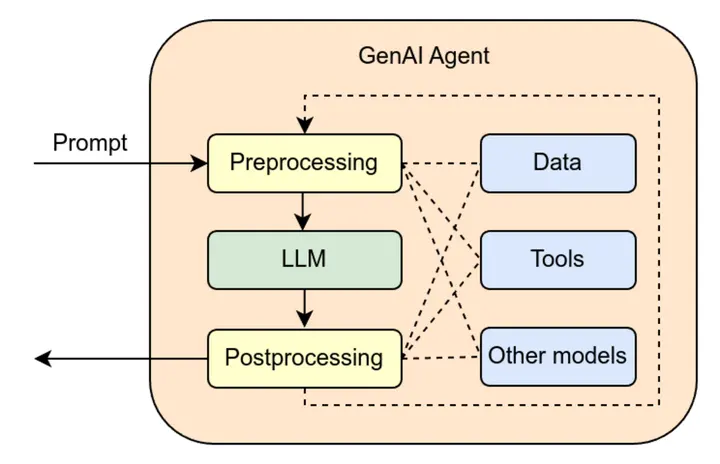
To understand the efficiency of AI agents, one can compare them to the example of self-driving cars. According to an analysis by the Financial Times, most current AI agents possess level 2 or level 3 autonomy, while level 5 is a purely theoretical stage where no human involvement is required. At the core of these agents are Large Language Models (LLMs), which provide them with the power to think and reason. To operationalize these models, there is a software framework around them called an 'agent harness' or 'agent scaffold.' This harness grants the agent permission to read files, access databases, and operate web browsers.
| Feature | Traditional AI (Tool-like) | Agentic AI (Agentic) |
|---|---|---|
| Decision-making ability | Limited (only answers questions) | Independent and goal-oriented |
| Working method | Single step (single task) | Multi-step (multi-stage tasks) |
| Use of external tools | Negligible | Web browser, API and database |
| Autonomy level | Level 1 | Level 2 to Level 4 |
The AI agent architecture proposed by Ken Huang includes seven layers. At the first level are foundation models, which are trained on massive datasets. The second level consists of data operations, and the third level consists of agent frameworks that manage the agents. The upper layers include security, compliance, and evaluation, which ensure that the agent operates within defined boundaries. This complex structure enables the agent to transcend being merely a program and play a role akin to a responsible financial advisor.
- Goal settingThe agent understands the complex goal provided by the user and breaks it down into smaller parts.
- Planning and reasoningUsing Large Language Models, the agent determines the best strategy to complete the task.
- Use of toolsThrough the agent harness, it connects with external tools like the internet, financial software, or databases.
- Execution and refinementIt completes the transaction and makes necessary improvements to its process based on the result.
The use of these agents in the financial sector could prove to be revolutionary. Don Tapscott stated that your personal agent will serve as your financial planner, doctor, and lawyer in the future. He predicted that the intelligence quotient (IQ) of these agents could reach 1,000 within the next decade. Blockchain-based smart contracts will play a crucial role in this process, as they automatically execute transactions as soon as pre-defined conditions are met. This will reduce transaction costs and minimize delays.
The engine driving this entire technology is Nvidia's graphics processing units (GPUs). In 2025, Nvidia made history by surpassing a market capitalization of 4 trillion and 5 trillion dollars. Under the leadership of CEO Jensen Huang, Nvidia has developed chips and software platforms (such as CUDA) that are indispensable for the training and operation of AI models. Today, Nvidia's technology is used in over 75% of the world's supercomputers, which demonstrates how firmly the future of agentic AI is built on a solid foundation.
However, giving AI agents free rein in financial transactions can also be risky. Tapscott warned that agents cannot act arbitrarily unless they are accountable to humans. For this, he emphasized strict requirements such as verifiable digital identity and Know-Your-Customer (KYC). If an error occurs in an autonomous transaction, customers must have the authority to seek justice and reverse the transaction. Regulatory oversight and transparency are essential conditions for the success of this new system.

Globally, many government agencies are now turning toward agentic AI. Departments such as the Internal Revenue Service (IRS) in the US and Staffordshire Police in Britain have announced the use of AI agents starting in 2026. Companies like Microsoft, Apple, and Google are also integrating agents into their operating systems, which will be able to read files in the background and perform tasks on behalf of the user. However, some banks and applications in China have banned such agents due to security and privacy concerns.
For countries like India and South Korea, this technology brings a new opportunity. Tapscott advised South Korea that instead of relying solely on American tech companies, they should build their own independent AI infrastructure. The same applies to India. The combination of AI, blockchain, robotics, and quantum technology can create a new economic model that can multiply the productivity of the common man.

In conclusion, AI agents are not merely a technical upgrade, but a fundamental shift in the way financial transactions are conducted. When you have an agent that monitors the market around the clock and makes investment decisions based on your needs, it will become easier even for the average investor to participate in the stock market and other financial instruments. However, to address the risks that come with this convenience, a robust legal framework and human oversight will be absolutely essential.