A Drug Factory Inside Cancer Cells: A New Technique to Destroy Tumors Using Toxic Gas
Japanese scientists have discovered a method to manufacture toxic drugs inside cancer cells by utilizing the carbon monoxide emitted by the cells themselves.

The biggest challenge in cancer treatment is to destroy only the cancer cells without harming healthy cells. In conventional chemotherapy, medication spreads throughout the entire body, causing patients to face severe side effects. But now, scientists at Japan's RIKEN Pioneering Research Institute (PRI) have developed a revolutionary method. In this method, using the toxic gas that cancer cells themselves produce, anti-cancer drugs are manufactured right inside them. This research has been published in the journal Nature Communications and could open a new chapter in cancer treatment.
Cancer is a group of diseases in which cells begin to grow uncontrollably and form tumors in the body. Millions of people worldwide fall victim to this disease every year. According to 2019 statistics, 23.6 million new cancer cases were recorded worldwide and 10 million people died. A unique characteristic of cancer cells is that they behave differently from normal cells and overproduce certain specific chemicals. These researchers have targeted carbon monoxide produced by cancer cells.
Carbon monoxide (CO) is generally known as a toxic gas emitted from vehicular exhaust, which is colorless and odorless. But it is also produced naturally in the human body. Especially in cancer cells, the level of this gas is exceptionally high. Scientists thought that if this gas were used as a 'biological marker', cancer cells could be identified and the reaction initiated right there. For this purpose, they used a special type of metal catalyst, i.e., a catalyst.
- DeliveryPalladium catalyst is packed in an albumin protein shell and introduced into the body.
- ProtectionThe albumin shell protects the catalyst from inhibitors like glutathione in the blood.
- EntryThis complex enters cancer cells, where the concentration of carbon monoxide is higher.
- Drug productionThe catalyst reacts with carbon monoxide to produce toxic phenanthridinone drug inside the cell itself.
The main role in this process is played by a compound called 'palladacycle'. Palladacycle is a metal-containing compound that can react with carbon monoxide to produce a substance called 'phenanthridinone'. Phenanthridinone is a toxic organic molecule used in anti-cancer drugs. The scientists' idea was that if the palladacycle were delivered to the cancer cells, the carbon monoxide present there would react with it, generating the toxic drug inside the cell itself, which would destroy that cell.
However, there was a major obstacle in this path. When the palladacycle is introduced directly into cells, a substance called 'glutathione' present within the cells immediately deactivates the palladium catalyst. If the catalyst does not function, drug synthesis cannot take place. To solve this problem, Katsunori Tanaka and his team used a protein named 'albumin'. Albumin is a common protein found in blood. The researchers safely packed the palladacycle within a protective shield of albumin. This shield protects the catalyst from inhibitors like glutathione and delivers it safely to the cancer cells.
- Packing of palladacyclePalladacycle is safely packed in an albumin protein shell.
- Reaching the cellsThis shell protects the catalyst from glutathione and delivers it to the cancer cells.
- Chemical reactionCarbon monoxide present in cancer cells reacts with the catalyst.
- Drug formationA toxic drug like phenanthridinone is formed inside the cell which destroys the cancer cell.

The researchers tested this method in the laboratory on human liver, cervical, breast, and lung cancer cells. They kept these cells with a mixture of albumin and palladacycle for 48 hours. The results were astounding. The phenanthridinone drug was produced inside the cancer cells, whereas no such process was observed in normal healthy cells. This meant that the albumin shield had protected the catalyst and successfully synthesized the drug by utilizing the carbon monoxide present within the cancer cells.
An important question was whether this process could also take place in the blood. If this reaction were to occur with the carbon monoxide present in the blood, it could damage blood cells. However, experiments revealed that this toxic drug is not formed in the blood. The reason for this is that the majority of the carbon monoxide in the blood is bound to 'hemoglobin'. Because it is bound to hemoglobin, this gas is not available for the chemical reaction. This discovery enhances the safety of this method.
| Property | Value |
|---|---|
| Molar mass | 28.0 |
| Bond length | 112.8 pm |
| Bond energy | 1072 kJ/mol |
| Boiling point | 82 K |
| Melting point | 68 K |
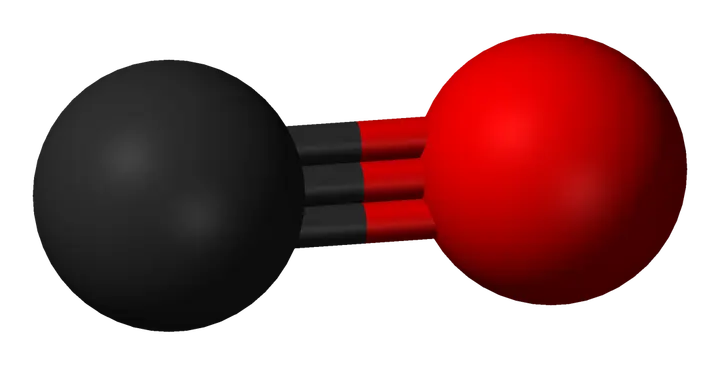
The molecular structure of carbon monoxide is also very interesting. It features a triple bond between carbon and oxygen. This bond is so strong that it requires an energy of 1072 kilojoules per mole to break, making it one of the strongest bonds known in chemistry. The bond length of this molecule is merely 112.8 picometers. Despite being such a small and strong molecule, it can be engaged in reactions with the help of catalysts like palladium.
| Property | Measurement / Information |
|---|---|
| Molar mass | 28.0 |
| Boiling point | 82 Kelvin (K) |
| Melting point | 68 Kelvin (K) |
| Bond-dissociation energy | 1072 kilojoules per mole |
| Bond length | 112.8 picometers |
Examining the causes of cancer, approximately 90-95% of cases are due to environmental and lifestyle factors. Tobacco use accounts for 25-30%, and poor diet as well as obesity are responsible for 30-35% of cancer deaths. If successful, this new technique could prove to be highly effective in fighting various types of cancer caused by lifestyle or other factors. It could particularly prove to be a boon for common types such as breast cancer and colorectal cancer.
This research is a major step forward in the field of 'in vivo synthetic chemistry'. In vivo refers to processes taking place inside a living body. According to Tanaka, this strategy involves manufacturing drugs at the site of the disease by utilizing substances that are either naturally present in the body or produced due to the disease. This is somewhat like a 'Trojan Horse' tactic, where the enemy's (cancer's) own resources are used against it.
Currently, this research has been conducted only on cultured cells. The next step will be animal experiments. If this method proves safe and effective in animal tests as well, human clinical trials will be initiated in the future. The biggest advantage of this technique will be that patients can be spared the terrifying side effects of chemotherapy, such as hair loss, extreme fatigue, and nausea. This is a promising ray of hope towards making cancer treatment more precise, safer, and effective.