Major Hacking Threat to Android Smartphones: CERT-In Warning and a Complete Guide to Staying Safe
India's cyber security agency has issued a serious warning for crores of Android users, stating that hackers can exploit operating system vulnerabilities to empty bank accounts.

The Indian Computer Emergency Response Team (CERT-In), the Government of India's premier cybersecurity agency, has issued a highly critical security alert for millions of Android smartphone users across the country. According to this warning, certain vulnerabilities have been discovered in the Android operating system that cybercriminals can exploit to gain complete control over your phone. The operating system is the core software of a smartphone that acts as a bridge between hardware and applications. If there are flaws in this foundational software itself, all information stored on the phone can be put at risk.
According to a report by Aaj Tak, CERT-In issued a critical vulnerability notice (CIVN-2026-0536) on November 4, 2026. A vulnerability refers to a flaw in a software's design or its working mechanism that can be taken advantage of. The agency has stated that smartphones running Android 14, 15, 16, and the latest Android 17 are under this threat. These flaws have been found in Android's framework and system components, which handle the phone's fundamental operations. Hackers can use these flaws to deceive users, trick them into clicking on fake links, or secretly download malware, ultimately leading to the risk of bank accounts being emptied.
To understand Android's journey and its security architecture, it is necessary to look at its history. According to Wikipedia data, Android Inc. was founded in 2003 by Andy Rubin and his associates. Initially, they wanted to create an operating system for digital cameras, but later they shifted their focus to smartphones. In 2005, Google acquired the company for approximately $50 million. In 2008, the first commercial Android phone, the HTC Dream, was launched. Today, Android is the world's most popular operating system, with over 4 billion users and a 45% share of the global market.
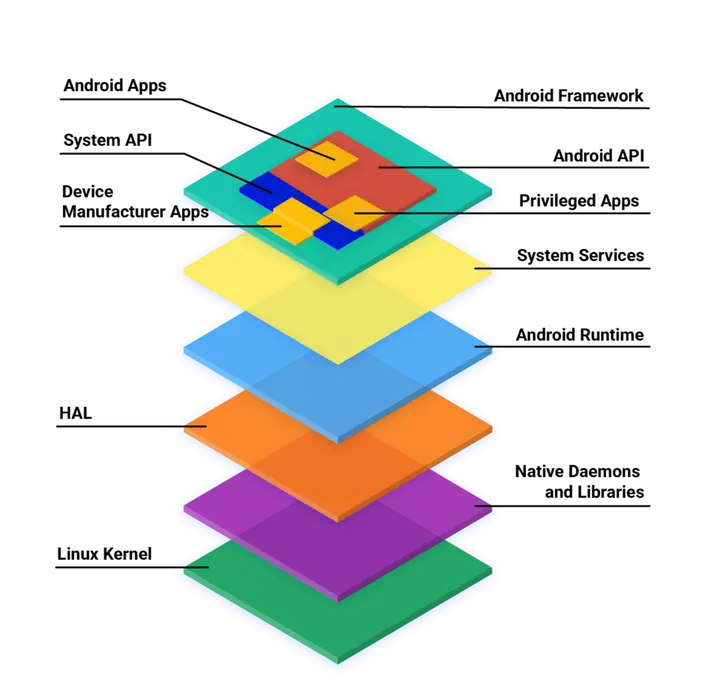
Android's very popularity makes it a primary target for hackers. Android is based on the Android Open Source Project (AOSP), meaning its source code can be viewed and modified by anyone. However, most phones run on Google's proprietary version, which includes Google Play Services. Android's architecture, meaning its internal structure, is divided into multiple layers. At the very bottom is the Linux kernel, which interfaces directly with the hardware. Above it are the libraries and runtime, and at the very top is the application framework. According to CERT-In's warning, the flaws have arisen precisely at this framework layer.
- Open settingsGo to the main Settings menu of your smartphone.
- Find system updateClick on the 'System' or 'Software Update' section.
- Check for updatesPress the 'Check for update' button so the phone can find new security patches.
- Download and installIf an update is available, download it and install it by restarting the phone.
In the field of cybersecurity, a 'threat actor' is an individual or organization that exploits security vulnerabilities to cause harm. These attackers use various types of malware. Malware is a program written specifically to damage computers or phones. It includes viruses, worms, and Trojan horses. Trojan horses are programs that appear useful on the surface but are harmful underneath. Once installed, they can create a backdoor in the phone, giving hackers remote access to it.
| Type of threat | How does it work? | Main impact |
|---|---|---|
| Malware | Harmful software code | Data theft or system corruption |
| Ransomware | Encrypting (locking) files | Demand for money to return data |
| Spyware | Secretly gathering information | Theft of passwords and banking details |
| Phishing | Sending fake links or messages | Tricking the user to get login details |
Another dangerous type is spyware, which steals information without the user's knowledge. This includes keyloggers, which record everything you type on the keyboard. In this way, hackers can obtain your usernames, passwords, and credit card numbers. Additionally, ransomware is a major threat, where hackers lock your files and demand money (especially in cryptocurrency) to unlock them. According to CERT-In's advisory, current Android vulnerabilities can facilitate these types of attacks.

Recognizing this threat, Google shared details of these vulnerabilities in the Android Security Bulletin on November 2, 2026, and also released security patches to fix them. A security patch is a small piece of software that works to 'patch' prior vulnerabilities. If a system update is available on your phone, it means the company has sent a solution to eliminate these security flaws. Users should install this update without delay.
- Discovery of vulnerabilityHackers find security flaws (vulnerabilities) in the software.
- Creating an exploitA special program or link is prepared to exploit that flaw.
- Reaching the userThis link is delivered to the user's phone via message, email, or a fake app.
- Gaining controlOnce clicked, the malware installs on the phone and starts sending data to the hacker.
This warning is even more crucial for Indian users because the usage of Android phones is very high in India. Many users use phones running older versions or ignore security updates. CERT-In has clarified that if you are using Android 14 or a higher version, you should immediately go to settings and check for a 'System Update'. In this process, the phone downloads new software from the internet and strengthens its security shield by restarting.

Cyberattacks are not limited to malware alone. 'Man-in-the-middle' attacks are those in which a hacker intercepts or modifies the communication between two parties. For example, if you are using an unsecured public Wi-Fi, a hacker can view the data between your phone and your bank's website. This is why it is always advised to use a secure network and not click on unknown links. New layers of security are added with every new version of Android, but hackers also constantly keep finding new vulnerabilities.
In the history of Android, there was a tradition of naming versions after sweets, such as Cupcake, Donut, and KitKat. However, starting with Android 10, Google discontinued this tradition and began using numbers only. The reason behind this change was to make it more globally inclusive. Today, as we have reached Android 17, security is becoming the biggest challenge. Organizations like CERT-In continuously monitor and work to keep users aware, but the ultimate security is in the user's own hands. Keeping software updated is not just for getting new features, but an imperative to keep your digital life secure.