A Stunning View of Earth's Atmosphere and a Journey Through Astronomy from the Space Station
An analysis of lightning flashing through clouds and the deep mysteries of space science from the International Space Station.

For centuries, humankind has gazed up at the night sky, attempting to unravel the secrets of the stars and the cosmos. Yet when viewed from this very sky back toward Earth, our own atmosphere appears as a wondrous and mysterious realm. Recently, from the International Space Station (ISS), Indian astronaut and Indian Air Force Group Captain Shubhanshu Shukla released a distinctive video capturing a natural fireworks display taking place within Earth's atmosphere. These scenes of lightning flashing amidst the clouds of a darkness-enveloped Earth have captured the attention of both scientists and ordinary citizens alike.
Astronomy fundamentally studies celestial bodies and cosmic phenomena existing beyond Earth's atmosphere. However, laboratories situated in Earth's lower orbit have now become the primary medium for observing not only the depths of the cosmos, but also Earth's own atmospheric changes, cloud dynamics, and storms from above. This kind of observation provides a perspective entirely distinct from weather and astronomical observations conducted from the ground.
Lightning Seen from Space: The Difference Between Ground and Orbit
For a human on the ground, lightning within clouds is a flash and a rumble directly overhead. Generally, when viewed from beneath the clouds, lines of lightning appear to strike toward the ground or race across the base of the clouds. Yet from the International Space Station, which orbits at an altitude of approximately 400 kilometers (400 km) above Earth's surface, this entire process appears inverted. Viewed from space, the clouds resemble a white carpet spread across the dark portions of Earth, and lightning flickers like brilliant spheres of light bursting from within the clouds.
- Generation of electric charge in cloudsPositive and negative electric charges accumulate inside clouds due to changes in temperature and humidity in the atmosphere.
- Electrical discharge and lightA spark of lightning is produced between clouds or inside a cloud, which generates intense brightness.
- Spread of light in the upper atmosphereThe light of lightning emerges from the dense layers of the cloud and extends towards space.
- Sensing from an altitude of 400 kmAstronauts from the International Space Station view these flashes as natural fireworks in the dark portion of the Earth.
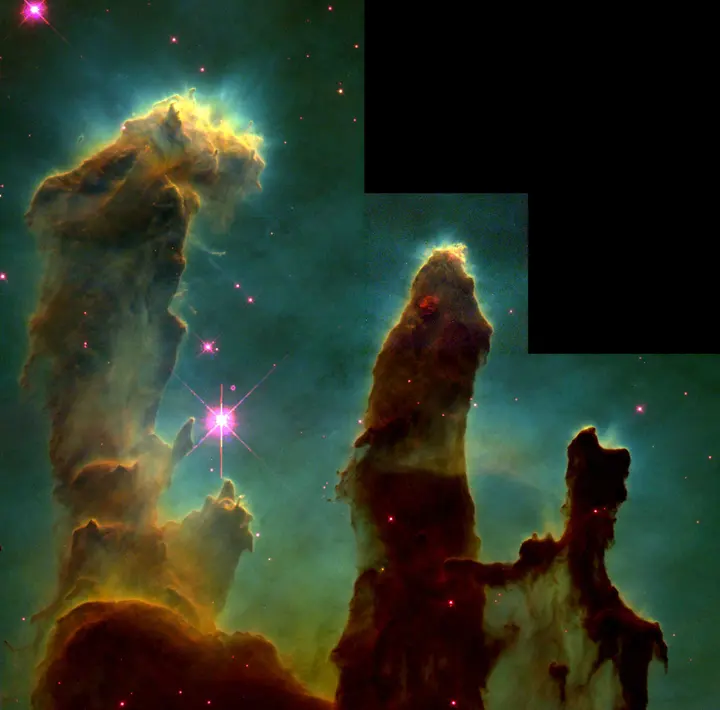
When electrical discharge occurs within a cloud or between two clouds, the immense light generated breaks through the upper layers of the clouds and spreads out toward space. Sharing this video on Instagram on the occasion of Diwali and Dhanteras, Shubhanshu Shukla described it as 'nature's own fireworks.' Because the Space Station allows for a view of clouds spread across thousands of square kilometers simultaneously, lightning occurring at multiple locations at once creates the illusion of festive firecrackers bursting.
| Detail | Rakesh Sharma (1984) | Shubhanshu Shukla (2025) |
|---|---|---|
| Spacecraft / Mission | Soyuz T-11 | Axiom-4 (Axiom-4) |
| Location | Salyut-7 Space Station | International Space Station (ISS) |
| International partner countries | Soviet Union | USA, Poland, Hungary |
| Orbit altitude | Low Earth orbit | Approximately 400 kilometers |
| Stay duration | Approximately 8 days | Approximately 2 weeks |
Historical Context: The Journey from Rakesh Sharma to Shubhanshu Shukla
Human missions hold a highly significant place in the history of India's space research. In the year 1984, Wing Commander Rakesh Sharma became the first Indian to travel into space. For decades following that historic moment, no Indian citizen reached space. Group Captain Shubhanshu Shukla has become the second Indian to travel into space and is the very first Indian to set foot on the International Space Station (ISS).
This historic journey was completed under the 'Axiom-4' mission, which began on June 25, 2025. Along with India, astronauts from America, Poland, and Hungary were included in this international mission. Shubhanshu Shukla spent approximately two weeks on the space station. During this period, he not only conducted scientific experiments but also captured many important views of the Earth and the Indian subcontinent on camera.

Observing India from the space station at night, he noted that our country looks like a glowing jewel. The lights of megacities like Pune, Bengaluru, and Hyderabad appeared to shine like stars from space. This urban light and the natural movement occurring in the Earth's atmosphere alongside it demonstrate a unique coordination between human settlements and the environment.
The Science of Astronomy and Atmospheric Observation
The word astronomy is derived from the ancient Greek words 'astron' (star) and 'nomos' (rule or law). Its direct meaning is the study of the laws of celestial bodies. Astronomy should not be confused with astrology, because astronomy is a strict natural science based on physics, mathematics, and chemistry.
Ancient civilizations around the world created calendars by observing the sky. The foundations of scientific astronomy were laid in Egypt, Babylonia, Greece, and India. In India, great scholars like Aryabhata, Varahamihira, and Brahmagupta made revolutionary improvements in the calculations of planetary motion and eclipses. Over time, the researches of Nicolaus Copernicus, Johannes Kepler, Galileo Galilei, and Isaac Newton changed the direction of understanding the universe by providing the heliocentric model and the laws of gravitation.
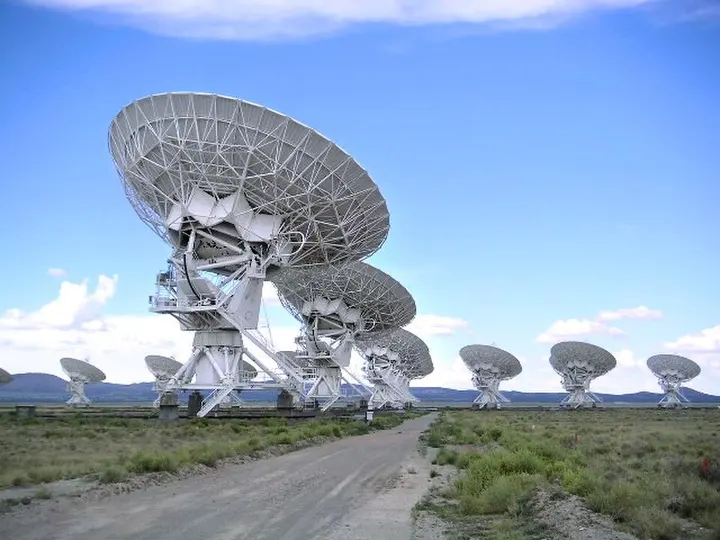
When astronomers observe the sky from the ground, the Earth's atmosphere often acts as an obstacle. The gases, dust, and temperature variations present in the atmosphere blur the light of stars. For this very reason, space agencies around the world, such as America's NASA, establish observatories like the Hubble and James Webb Space Telescopes in space. NASA, established in 1958, had a budget of $24.4 billion approved for the year 2026 and employs approximately 18,400 personnel.
સંખ્યા અને અબજ ડોલર
Why is continuous observation of the Earth from the space station necessary?
The International Space Station is not just a place to look toward the stars, but also a center that continuously monitors the living systems of the Earth. From an altitude of 400 kilometers, ocean currents, mountain ranges, forest fires, the origin of storms, and charged atmospheric storms can be evaluated from a comprehensive perspective.
When lightning occurring in clouds is studied from satellites and space stations, the chemical changes and energy flows taking place in the upper layers of the atmosphere can be understood much better. This type of scientific data proves extremely useful in making weather forecasts on Earth more accurate and in measuring the impacts of climate change.
Viewed from space, the Earth emerges as a borderless land where nature celebrates illumination in its own way. These observations by Shubhanshu Shukla are not limited to just a captivating video, but are proof of a new era in Indian space research, where Indian scientists are marching forward shoulder-to-shoulder with the world in unraveling the mysteries of the Earth and the entire universe.