The Deadly Invasion of Cane Toads in Australia: The Historic Blunder of 1935 and a Multi-Million Dollar Water Front to Stop Them
The venomous South American toad, introduced to protect sugarcane crops from pests, has today become devastating to Australia's native ecosystem; preparations are now underway to create a protective water barrier across 7,500 square kilometers to save the Pilbara.

The Australian cane toad is the greatest example of how short human understanding can prove to be when introducing a new species into ecology. In the year 1935, this foreign frog was brought to Australia to control the cane beetle (Dermolepida albohirtum), a sugarcane pest that damages the sugarcane crop. Today, nearly nine decades later, that very frog has become a lethal headache for the wildlife ecosystem of the entire continent. The extreme poison secreted from its body is wiping out native predatory animals, and it is continuously marching westward.
To curb the spread of this invasive species, the global mining company Rio Tinto is now mounting a major front in the Pilbara region of Western Australia. According to the company's announcement and a BBC Hindi report, Rio Tinto will spend 28 million Australian dollars (approximately 185 crore rupees) in collaboration with Perth's Curtin University and other scientific institutions. With this amount, a 'Toad Control Zone' will be established in Pilbara to prevent this venomous creature from advancing further in the southern and western directions. The company operates iron ore mines in Pilbara, and in the past, the company had to endure severe criticism for damaging Aboriginal rock shelters, following which the company has now become committed to protecting local communities and the environment.
Water blockade of 7,500 square kilometers
According to ranger Roberta Hunter, who works in Australia's Nyangumarta Warrarn Aboriginal Reserve, wherever the cane toad reaches, it destroys water sources and local animals. To stop this destruction, an ambitious five-year project is set to begin starting in the year 2027. Under this scheme, a protective shield will be erected across a vast strip of approximately 7,500 square kilometers between the Great Sandy Desert and the Indian Ocean, which will block the cane toad from reaching water.
Although the cane toad is an amphibian, it possesses the ability to survive for a long time even in dry climates, but to stay alive during the dry months, it desperately needs water every few days. When natural water sources dry up, it relies on artificial ponds, borewells, or water tanks created for animal husbandry and farming. Under this initiative, fencing and barriers will be erected around man-made water reservoirs of agriculture and animal husbandry so that the frogs cannot reach the water and perish of thirst at the edge of the desert.
According to Professor Ben Phillips of Curtin University, if the cane toad is not prevented from entering this area, it will reach the Pilbara within the next two decades. Australian government data indicates that these frogs are expanding their range westward at a rate of 40 to 60 kilometers per year. Reaching the Pilbara poses a grave risk of extinction for unique and endangered species such as the northern quoll, goanna lizard, and ghost bat.
કિમી/વર્ષ
The Biology and Lethal Venom of the Cane Toad
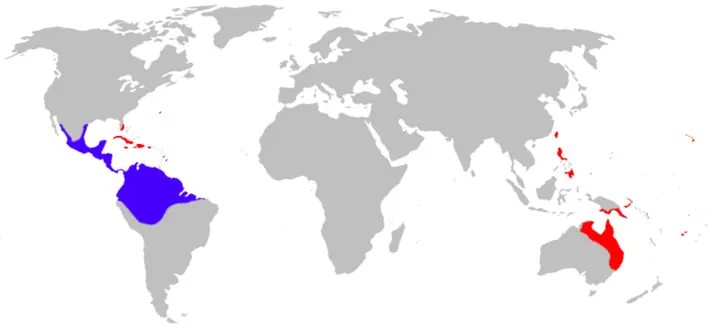
Scientifically known as Rhinella marina, this true toad is native to South and Central America. It was formerly placed in the genus Bufo, but its name was changed to Rhinella marina in 2007. Its common name is the 'marine toad', although it does not live in the sea. Carl Linnaeus gave this misleading name in 1758 based on an illustration by Albertus Seba, which depicted it living in both marine and terrestrial environments. In reality, it prefers to live in grasslands, forests, and around human settlements in gutters or gardens.
This frog is exceptionally large in size. Generally, an adult cane toad is 10 to 15 centimeters (4 to 6 inches) in length, but the largest specimen recorded to date was 24 centimeters (9.4 inches) long. Female toads are significantly larger than males. Its skin is dry, rough, and warty. In color, it can be gray, yellowish, reddish-brown, or olive-brown. Large parotoid glands are located behind the eyes. When the toad feels threatened, these glands secrete a milky white fluid called bufotoxin. This poison attacks the heart and nervous system and proves fatal to most predators.

Reproductive Capacity and Unusual Adaptation
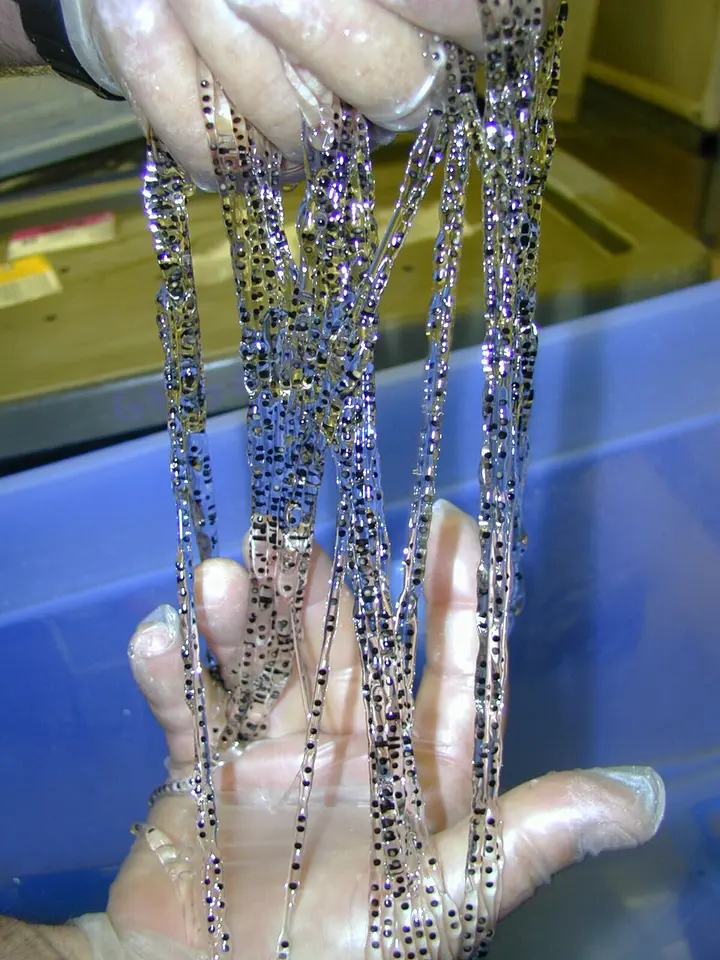
Its reproductive capacity is the primary reason behind the population explosion of the cane toad. A single adult female can lay anywhere from 8,000 to 25,000 eggs at a time. These eggs are laid in the water in transparent, jelly-like strings that can be up to 20 meters (66 feet) long. Small black tadpoles typically hatch from the eggs within 48 hours. It takes anywhere from 12 to 60 days for a tadpole to develop into an adult frog.
The eggs and tadpoles are also extremely toxic. However, after metamorphosis, when they become small frogs, their ability to produce venom temporarily decreases, due to which only 0.5% of the offspring reach adulthood. Interestingly, due to extremely dense populations in Australia, rapid evolution has occurred in tadpoles. The tadpoles here are 30 times more attracted to eating their own siblings—that is, cannibalism—than the native American population and launch 2.6 times more actual attacks. Furthermore, seeing the presence of larger tadpoles, smaller tadpoles accelerate their own development.
This creature's capacity to withstand temperature is also remarkable. It can survive from temperatures as low as 10 to 15 degrees Celsius to harsh heat as high as 40 to 42 degrees Celsius. Furthermore, it can survive losing up to 52.6% of its body's water. Due to these very physical capabilities, it is spreading without any hindrance even in Australia's extremely adverse and semi-arid environment.
| Feature / Characteristic | Recorded parameter or limit |
|---|---|
| Common adult length | 10 to 15 centimeters (4 to 6 inches) |
| Maximum recorded length | 24 centimeters (9.4 inches) |
| Number of eggs in a single clutch | 8,000 to 25,000 eggs |
| Length of the egg jelly string | Up to 20 meters (66 feet) |
| Water deficit tolerance | Surviving a loss of 52.6% of body water |
| Temperature tolerance limit | 10–15°C to 40–42°C |
| Lifespan in the wild | 10 to 15 years (up to 35 years in captivity) |
Cane toad's diet and lack of native predators
Most frogs hunt only by seeing moving insects, but the cane toad can find food through its sharp sense of smell in addition to its excellent vision. It devours not only ants, beetles, or grasshoppers, but also small rodents, other frogs, reptiles, birds, bats, and household garbage or dog and cat food.
Natural predators capable of fighting the cane toad exist in South America, but the native creatures that evolved in Australia were completely unaware of this ultra-toxic bufotoxin. When native predatory animals such as quolls or snakes swallow it mistaking it for a common frog, within minutes their heartbeats stop and they die. Due to the absence of natural enemies and the availability of abundant food, there has been no control over the population of the cane toad.
- Selection of geographical shieldDesignating the 7,500 square kilometer strip between the Great Sandy Desert and the Indian Ocean as a control zone.
- Blockade of artificial water sourcesErecting frog-proof barriers around dams, tanks, and borewells built for livestock and irrigation.
- Destruction by thirst in the dry seasonDepriving frogs of artificial water when natural water dries up, causing them to perish due to the necessity of finding water every few days.
- Protection of native speciesPreventing the entry of toads to save endangered species such as the northern quoll, goanna, and ghost bat from poison.
A permanent lesson from human intervention
This saga of the cane toad demonstrates how terrifying the consequences can be when humans mindlessly introduce an organism into a natural environment. The organism that was respectfully brought in 1935 as a pesticide is the very one on which billions of rupees are being squandered today just to stop it.
The water-blockade scheme by Rio Tinto and Curtin University, starting from 2027, is the last ray of hope for Pilbara's unique wildlife. If it succeeds in halting this invasion at the border of the Great Sandy Desert, it will provide a new model for the control of invasive species worldwide. Otherwise, in this battle between evolution and science, a foreign frog will erase the ancient continent's biodiversity forever.