Historic Landing of 'Gajraj' at 13,629 Feet: A Major Achievement for the Indian Air Force at Nyoma Airbase
By landing an IL-76MD aircraft at the Nyoma Airbase, located in close proximity to the China border in Ladakh, India has demonstrated its strategic capabilities on a global scale.
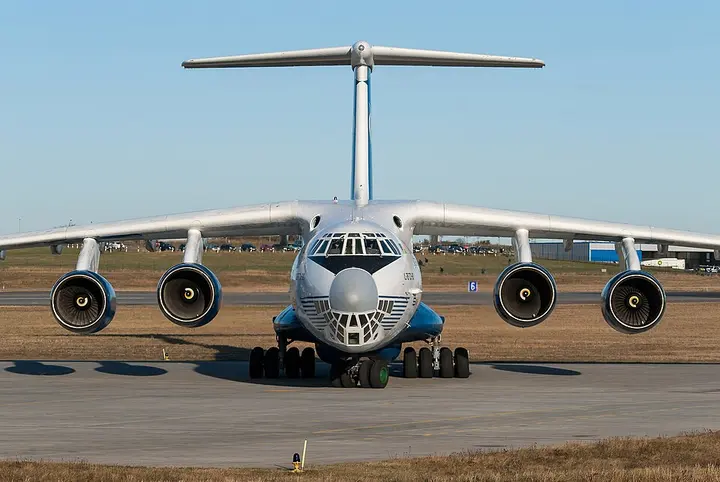
The Indian Air Force (IAF) has created a new history in the eastern region of Ladakh. The Air Force's massive transport aircraft, the Ilyushin Il-76MD, known in India as 'Gajraj', has successfully landed at the Nyoma airbase, which is situated at an altitude of 13,629 feet above sea level. This event, which took place on November 7, 2026, is a milestone not only for India but for the global aviation sector as well, as it marks the first landing of this aircraft at such an altitude anywhere in the world. According to a Business Line report, this achievement further strengthens India's strategic airlift capability.
The Nyoma airbase is located just 25 kilometers from the Line of Actual Control (LAC). Landing a heavy aircraft at such a close proximity and at such an altitude indicates a major boost in the strength of Indian forces on the border with China. The Air Force has described this achievement as a 'new height in aviation history'. Behind this success lies the aircraft's durability and the extraordinary skill, precision, and professionalism of its crew members. Previously, airbases like Leh, Kargil, and Thoise were operational in Ladakh, and now Nyoma has been added to them.
Gajraj: The powerful Russian-origin aircraft
The Ilyushin Il-76 is a Russian-origin four-engine turbofan aircraft. A turbofan is a type of jet engine that provides greater efficiency and power. According to Wikipedia data, the design of this aircraft was prepared by the Ilyushin Design Bureau of the Soviet Union in 1967. Its primary purpose was to transport heavy machinery and military supplies to remote areas. This aircraft has been serving in the Indian Air Force for decades and is known for its ability to operate in adverse weather conditions due to its robust construction.
A special feature of this aircraft is that it can take off and land even on unpaved runways. This capability makes it ideal for mountainous and rocky regions like Ladakh. The Il-76MD is an upgraded military version of this aircraft, where 'MD' stands for Modified Distance, indicating an aircraft with long-range capability. It can carry a load of up to 40 tons and cover a distance of 5,000 kilometers in less than six hours.
Challenges of high-altitude landing
At an altitude of 13,629 feet, the air is thin, which directly affects an aircraft's engines and its lift—that is, its ability to remain airborne. In thin air, the engine does not receive sufficient oxygen, causing a reduction in power. Furthermore, the braking distance required to stop the aircraft also increases. When landing at a high-altitude airbase like Nyoma, pilots must maintain extreme precision, as there is no room for error.
According to a report by The Hindu, the Nyoma airbase was made operational only last November. This airbase is capable of handling fighter jets, helicopters, and now heavy transport aircraft. The Kargil airstrip is at an altitude of approximately 10,500 feet, while Nyoma is significantly higher. The world's highest airfield is Daulat Beg Oldi, which is situated at an altitude of 16,700 feet. However, for a massive aircraft like the Il-76MD, landing at Nyoma is nothing short of a technical marvel.
| Detail | Capacity/Measurement |
|---|---|
| Maximum Payload | 40 tons |
| Range | 5,000 km |
| Number of engines | 4 turbofan engines |
| Main function | Strategic airlift |
Strategic Importance and India's Grip on the LAC
The location of the Nyoma airbase is strategically highly sensitive. In the context of border disputes with China, the landing of heavy aircraft at this airbase facilitates rapid military movement for India. If an emergency arises at the border, India can use these aircraft to transport tanks, heavy artillery, and hundreds of soldiers directly near the front lines. This is known as strategic airlift, which can determine the difference between victory and defeat in war-like situations.
The Ministry of Defence is continuously upgrading the infrastructure of all airfields and Advanced Landing Grounds (ALG) along the LAC. ALGs are airstrips near the border that are used for military requirements. This landing at Nyoma demonstrates that India is now capable of transporting not just small aircraft or helicopters, but even the heaviest aircraft to the very edge of the border.
- ApproachPrecise management of aircraft speed and altitude in thin air.
- TouchdownLanding the aircraft wheels precisely at the beginning of the runway.
- Reverse ThrustReducing aircraft speed by using engine power in the opposite direction.
- BrakingUsing a strong braking system to safely stop the aircraft on a short runway.
Aircraft Design and Modernization
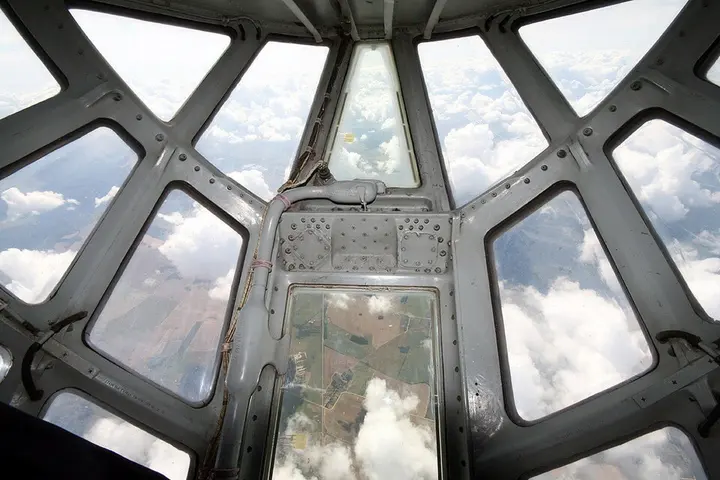
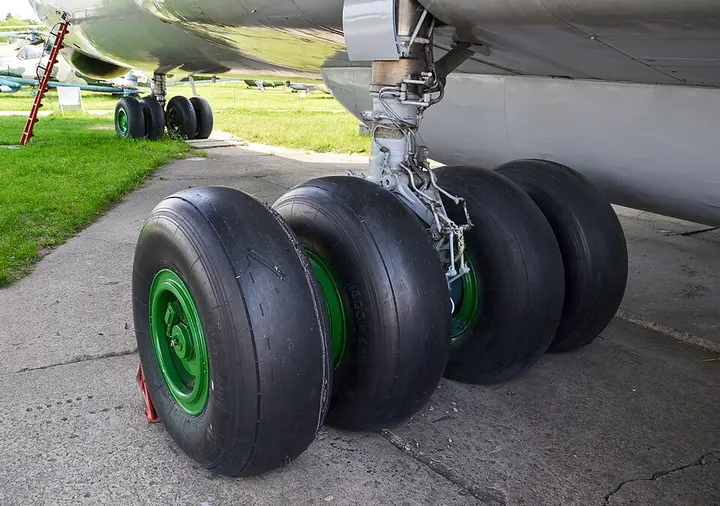
The Il-76 aircraft is designed in such a way that its fuselage, or main body, provides vast space. Its nose section is made of glass, which helps the pilot see the ground below. This proves particularly useful when landing in mountainous regions. The landing gear at the rear of the aircraft is designed to provide stability when landing on rough surfaces.
According to Wikipedia reports, work on modern versions of this aircraft, such as the Il-76MD-90A, began in 2010. These new aircraft feature a glass cockpit, which uses digital screens instead of old analog gauges. Furthermore, the avionics—the electronic equipment of the aircraft—have also been upgraded. The Indian Air Force is also continuously modernizing its fleet to face future challenges.
The Glorious History of the Indian Air Force
The Indian Air Force was established on October 8, 1932. From the Second World War to all subsequent wars, the Air Force has played a crucial role. The primary mission of the Air Force is to protect Indian airspace and conduct aerial warfare during armed conflicts. Additionally, the Air Force also performs the task of rescuing civilians and delivering relief materials during natural disasters.
This landing at Nyoma is a testament to the capabilities of the Air Force's 'Gajraj' squadron. These aircraft have previously proven their utility in war-torn regions like Afghanistan and during natural disasters such as the tsunami. During the Soviet-Afghan War between 1979 and 1991, Il-76 aircraft transported 89% of troops and 74% of cargo, demonstrating their reliability.
The Direction of the Future
The landing of the Il-76MD at Nyoma Airbase is not merely an experiment, but part of India's changing defense policy. By strengthening infrastructure at the border, India is sending a clear message to neighboring countries. In the coming time, regular flights are expected to commence from this airbase, which will cater to both military and civilian needs in this remote region of Ladakh. The roar of this 'Gajraj' of the Air Force has now become more potent atop the Himalayas.


