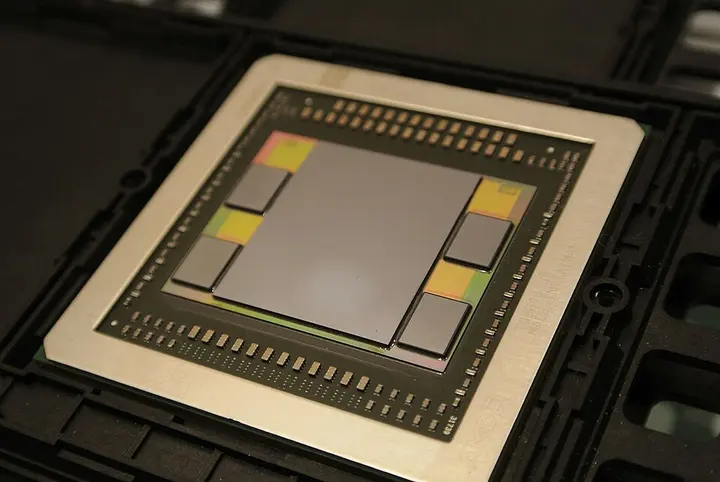
The GPU Revolution: From Humble Video Game Cards to the Pulsating Engine of Artificial Intelligence
An in-depth technological saga of how a silicon chip originally designed merely to draw pixels on a screen became the most powerful driving force behind supercomputing and artificial intelligence today.

In today's artificial intelligence (AI) era, the single hardware chip that sees the most discussion and demand is the Graphics Processing Unit, or GPU. Fundamentally, this specialized circuit was designed to rapidly render colorful video games and three-dimensional (3D) scenes on computer screens. Today, however, it has become the primary engine for science, medical research, and especially for training the complex models of artificial intelligence. This transformation is no accident, but the result of the GPU's internal architectural design and its extraordinary computational capability.
In simple terms, a Graphics Processing Unit (GPU) is a highly specialized electronic circuit designed to accelerate digital image processing and computer graphics. It can be available on a discrete graphics card added separately to a computer, or embedded directly inside motherboards, mobile phones, personal computers, workstations, and gaming consoles. Today's modern GPUs do not merely display pictures; they possess the capacity to solve linear algebra computations at exceptional speeds, which forms the foundation of both graphics and AI.
From Video Display Controller to Modern GPU
The roots of the modern GPU lie in the early experiments of the 1960s and 1970s. In 1967, graphic terminals such as the Adage AGT-30 used analog matrix processors. Subsequently, in 1969, Evans & Sutherland (E&S) introduced the Line Drawing System-1 (LDS-1), which was the very first fully digital system to provide matrix multiplication facilities. That same year also saw the arrival of the low-cost IMLAC PDS-1 terminal, which was later used in early 3D games like 'Maze War'.
In the 1970s, the initial meaning of the term 'GPU' was 'Graphics Processor Unit', denoting a programmable processing unit that managed graphics and provided output independently of the Central Processing Unit (CPU). In 1972, the PLATO IV system became operational at the University of Illinois, on which networked multiplayer wireframe 3D games gained popularity between 1973 and 1978. During this same period, in 1972, E&S's Continuous Tone 1 (CT1) system was delivered to Case Western Reserve University, providing real-time Gouraud shading.
In 1975, through the joint efforts of E&S and the University of Utah, the first MOSFET video frame buffer capable of color and smooth shading was developed. In 1977, the E&S CT3 system, provided to Lufthansa Airlines for pilot training, became the first graphics system capable of real-time texture mapping. Specialized circuits were also developed for arcade video games. At that time, since random access memory (RAM) was extremely expensive, data was assembled only as the display was being scanned. In arcade games such as Midway and Taito's 'Gun Fight' (1975), 'Sea Wolf' (1976), and the famous 'Space Invaders' (1978), a barrel shifter circuit assisted the CPU in performing animation.
The Namco Galaxian arcade system released in 1979 supported RGB color, multi-colored sprites, and a tilemap background, which was used by several leading companies such as Sega, Konami, and Midway. In home computers, the 1977 Atari 2600 used a Television Interface Adapter, while the 1979 Atari 8-bit computers included a video processor named 'ANTIC', which directly interpreted display list instructions.
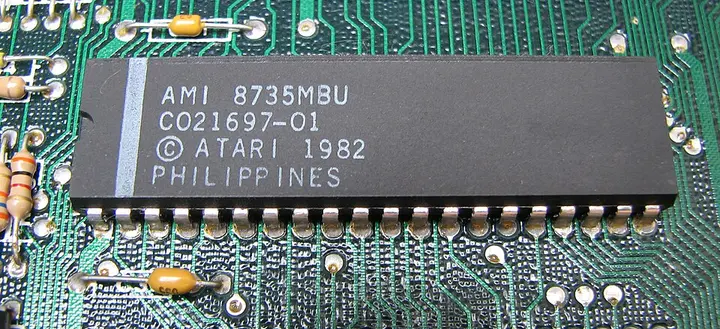
Early graphics controllers, known as video display controllers, had no internal calculation capabilities. Subsequent 'blitters' performed the basic operation of merely moving blocks of memory from one location to another. The true rise of the modern GPU occurred in the 1990s, when it began drawing lines and text on the screen independently without relying on the CPU, and subsequently acquired the capability to perform three-dimensional calculations internally.
How a GPU Works: The Mathematics of Parallel Architecture
The CPU, or Central Processing Unit, considered the general brain of the computer, possesses a few extremely powerful processing cores, which are optimal for executing complex tasks sequentially (serial processing) one after another. In contrast, graphics tasks are inherently independent. The color of millions of pixels on the screen or the vertices of a 3D object can be calculated without depending on one another. To meet this requirement, the GPU is designed with hundreds or thousands of small calculation units (compute cores).
This specialized architecture of the GPU is considered ideal for solving 'embarrassingly parallel' problems. This means tasks that involve a large dataset where the exact same mathematical operation must be performed simultaneously on thousands of its parts. For example, if five great mathematicians are sitting in a classroom, they can solve an extremely difficult puzzle one after another—this is the CPU. But if you have thousands of simple additions and multiplications, thousands of ordinary students sitting together will complete that task in a flash—this is how the GPU operates.
- CPU (Serial Processing)Solves complex tasks sequentially one after another through a few extremely powerful cores.
- GPU (Parallel Architecture)Performs the same mathematical process simultaneously on large datasets through thousands of small computational units.
Inside the hardware of a GPU, the computational units are known by various names. In Nvidia's processors, they are called Streaming Multiprocessors (SM); in AMD's GPUs, they are called Compute Units (CU); while in Intel's GPUs, they are known as Xe Cores. All of these processor cores operate simultaneously in parallel. Additionally, modern GPUs include dedicated ray tracing blocks for realistic rendering of light and shadows, video encoding circuits, and special hardware blocks to accelerate AI computations.
The overall performance and speed of a GPU do not depend solely on the number of cores, but rather on the size of the connector pathways used in semiconductor manufacturing, the clock signal frequency, and the size of the memory cache located on the chip. The performance capacity of a GPU is generally measured in Floating Point Operations Per Second (FLOPS). Today's modern processors deliver results at the level of teraflops (TFLOPS), meaning trillions of calculations per second, although this is an estimated benchmark and other factors also affect real-world conditions.
Two Forms of GPU: Dedicated vs. Integrated
In the world of personal computers, Graphics Processing Units are primarily found in two forms: dedicated graphics (also called discrete graphics) and integrated graphics (referred to as a shared graphics solution, IGP, or Unified Memory Architecture - UMA).
A dedicated GPU resides on its own circuit board and, instead of relying on the computer's general system memory, uses dedicated high-speed RAM mounted on its own board, such as GDDR SDRAM. This dedicated memory handles the heavy data traffic of the graphics card very quickly. However, if this dedicated memory becomes completely filled during a task, performance suddenly slows down (choking occurs). Technologies such as Scalable Link Interface (SLI), NVLink, and CrossFire were developed to combine multiple GPUs for greater power on a single screen. However, their use in general gaming has now declined because most games do not support them and they are extremely expensive.
On the other hand, an integrated GPU (iGPU) uses a portion of the computer's main system RAM rather than having its own dedicated memory. It is mounted either on the motherboard's Northbridge chipset or directly on the CPU's silicon die, such as the AMD Accelerated Processing Unit (APU) or Intel HD Graphics. Integrated graphics are relatively inexpensive but not as powerful as dedicated ones. Around 2004, IGPs from companies like SiS and VIA could only run basic programs or Adobe Flash and were considered unsuitable for 3D gaming. However, today's modern integrated processors can run Triple-A games even on low settings.
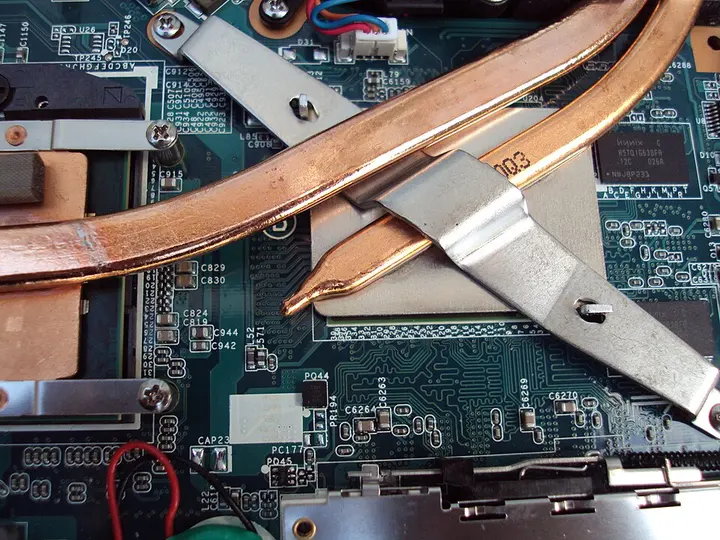
| Feature | Dedicated GPU | Integrated GPU |
|---|---|---|
| Memory | Uses its own dedicated high-speed VRAM | Uses a portion of the computer's system RAM |
| Cost and Capability | Expensive and extremely powerful | Affordable and suitable for ordinary tasks |
| Memory Bandwidth | More than 1000 GB/s | Maximum up to 128 GB/s |
The biggest difference between dedicated and integrated is memory bandwidth. Graphics calculations are very demanding on memory. Currently, an iGPU can use a maximum system memory bandwidth of 128 gigabytes per second (GB/s), whereas in a dedicated graphics card, a bandwidth of more than 1000 gigabytes per second (GB/s) is available between its VRAM and GPU core. Modern systems with Unified Memory Architecture (UMA), such as modern AMD, Intel, Apple processors and modern game consoles, have the CPU and GPU sharing a single common RAM pool and address space.
The option of an external GPU (eGPU) also exists to get more power in a notebook or laptop. In this setup, a graphics card is connected outside the laptop via an external bus such as PCI Express. For this, ExpressCard or mPCIe ports (PCIe ×1, 5 or 2.5 gigabits per second), Thunderbolt 1, 2, or 3 ports (PCIe ×4, 10, 20, or 40 gigabits per second), USB4 or OCuLink ports are used. A powerful GPU consumes hundreds of watts of electricity, so such eGPU enclosures must have their own separate power supply unit (PSU).
From Video Gaming to General-Purpose Computation (GPGPU) and the Engine of AI
The true revolution of the GPU came when scientists and engineers realized that this chip is capable not only of painting pixels on a monitor, but also of performing any kind of parallel computation. Out of this idea was born the General-Purpose Graphics Processing Unit (GPGPU). In this method, the shader pipeline of the graphics accelerator is transformed into a stream processor or vector processor to run compute kernels.
Where massive vector operations are required, GPGPUs deliver manifold higher performance compared to traditional CPUs. For Stanford University's well-known Folding@home project, GPU-based clients were built in collaboration with Nvidia and AMD for biological computations of protein folding. Under specific conditions, these GPUs completed computations up to 40 times faster than traditional CPUs. Starting from 2005, the widespread use of the Single Instruction, Multiple Data (SIMD) architecture of GPUs began in genetic programming and evolutionary computation.
This parallel processing proved to be a boon for artificial intelligence and deep learning neural networks. During the training of AI models, hundreds of millions of parameters must be multiplied simultaneously. Today's top supercomputers depend entirely on GPU-driven accelerator systems. According to the June 2026 data of the TOP500, which lists the world's most powerful supercomputers, 276 supercomputers use accelerator or co-processor technology, showing a major jump from the 255 systems of the previous six months.
In this list, 107 supercomputers are equipped solely with NVIDIA Hopper chips, 62 systems use NVIDIA Ampere, and 32 systems feature AMD Instinct chips. In ultra-powerful supercomputers like Summit and Nvidia's DGX series of workstations and servers, hundreds of GPUs are linked together to run AI training, visual effects (VFX), and complex scientific simulations. Apart from this, its heavy computational capacity has also been utilized in cryptocurrency mining.
Market Share and Global Scenario
There has always been intense competition in the global market for graphics processing units. Examining historical data, in 2009 Intel was in the lead among market share leaders with a 49.4% share (primarily due to mass-sold integrated chipsets), Nvidia was second with 27.8%, and AMD/ATI was third with 20.6%. Among other companies, firms like Matrox, which previously manufactured custom solutions, now customize Intel and AMD GPUs for workstations. Apart from this, companies like China's Jingjia Micro have manufactured GPUs for the domestic market, though they lag far behind the leading companies in global sales.
Today, the GPU is no longer limited to just hardware; it has become a symbol of global technological sovereignty and economic power. Starting from gaming consoles and smartphones to supercomputers predicting weather and generative AI models speaking human-like language, this small chip of silicon has taken the driving force of the entire digital age into its own hands.