Satellite Network Leasing in India: TRAI Recommendations Spark a Telecom Revolution
The Telecom Regulatory Authority of India has proposed a new licensing policy allowing satellite companies to lease capacity to telecom operators, enabling direct satellite connectivity for consumers.

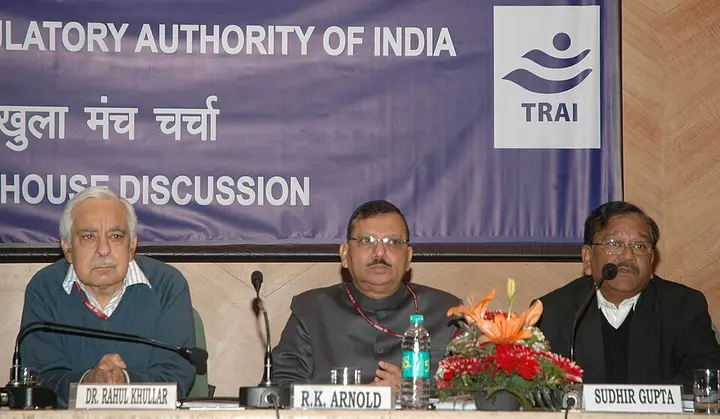
In a major policy shift for the Indian telecom sector, a new licensing framework has been recommended by the country's telecom regulator. According to a proposal presented on Thursday by the Telecom Regulatory Authority of India (TRAI), companies with foreign or domestic satellite setups will be able to build their own satellite networks in India and lease them to local telecom operators. Under this new arrangement, satellite companies will not be permitted to sell services directly to consumers.
This recommendation from TRAI has been introduced as a new license category named "Satellite Communication Network (SCN) Provider Authorization" under the Telecommunications Act, 2023. It is noteworthy that these regulatory recommendations are not directly binding; the policy will only be implemented in the country once it is accepted by the Department of Telecommunications (DoT).
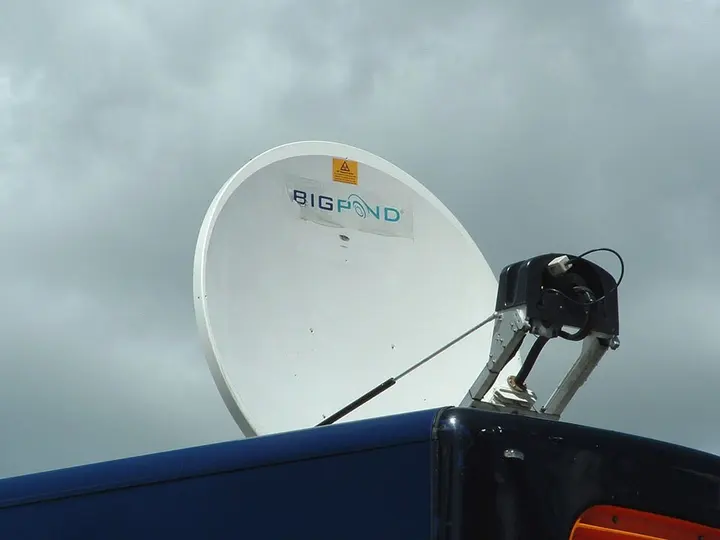
If this policy is adopted, global satellite companies such as Starlink and Eutelsat OneWeb will be able to enter the Indian market solely as network providers. On the other hand, Indian telecom companies like Reliance Jio and Bharti Airtel will be able to provide satellite-based internet, calling, and messaging services to their customers without having to build their own space infrastructure.
| Property / Parameter | TRAI's proposed condition / rate |
|---|---|
| License Type | Satellite Communication Network (SCN) Provider |
| Entry Fee | ₹37.5 Lakh |
| Licensing Fee | 8% of AGR |
| Spectrum Fee | 4% of AGR (as per May 2025 proposal) |
| License Duration | 20 years (with renewal facility) |
| DoT decision timeline | 30 days after security clearance |
| Gateway operational deadline | Within 12 months of receiving approval |
How does the Satellite Communication Network (SCN) model work?
In the proposed Satellite Communication Network (SCN) model, operations have been divided into two main segments. The first part consists of the Ground Segment and network management. The SCN licensee will manage Gateway Earth Stations (which communicate with satellites from Earth), network equipment, and spectrum in India.
The second part involves customer service and billing. The SCN operator will lease this entire network to India's licensed mobile operators or internet service providers. For general consumers, sales transactions, consumer billing, and grievance redressal will be handled by the respective local telecom company under its own brand name.
According to the regulator's proposal, to obtain an SCN license, any company must possess satellite capacity authorized by the Government of India's Department of Space. Alternatively, it must be a subsidiary of such an authorized company or have a contractual agreement with them to operate gateways in India. Ownership of the satellite itself is not strictly mandatory to obtain this license, meaning companies operating gateways for foreign satellite operators will also be eligible.
- 1. Authorization and InfrastructureSCN company sets up gateway earth stations and networks in India after getting capacity approved from the Department of Space.
- 2. Spectrum AllocationSpectrum is administratively allocated by DoT to the SCN company or its telecom partner for a period of up to 5 years.
- 3. Network LeasingSCN company enters into an agreement to lease its entire satellite ground network to a local telecom operator.
- 4. End Customer ServiceThe telecom company sells satellite internet/calling under its own brand to the customer, handles billing and customer care.
License conditions, financial figures, and regulatory timelines
TRAI has proposed that the SCN controlling license will be at the national level, valid for 20 years, and can be renewed subsequently. However, this license does not grant permission to launch satellites or operate in space; that authority remains solely with the Department of Space.
Regarding financial terms, TRAI has recommended an entry fee of ₹3.75 million and a license fee of 8% of the Adjusted Gross Revenue (AGR). To ensure telecom companies are not double-taxed, it has also been suggested that they be allowed to deduct the amount paid to SCN providers from their gross revenue.
For spectrum allocation, it is recommended to use an administrative method instead of auctions, with spectrum granted for a period of up to 5 years. It has been directed that the DoT must dispose of applications within 30 days after receiving security clearances. Regarding the cost of the spectrum, TRAI has clarified that the final decision taken by the DoT, based on its May 2025 proposal to set the spectrum charge at 4% of AGR, will apply.
Direct-to-Device Service and Spectrum Allocation Rules
The most attractive aspect of this shift is the approval for Direct-to-Device (D2D) services. Through D2D technology, satellites can connect directly to ordinary smartphones in remote or inaccessible areas where there is no mobile tower coverage.
TRAI has suggested that the country's telecom operators will be able to use their existing spectrum for D2D services without any additional charges. There is no need to wait for the World Radiocommunication Conference to be held in 2027 for this. However, the condition for this is that the specific frequency channel must be uniformly available across all 22 telecom circles of the country.
From the perspective of national security, it has been made mandatory for all customer data traffic to pass through gateway earth stations located within India. Even if there is a technical failure in the local gateway, data cannot be routed or copied to foreign servers. All providers must provide facilities for real-time monitoring and lawful interception, and these gateways must be operational within 12 months of receiving approval.
કિમી
Background: Satellite Orbits and the History of Satellite Technology
The history of satellite communication is quite fascinating. Sputnik 1, humanity's first artificial satellite launched by the Soviet Union on October 4, 1957, operated at frequencies of 20.005 MHz and 40.002 MHz. Subsequently, Project SCORE was launched on December 18, 1958, which worked for 8 hours before its battery failed, transmitting a Christmas message from space to Earth.
In terms of satellite orbit, there are primarily three categories. Geostationary Orbit (GEO) is located at an altitude of 22,236 miles (35,785 km) from Earth's equator, where the satellite moves in sync with Earth's rotation, making it appear stationary in the sky.
On the other hand, Low Earth Orbit (LEO) is at an altitude of 160 to 2,000 km from Earth and has an orbital period of just 90 minutes. Because LEO satellites are closer to Earth, they have lower latency in signal transmission. Medium Earth Orbit (MEO) is situated between altitudes of 2,000 and 36,000 km.

Implications and challenges for India and general consumers
In India, the telecom sector is regulated under the TRAI Act, which was formed on February 20, 1997. TDSAT was established on January 24, 2000, for the resolution of commercial disputes. The new recommendations from TRAI will prove to be very important for bridging the digital divide in India.
The biggest advantage of this model will be that global organizations like Starlink or OneWeb will not need to set up retail outlets or distribution networks to reach consumers in India. On the other hand, Indian telecom companies will not need to spend billions of dollars to launch their own satellites.
With this policy, high-speed broadband and connectivity will easily reach remote mountainous regions of the Himalayas, the northeastern states, or ships in the middle of the ocean. Local consumers will gain the ability to access modern satellite-based services under their existing SIM cards and plans.