Planned Obsolescence: Why Your Smartphones and Gadgets Are Intentionally Designed to Fail
The economic strategies and product design tactics of tech companies that drain consumer pockets and push the environment toward mountains of e-waste.

Have you ever noticed that your new smartphone slows down in just two or three years, or that the battery of your expensive wireless earphones suddenly stops working? This is no coincidence, but a well-planned strategy of the technology industry called 'planned obsolescence.' This is a policy in which products are deliberately designed with a limited lifespan so that consumers are forced to buy a new model in a short period. According to a Wikipedia report, the main objective of this strategy is to increase long-term sales volume by reducing the time between repeat purchases.
This concept is not new, but it has become extremely complex in modern electronics. According to a report in Businessline magazine, devices like smartphones, laptops, and smartwatches are now made of materials that are difficult or economically unfeasible to repair. When a device breaks down, the consumer has no choice but to discard it. This process not only wastes consumers' money but also poses a major threat to the environment, as these devices contain toxic substances like mercury and arsenic that pollute the soil and water.

The history of planned obsolescence is quite old. In 1924, when the American automobile market reached a point of saturation, General Motors executive Alfred P. Sloan Jr. proposed changing models every year. The purpose was to entice consumers to buy a new car every year. In 1932, Bernard London proposed legally limiting the lifespan of products to overcome the economic depression. However, the term was popularized in 1954 by industrial designer Brooks Stevens. According to Stevens, it is the art of instilling in the buyer's mind the desire to own something a little newer, a little better, and a little sooner than is necessary.
There are several types of this strategy, of which 'contrived durability' is the most common. In this, the product is deliberately made from weak materials so that it breaks down quickly. For example, using cheap plastic gears instead of metal in toys or using soft metal in screws, which causes them to break even under normal use. The short lifespan of smartphones and other handheld electronics is the result of constant use, fragile batteries, and designs that are easily damaged.
In modern gadgets, the battery is the greatest weapon of planned obsolescence. Starting with Apple's iPhone, this practice has now been adopted by almost all companies, where the battery is permanently sealed inside the device. According to Wikipedia data, this design helps make the device thinner, but makes it impossible for the consumer to replace the battery. Often, the battery is glued with strong adhesive, and attempting to remove it carries the risk of damaging the main circuit board. The European Union has taken a strict stance on this matter and has decided to make a design that allows consumers to replace batteries themselves mandatory for all electronic devices starting in 2026.
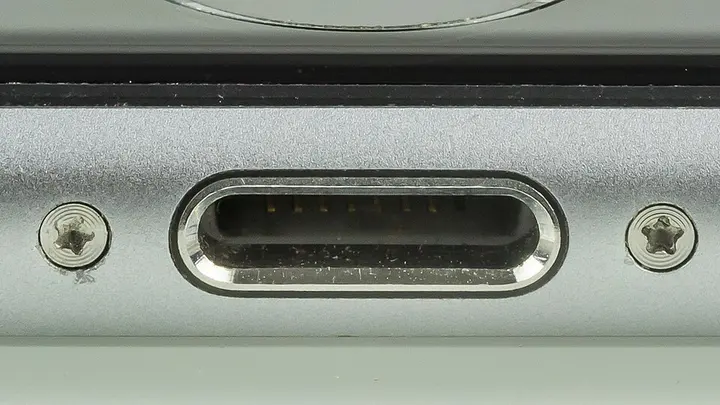
Prevention of repairs is another clever strategy. Companies often use screws that cannot be opened with standard tools, such as Apple's 'pentalobe' screws. Furthermore, if a third party repairs the device, the device is locked via software. Printers from companies like Canon and HP have smart chips that declare a cartridge useless even when ink remains. This is called 'programmed obsolescence,' where a product is shut down by software alone without any mechanical failure.
- Design phaseThe product is deliberately designed with weak materials or a sealed battery.
- Information asymmetryThe company knows when the product will break, but the consumer is kept in the dark about its durability.
- Barriers to repairExternal repairing is made impossible through special screws, glue, and software locks.
- New purchaseThe consumer is forced to buy a new model by keeping the repair cost the same as a new device.
From an economic perspective, planned obsolescence succeeds only when there are a few manufacturers in the market, which is called an 'oligopoly.' Here, the manufacturer has an information advantage (information asymmetry); they know how long the product will last, while the consumer is unaware. When competition in the market increases, the lifespan of products also increases. For example, in the 1960s and 70s, when Japanese cars entered the American market, seeing their durability forced American companies to also build stronger cars.
Psychological obsolescence is a game played with the consumer's mind. According to Vance Packard's book 'The Waste Makers,' marketing convinces the consumer that their current device has become old. The new model is presented as a status symbol. Often, accessories are launched with new phones that are not compatible with older models, which forces the consumer to change the entire ecosystem.
| Type of barrier | Example | Impact |
|---|---|---|
| Mechanical | Plastic gears, soft screws | Rapid wear and tear |
| Design | Sealed battery, glue | Battery replacement becomes impossible |
| Software | Smart chips, software update | Deliberately slowing down the device |
| Legal | Copyright manuals | Independent repairers not receiving information |
The most alarming consequence of this strategy is e-waste. In 2022, 62 million tonnes of e-waste were generated globally, a figure projected to reach 82 million tonnes by 2030. This amount of waste could fill 1 million trucks, enough to encircle the Earth's equator. Surprisingly, only 22.3% of this waste is officially recycled. According to a UNEP report, the volume of e-waste in countries like India could increase by up to 500% over the next decade.
Developed countries often send this e-waste to India, China, and African nations under the guise of recycling, effectively turning them into dumping grounds for toxic waste. Although the value of metals such as gold, silver, and copper contained in this waste is approximately $62 billion annually, this wealth is squandered due to improper recycling methods, causing serious harm to the health of workers.
મિલિયન ટન
The 'Right to Repair' movement is now gaining momentum worldwide. The Federal Court of Australia fined Apple 9 million Australian dollars for misleading consumers about their repair rights. The European Union is now introducing laws that will require products to carry a 'reparability score,' allowing consumers to know before purchasing whether an item will be repairable in the future.

Ultimately, planned obsolescence is not just corporate greed, but a result of our current 'produce-and-consume' system. As long as consumers chase new features instead of durability, companies will continue this strategy. To protect the environment and their own pockets, consumers now need to become aware and demand products that can be repaired.