AI Now on the Wrist: Meta Launches Muse AI for Apple Watch and Android Smartwatches
Meta has taken a new step in the field of wearable technology by expanding its popular artificial intelligence assistant, Muse, to smartwatch platforms.

In the modern digital age, the use of artificial intelligence (AI)—computer systems that think and learn like human intelligence—is growing rapidly. Leading technology company Meta has officially announced the expansion of its personal AI assistant, Muse AI, making it available on Apple Watch and Android smartwatches. According to a November 12, 2026, report by the news organization Business Standard, this rollout will allow millions of users to receive direct AI assistance from their wrists without having to take out their smartphones.
This new step will bring a major change to the field of wearable technology—digital devices that can be worn on the body. Until now, AI assistants were primarily limited to smartphones or laptops, but by integrating Muse AI with Apple Watch and Android devices, Meta will make daily tasks much easier. Users will now be able to get answers to complex questions by giving voice commands or directly on the small display.
| Metric / Detail | Information / Figure |
|---|---|
| Establishment Year | 2004 (TheFacebook) / 2021 (Meta Rebrand) |
| Headquarters | Menlo Park, California, USA |
| 2022 R&D Expense | $35.3 Billion (3rd rank in the world) |
| 2023 Advertising Revenue Share | 97.8% |
| Fortune 500 Ranking | 17th Rank |
| Forbes Global 2000 Ranking | 16th Rank |
Meta's background: A journey from social media to AI
According to official Wikipedia statistics, Meta Platforms, Inc., headquartered in Menlo Park, California, was founded in 2004 as TheFacebook, Inc., and was renamed Facebook, Inc. in 2005. The company changed its brand name to Meta in 2021, with the goal of building a metaverse based on digital and virtual reality. The company owns world-renowned social media platforms such as Facebook, Instagram, WhatsApp, Messenger, and Threads.

From a financial perspective, Meta's primary source of revenue is advertising; according to 2023 figures, advertising accounted for 97.8% of the company's total revenue. The company is ranked 17th on the Fortune 500 list and 16th on the Forbes Global 2000. In 2022, Meta spent $35.3 billion on research and development (R&D), making it the third-largest spender in this field globally.

How Muse AI works on wearable devices
Running an AI model on small devices like smartwatches is a technically complex process. Muse AI works by combining the smartwatch's processor with cloud computing—internet-based data processing. When a user asks a question on the smartwatch, the device converts that voice into digital signals and processes it.
અબજ ડૉલર ($)
Using Muse AI on smartwatches will make daily life more convenient. Users will be able to rely on it for everything from fitness tracking to answering instant messages, setting reminders, and getting information while traveling. For Apple Watch and various Android smartwatch manufacturers, this is an upgrade that significantly increases the utility of smartwatches.
- 1. Device IntegrationThe Muse AI assistant is integrated with Apple Watch and Android smartwatch platforms by Meta.
- 2. User InputThe user asks a question or gives a command by speaking or touching the screen on their smartwatch.
- 3. Data ProcessingSmartwatch and cloud AI processors analyze the command and prepare the response.
- 4. Instant OutputAccurate information is provided to the user on the smartwatch display or via audio.
Transformation of Hardware and Infrastructure
Meta's entry into the AI sector has not been smooth. Since 2022, the company has had to make extensive changes to its AI hardware and software to keep pace with other technology companies. Initially, the company used less expensive central processing units (CPUs) - general computing processors - for AI processing, but that method proved ineffective. Meta then shifted toward graphics processing units (GPUs) - specialized processors capable of performing complex AI computations quickly.
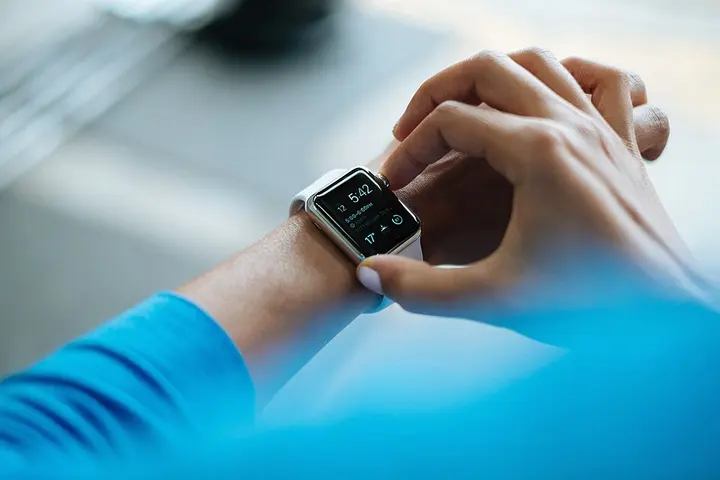
In addition, in March 2022, Meta partnered with the Italian eyewear company Luxottica to launch smart glasses named Ray-Ban Stories, which had the ability to play music and take photos. Now, with the introduction of Muse AI to smartwatches, the company is further strengthening its wearable ecosystem. At the time of its 2012 IPO, the company was valued at $104 billion and raised $16 billion, but by October 2022, its market capitalization - the total market value of the company - had dropped to $268 billion. To emerge from this situation, an emphasis is being placed on AI and hardware.
What This Means for Everyday Users and India
For a country like India with a massive smartphone and smartwatch market, this move by Meta is extremely significant. Both Android smartwatches and Apple Watches have a very large user base in India. The arrival of Muse AI on these platforms will provide Indian users with the convenience of obtaining information right from their wrists in their own language or through simple voice commands.
This technology will greatly benefit fitness enthusiasts, corporate employees, and students. However, some questions remain unresolved regarding its impact on battery life and how data privacy - the security of digital information - will be maintained. Nevertheless, the Muse AI smartwatch rollout proves that AI is no longer limited to large screens but is weaving itself into every aspect of our daily lives.