NVIDIA's Major Move in South Korea: New Investments in AI Startups and Infrastructure
In partnership with South Korea's Ministry of Science and ICT, NVIDIA is investing in startups operating across every tier of the AI stack, charting a new course for future robotics and semiconductor technology.
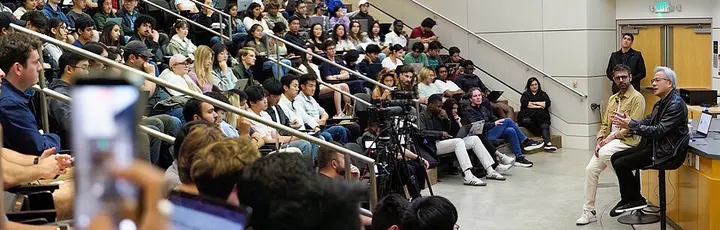
NVIDIA, a technology company leading globally in the field of Artificial Intelligence (AI), has announced a major investment in South Korea's IT ecosystem. These important announcements were made at the 'MSIT-NVIDIA AI Startup Partnership Forum' held at COEX, jointly organized by South Korea's Ministry of Science and ICT (MSIT) and NVIDIA. The event was attended by Ryu Je-myung, Vice Minister of Science and ICT, and senior NVIDIA executives.
At this platform, NVIDIA and government officials directly interacted with more than 20 South Korean startups working in the fields of foundation models, physical AI, AI infrastructure, and AI semiconductors. NVIDIA officially announced its investment in South Korean startup Point2 Technology, while also revealing plans to make additional investments in Motif Technologies, RLWRLD, and Upstage. These investments cover the full AI stack.
| Startup Name | Main Sector | Core Technology and Speciality |
|---|---|---|
| Point2 Technology | AI Infrastructure | Radio Frequency-based Scalable Interconnect Solutions |
| Motif Technologies | Foundation Models | Motif-3 Open-Weights Large Language Model |
| RLWRLD | Physical AI | Five-Finger Dexterity Models for Robots |
| Upstage | Enterprise AI | Solar Language Models and Document AI Tools |
Four Leading Startups and Their Innovative Technology
According to NVIDIA's official announcement, the four startups selected for investment are doing specialized work across various layers of AI technology. First, Point2 Technology is an AI interconnect company. It builds radio frequency-based scalable interconnects for rapid data transfer between chips and racks in AI factories. Serving as a modern alternative to copper and optical interconnect solutions, this technology provides the capacity, performance, and energy efficiency required for next-generation AI clusters.
The second startup is Seoul-based Motif Technologies, an AI research lab. This organization develops foundation models to build AI agents capable of performing complex tasks. They recently released a large language model (LLM) named Motif-3 with open weights. This model is freely available to researchers and developers.
- 1. Infrastructure Layer (Point2 Technology)Radio frequency interconnects are built for fast data transfer between chips and racks in AI factories.
- 2. Foundation Model Layer (Motif Technologies)Open-weights language models like Motif-3 are prepared for AI agents capable of performing complex tasks.
- 3. Enterprise Application Layer (Upstage)Workflows are simplified by extracting information from organizational documents via Solar models and Document AI.
- 4. Physical AI Layer (RLWRLD)Software is prepared for industrial and humanoid robots possessing human-hand-like five-finger dexterity.
The third startup is RLWRLD, a physical AI startup operating from San Francisco, Seoul, and Tokyo. It develops robotics foundation models for humanoid and industrial robots. With the help of this technology, robots can perform complex real-world tasks with five-finger dexterity, such as precisely arranging micro spare parts, tightening nuts onto bolts, and kitting spare parts from a moving conveyor.
The fourth company is Upstage, a South Korean enterprise AI company. It develops Solar language models and document AI tools. These tools help businesses easily extract information from complex documents, streamline operational workflows, and build AI applications for daily operations.
Local Ecosystem and Expansion of the Inception Program
This new investment further strengthens NVIDIA's long-standing partnership with South Korea's startup and venture community. More than 1,000 South Korea-based startups are currently members of the NVIDIA Inception program. This global program helps startups scale rapidly by providing preferred pricing on hardware and software products, technical expertise, and networking opportunities with leading investors.
મિલિયન
NVIDIA was founded on April 5, 1993, by Jensen Huang, Chris Malachowsky, and Curtis Priem. The initial conception of the company took place in late 1992 at a Denny's diner on Berryessa Road in East San Jose. Started with a funding of just $40,000 (which amounts to $89,000 in 2025 values), the company secured $20 million in venture capital funding from Sequoia Capital and Sutter Hill Ventures. The company's name is derived from the Latin word 'invidia', which means envy.
Semiconductor Supremacy and Dominance in the Global Market
According to Wikipedia reports, in the early 2000s, NVIDIA invested over $1 billion to develop the CUDA software platform and Application Programming Interfaces (APIs). CUDA gave Graphics Processing Units (GPUs) the capability for parallel programming. The number of CUDA developers was 1 million in 2018, which grew to 2 million in 2021 and reached 5 million by 2024.

Driven by this technological breakthrough, by 2025, NVIDIA's share in the market for GPUs required for the training and deployment of AI models exceeded 80%. Furthermore, over 75% of the world's TOP500 supercomputers use NVIDIA chips. The company also manufactures Systems on Chips (SoCs) and maintains a massive presence ranging from gaming to the automotive sector.
Based on this capability, NVIDIA crossed a market capitalization of $1 trillion in 2023. On March 1, 2024, the company crossed the $2 trillion market value mark, taking only 180 days. On June 18, 2024, NVIDIA became the world's most valuable company. In 2025, driven by the immense demand for AI data center hardware, it has become the world's first company to cross the $4 trillion and $5 trillion market caps. This investment by NVIDIA in South Korean AI startups will take the convergence of semiconductors and software to new heights in the future.