Physical AI: What Changes When Artificial Intelligence Enters a Robot's Body?
The convergence of the digital brain and the physical body defines Physical AI, poised to revolutionize fields from agriculture to space science.
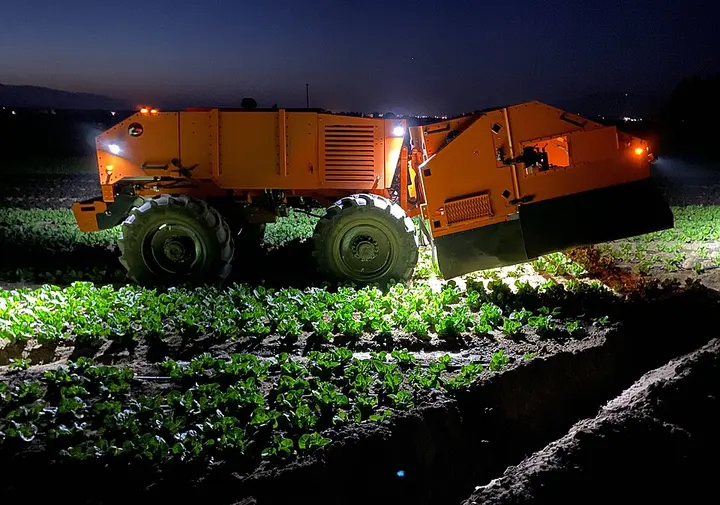
Today we are familiar with ChatGPT and other language models, but this intelligence has hitherto been limited purely to the screen. When this artificial intelligence (AI) is given a physical body, it is called 'Physical AI'. This technology is formed by the convergence of robotics and autonomous systems, which can move and perform tasks in the real world. According to Wikipedia reports, robotics is the interdisciplinary study of the design, construction, operation, and use of robots. A roboticist is a person who specializes in this field and works to make machines helpful in human tasks.
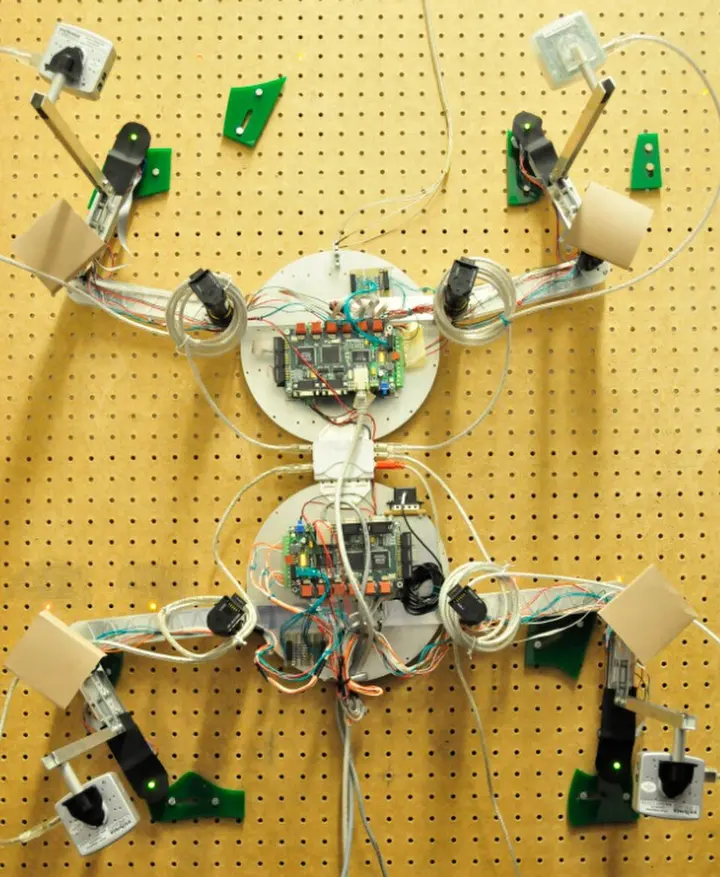
Robotics generally encompasses four key aspects of design: power source, mechanical structure, control system, and software. Batteries or electricity are used as a power source, while the mechanical structure includes its body parts. The control system runs software via electrical circuits and controls the speed of the motors. Software is the brain of the robot, which determines when and how to act. This software can be operated via remote control or entirely by AI. The primary objective of Physical AI is to build machines that can interact naturally with humans and operate in complex environments.
- SensingThe robot collects information about the surrounding environment through its sensors.
- ProcessingThe collected information is analyzed by AI software and decisions are made.
- ActuationThe control system commands motors and actuators so the robot can move.
The energy source is the most critical factor for any physical AI system. Most robots use lead-acid batteries, which are safe and have a long lifespan, but they are heavier in weight compared to silver-cadmium batteries. Silver-cadmium batteries are smaller in size but very expensive. Factors such as safety, cycle lifetime, and weight must be considered when designing a robot. Besides these, generators, flywheel energy storage, hydraulics, and solar power can also be used. Some experimental robots can even derive energy through the digestion of organic waste.
Actuators are responsible for the movement of the robot, converting stored energy into motion. The most popular actuators are electric motors, with DC motors used for portable robots and AC motors for industrial robots. Recently, the use of piezoelectric motors has increased, where small ceramic elements generate vibrations thousands of times per second to impart motion. These motors provide nanometer-level precision and high force. Additionally, a method called series elastic actuation introduces elasticity between the motor and the load, which increases safety during collisions.
| Type | Mechanism | Main advantage |
|---|---|---|
| Electric Motor | Rotates wheels or gears using electricity | Simple and versatile use |
| Piezoelectric | Vibration of ceramic elements | Nanometer accuracy and speed |
| Pneumatic Muscles | Expansion of air-filled tubes | Up to 42% expansion |
| Linear Actuator | In-and-out motion in a straight line | Excellent for industrial heavy work |
Artificial muscles have been developed to mimic human muscles. Pneumatic artificial muscles are tubes that can expand by up to 42% when inflated. Shape memory alloy is a material that contracts by about 5% when electricity is applied. Electroactive polymers can contract by up to 380%, and they are used to create the facial muscles of humanoid robots. Carbon nanotubes may be used in the future, possessing the capacity to store energy of up to 10 J/cm3. If a carbon nanotube wire with a diameter of 8 millimeters is used, it can become even more powerful than a human biceps.
Various methods are used for the movement or locomotion of robots. Single-wheeled robots balance on a ball, such as Carnegie Mellon University's Ballbot, which is human-sized. Two-wheeled robots maintain their balance using a gyroscope. Four- or six-wheeled robots provide a better grip on rough outdoor terrain. However, building bipedal robots that walk on two legs is the most challenging. Honda's ASIMO robot uses a zero moment point algorithm, which maintains a balance between gravity and walking speed. However, according to human observers, this walk does not feel natural.
A more advanced method is dynamic balancing, in which the robot continuously monitors its motion and places its steps to maintain stability. Anybots' Dexter robot is stable enough that it can even jump. Another promising method is passive dynamics, in which the swinging motion of the limbs is used for walking, which can increase efficiency by 10 times. Apart from these, flying robots or unmanned aerial vehicles (UAVs) are also a part of physical AI. Modern passenger planes are also a type of flying robot, where the autopilot can control everything from take-off to landing.
Drawing inspiration from nature, biomimetic flying robots are being built. These robots can fly by flapping their wings like birds, bats, or insects. Robots with bird-like wings can increase their flight efficiency by changing the shape of their wings in the air. Similarly, robots that mimic the feet of a gecko lizard have been built to climb walls, allowing them to climb even smooth surfaces like glass. Fish are mimicked for swimming in water, because fish have a propulsive efficiency of over 90%, which is much higher than any man-made boat.
In India, the Ministry of Science and Technology plays a major role in research and development in this sector. According to the Ministry's report, various departments operate under it, such as the Department of Biotechnology and the Department of Scientific and Industrial Research (CSIR). These institutions are working on advanced technologies through the National Quantum Mission and the National Innovation Foundation. To increase the use of robotics in sectors like agriculture, manufacturing, medicine, and defense in India, the government is promoting various autonomous institutions.
The impact of Physical AI on human life will be profound. On one hand, it could displace workers, as a solution to which suggestions like Universal Basic Income have been made. On the other hand, it also creates new career opportunities for highly educated youth. Robotics is becoming a profitable business. In the future, robots are expected to work as human companions not only in factories, but also in domestic chores in our homes, in surgeries in hospitals, and in space exploration. This technology is still under active research, with new fields like quantum robotics being added.
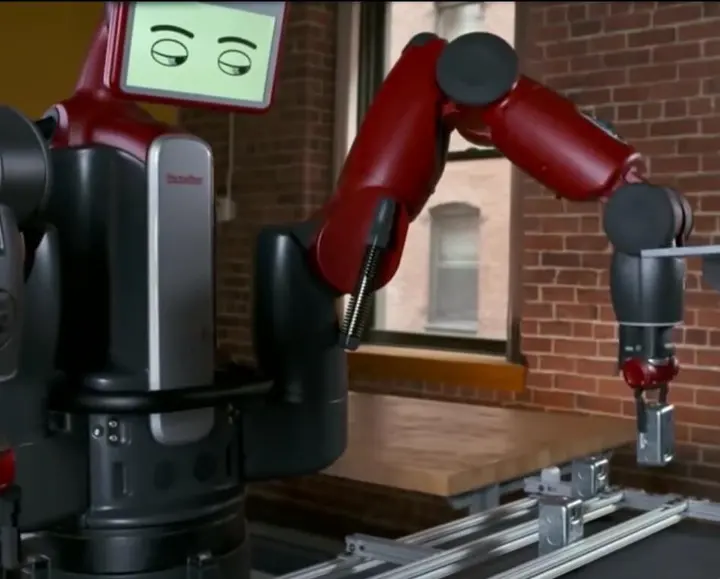
In conclusion, Physical AI is not merely a machine, but an intelligent system that understands and adapts to the laws of the physical world. Whether it is a bipedal humanoid or a flapping-wing drone, this technology will take human capabilities to new heights. Given the way institutions under the Ministry of Science and Technology, Government of India, are moving in this direction, it can be said that in the coming decades, Physical AI will become an integral part of our lives.