SEBI Prepares Its Own Indigenous AI Model to Secure Indian Stock Market
The Securities and Exchange Board of India (SEBI) is working on an indigenous Artificial Intelligence model tailor-made for the Indian securities market. This is a major step toward enhancing market security and transparency.
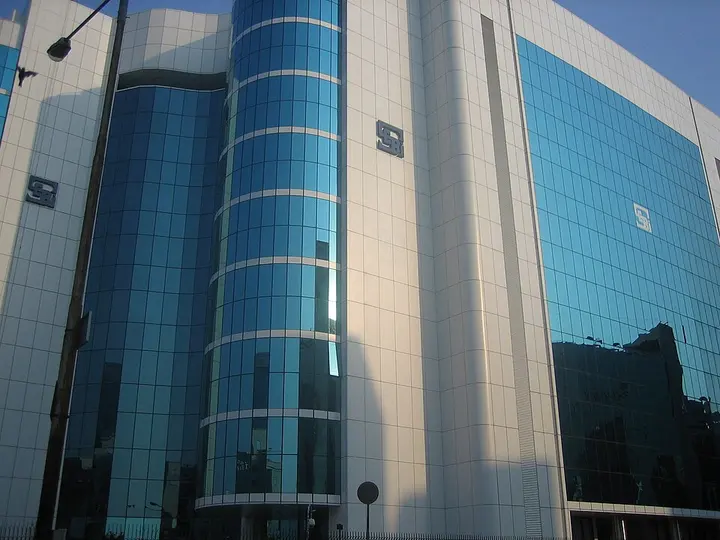
With the objective of enhancing investor protection and transparency in the Indian stock market, the country's primary financial regulatory body, the Securities and Exchange Board of India (SEBI), is exploring the possibilities of developing an indigenous artificial intelligence, i.e., Artificial Intelligence (AI) model. At the BFSI Insight Summit on October 29, 2026, SEBI Chairman Tuhin Kanta Pandey made an important announcement in this regard.
Considering the ever-increasing trading speed and the complexity of millions of transactions in financial markets, the need for a technology more advanced than traditional software has arisen. This indigenous model under consideration by SEBI will be tailored to the laws and specific requirements of the Indian capital market, enabling real-time monitoring of suspicious activities in the market.
દિવસ
Background: Establishment and Organizational Structure of SEBI
To organize the Indian financial market, SEBI was established as an executive body on April 12, 1988. Prior to that, the 'Controller of Capital Issues' under the Capital Issues Control Act, 1947 regulated the market. Subsequently, by passing the SEBI Act, 1992 through the Indian Parliament, SEBI was granted autonomous and statutory powers on January 30, 1992.
SEBI's headquarters is located in the Bandra Kurla Complex, Mumbai. In addition, it has regional offices in New Delhi, Kolkata, Chennai, and Ahmedabad. SEBI is managed by a 9-member board, which includes a Chairman nominated by the Central Government, 2 members from the Union Ministry of Finance, 1 member from the Reserve Bank of India (RBI), and 5 other members appointed by the Central Government. SEBI completely controls and manages the country's financial market through a total of 20 departments.
Currently, Tuhin Kanta Pandey has been serving as the Chairman of SEBI since March 1, 2025, succeeding Madhabi Puri Buch, whose term ended on February 28, 2025. SEBI possesses legislative, judicial, and executive powers, which empower it to make rules, conduct investigations, and levy penalties.
[[fig 2]] ## How Will Artificial Intelligence Work?
Artificial intelligence is the ability of computer systems to perform tasks that typically require human intelligence, such as learning, reasoning, and decision-making. In the context of the stock market, AI will primarily utilize Large Language Models (LLMs) and Natural Language Processing (NLP) capabilities. With the help of NLP, this model will be able to analyze thousands of company quarterly filings, news reports, and social media trends in a matter of moments.
Machine Learning algorithms are used to detect irregularities. When a 'Pump and Dump Scheme' is underway in the market to trap small investors by artificially inflating the price of a particular stock, or 'Insider Trading' is taking place based on non-public inside information, this AI system will instantly identify abnormal trading patterns.
While traditional systems conducted investigations based solely on pre-determined rules, the indigenous AI model will be capable of continuously learning from its experience to detect new types of financial fraud. It will generate a 'risk score' for potential financial crimes so that SEBI officials can take swift and precise action.
- 1. Data AggregationReal-time collection of stock market trades, volumes, and company financial reports is performed.
- 2. Natural Language ProcessingThe AI model rapidly analyzes thousands of documents and announcements through natural language processing.
- 3. Suspicious Pattern IdentificationSignals of irregularities such as insider trading and pump-and-dump along with risk scores are determined.
- 4. Alerts and EnforcementSEBI officials receive automated alerts regarding suspicious activity so that prompt legal action can be taken.
Historical Reforms and Technological Progress of SEBI
SEBI's history is filled with structural and technological reforms of the market. Through the Depositories Act, 1996, SEBI abolished physical share certificates and initiated paperless trading, which eliminated the fear of theft and forged certificates. Apart from this, SEBI has taken continuous steps to accelerate the settlement process.
In July 2001, SEBI introduced the T+5 rolling cycle, which was reduced to T+3 in April 2002 and T+2 in April 2003. T+2 means that the settlement of shares and funds takes place within 2 days of the trade. Additionally, in October 2011, SEBI increased the application limit for retail investors from ₹100,000 to ₹200,000.
Recently, on September 24, 2026, the SEBI Board made a major change in portfolio manager regulations. Under this, the 'Portfolio Managers Route for Investing in Mutual Fund Units' (PRIM) was approved, allowing a minimum investment of ₹25 lakh ($26,000) in mutual fund schemes.
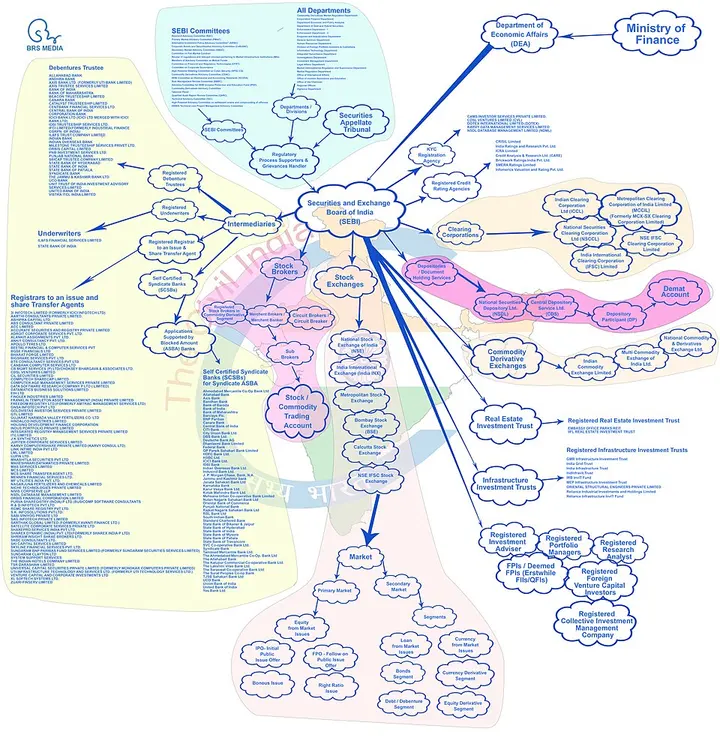
Impact on the Indian Market and Retail Investors
As the number of retail investors in the Indian capital market is growing rapidly, the indigenous AI model will strengthen the architectural security of the market. This model will reduce dependence on foreign technology and will be directly compatible with the Indian legal framework and trading practices.
In the past, cases such as the Satyam scam, the IL&FS crisis, or the Punjab National Bank scam brought allegations against SEBI for lack of timely monitoring. With the AI-based real-time monitoring system, irregularities can be curbed at the initial stage itself, making ordinary investors' capital safer and maintaining their confidence in the market.
Challenges and Uncertainties
Despite technological progress, the use of AI in financial models also brings certain challenges. The biggest question is the problem of 'hallucinations' observed in AI, meaning giving wrong answers or estimates. If the model mistakenly flags a legitimate transaction as suspicious, it could spread unnecessary panic in the market.
Furthermore, SEBI relies on stock exchanges for data aggregation, making it necessary that the AI model continuously receives accurate and quality data. Establishing a strong legal framework and fixing accountability for AI decisions is also a complex issue, which is expected to see more clarity in the coming days.