Generative Adversarial Networks (GANs): A Competition Between Two Machines That Creates Vividly Realistic Fake Data
An in-depth explanation of how GAN technology, invented by Ian Goodfellow in 2014, generates realistic synthetic data through a 'zero-sum game' between two neural networks.
In 2014, the world of Artificial Intelligence (AI) reached a revolutionary turning point when researcher Ian Goodfellow and his colleagues at the University of Montreal introduced the concept of the 'Generative Adversarial Network' (GAN). According to Wikipedia and technical reports, this is a framework that has proven foundational for Generative AI in the field of machine learning. The most significant feature of GAN is that it generates new and vivid data through a competition between two separate neural networks. This process is similar to the theory of evolution, where two parties continuously become more powerful and accurate in an attempt to defeat each other.
The main objective of GAN is to create data that looks similar to, or possesses the same properties as, the original training data. For example, if a GAN is shown thousands of photographs, it can create new photos that appear completely real to the human eye, even if the person or place does not exist in the real world. Because of this capability, GAN is widely used to prepare synthetic data. This technology is not limited to images alone, but is also being used in the creation of audio, text, and scientific data.
- Input NoiseGenerator network receives random numbers (noise) from latent space.
- Data GenerationGenerator uses this noise to create fake data or images.
- Comparison and DistinctionDiscriminator compares real dataset and Generator's fake data.
- Feedback LoopBoth networks correct their errors based on the Discriminator's result.
- EquilibriumTraining completes when the Discriminator cannot distinguish the difference.
- Random NoiseGenerator starts by taking random numbers from latent space.
- Data GenerationGenerator prepares a fake data sample from these numbers.
- ComparisonDiscriminator compares real data and fake data created by the Generator.
- FeedbackGenerator corrects its mistakes based on the Discriminator's result and tries to become more accurate.
GAN Architecture: The Battle Between the Creator and the Discriminator
To understand the working mechanism of GAN, we must view it as a 'zero-sum game' between two players. In this game, one player's gain is the other player's loss. These two players are the 'Generator' and the 'Discriminator'. The Generator's job is to create new data, while the Discriminator's job is to determine whether that data is real or fake. Both of these networks are trained simultaneously and learn from each other's mistakes.
The Generator network starts with random noise, or random numbers, taken from 'latent space'. It processes these numbers to create a new image or data sample. Initially, the data created by the Generator is completely meaningless and blurry. On the other hand, the Discriminator has two types of inputs: samples taken from the real dataset and fake samples created by the Generator. The Discriminator's goal is to identify real data as 1 (real) and fake data as 0 (fake).
Training Process and Backpropagation
GAN training is a complex process that utilizes 'backpropagation'. This is a method through which the network corrects its own errors. When the generator creates a sample and the discriminator identifies it as 'fake', the generator receives a signal that it needs to improve its method. Similarly, if the discriminator mistakes a fake sample for 'real', the discriminator is trained to improve its identification capability.
This process is repeated thousands or millions of times. As time passes, the generator becomes so skilled that it perfectly captures the statistical characteristics of the real data. Eventually, a stage is reached where the discriminator becomes confused and cannot distinguish between real and fake data. At this stage, we can say that the GAN has successfully learned to create synthetic data. According to Ian Goodfellow's original paper, this is a mathematical game where the generator attempts to minimize the loss function and the discriminator attempts to maximize it.
| Features | GAN | VAE | Autoregressive |
|---|---|---|---|
| Data generation speed | Fast (in one pass) | Fast | Slow (sequential) |
| Image quality | Extremely sharp | Slightly blurry | Good |
| Mathematical approach | Implicit | Explicit | Explicit |
| Training difficulty | High (unstable) | Low | Medium |
Mathematical Foundation and Probability Theories
At the core of GANs lie probability theory and measure theory. Mathematically speaking, the generator is a function that attempts to transform a latent distribution into the real data distribution. According to Source 1, the objective function of this game is based on log-probability. The discriminator ensures that it provides a maximum value for real data and a minimum value for data created by the generator.
In practice, when it comes to creating images, a 'deconvolutional neural network' is used as the generator and a 'convolutional neural network' is used as the discriminator. These networks are highly capable of understanding the arrangement and patterns of pixels. A special feature of GANs is that they are 'implicit generative models', which means they do not calculate the probability of data directly, but rather learn how the data is generated.

Comparison with Other Models
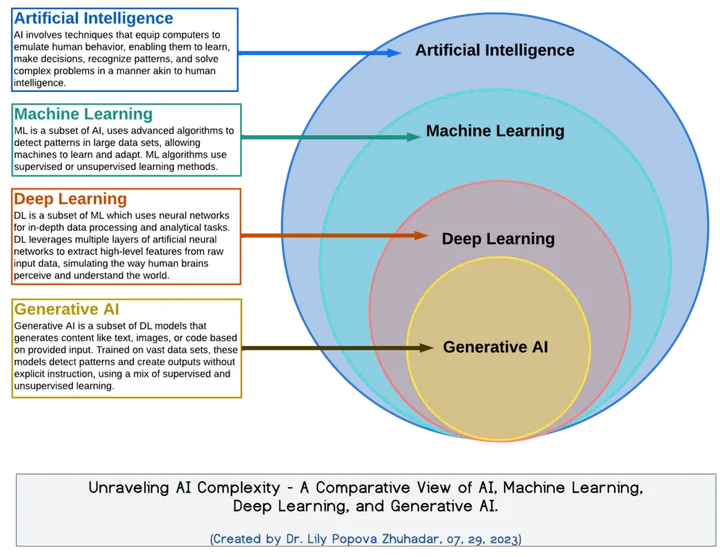
GANs are compared with other machine learning methods such as 'Variational Autoencoders' (VAEs) or 'Autoregressive models'. VAEs attempt to reconstruct data by compressing it, which often results in images that are somewhat blurry. In comparison, images created by GANs are extremely sharp and realistic. Furthermore, models like WaveNet generate data in a piece-by-piece sequence, whereas GANs can create an entire image or data sample in one pass.
However, training a GAN is a challenging task. Problems such as 'mode collapse' often arise, in which the generator begins to create only one type of sample and loses diversity. To solve these problems, advanced architectures like StyleGAN-1 and StyleGAN-2 have been developed, which provide better control over the various characteristics of the data.
The Importance and Future of Synthetic Data
Synthetic data prepared by GANs is revolutionizing many fields today. In the medical field, fake medical records or X-ray images are prepared by GANs to conduct research while maintaining patient privacy. In the agricultural sector, when there is limited data to identify crop diseases, GANs are used to generate additional data to train models. In astronomy as well, this technology is used to remove noise from images taken by telescopes and to identify stars more clearly.
In countries like India, where there are diverse languages and data types, GANs can be used to synthesize voices in local languages or to digitally restore old documents. However, this technology can also be misused to create 'deepfakes', which is a matter of concern. Nevertheless, from the perspective of science and engineering, GANs are a remarkable example of the confluence of human creativity and machine learning.
In the coming years, as computational power increases, GANs will become more accurate and efficient. By 2026, many experts believe that the gap between Variational Autoencoders and GANs will narrow, and we will see even more powerful generative models. This idea of Ian Goodfellow is not just a research paper today, but has become the backbone of modern AI.