Hydrogen Fuel Cells: The 'Capital Revolution' for Zero-Emission Transport and Its Internal Mechanics
A detailed explanation of how fuel cells generate electricity without pollution through the chemical combination of hydrogen and oxygen, and their significance in the future of transportation.

In today's era, when global warming is becoming a serious challenge, hydrogen fuel cells have emerged as a promising technology to reduce carbon emissions in the transport sector. A fuel cell is an electrochemical cell that converts the chemical energy of a fuel (mostly hydrogen) and an oxidizing agent (mostly oxygen) into electricity. The main difference between a standard battery and a fuel cell is that energy is stored in a battery beforehand, whereas a fuel cell requires a continuous supply of fuel and oxygen. As long as this supply continues, the fuel cell can continuously generate electricity.
The history of the hydrogen fuel cell is quite old and interesting. The first fuel cell was invented in 1838 by Welsh physicist Sir William Grove. He built a crude fuel cell using iron, copper, and porcelain plates. However, its commercial use began nearly a century later in 1932 with the invention of the hydrogen-oxygen fuel cell by Francis Thomas Bacon. In the mid-1960s, NASA began using this technology to generate power for satellites and space capsules in its space programs. Since then, it has been used in various vehicles such as forklifts, cars, buses, trains, boats, and submarines.
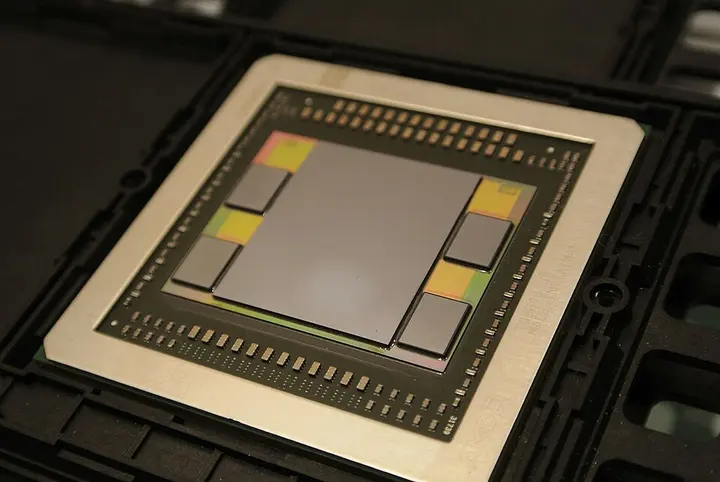
The basic structure of a fuel cell consists of three main parts: an anode, a cathode, and an electrolyte. These three parts are arranged next to each other, and chemical reactions take place between them. At the anode, a catalyst (typically platinum powder) splits the hydrogen fuel into ions and electrons. The electrolyte is a substance that allows only ions to pass through it but blocks electrons. These released electrons flow through an external circuit, which generates direct current (DC) electricity. Finally, at the cathode, these ions, electrons, and oxygen recombine to form water (H2O), which is the only byproduct of this process.
- Hydrogen entryHydrogen gas is introduced from the anode side where it comes in contact with the catalyst.
- IonizationThe catalyst splits hydrogen molecules into protons and electrons.
- Electric currentElectrons flow through an external circuit which provides electricity to run the motor.
- Water generationAt the cathode, protons, electrons, and oxygen combine to create pure water and heat.
The most widely used type in vehicles is the Proton-Exchange Membrane Fuel Cell (PEMFC). In this design, a proton-conducting polymer membrane (typically Nafion) is used as the electrolyte. On the anode side, hydrogen comes into contact with the catalyst and splits into protons and electrons. These protons travel through the membrane toward the cathode, while the electrons travel around the outside and power the motor. The reaction with oxygen at the cathode produces pure water and heat. This process is so clean that no toxic gases are emitted from it.
A single fuel cell typically generates a very low voltage of only 0.6 to 0.7 volts. To obtain the energy required to power a vehicle, many such cells are connected in series, which is called a 'fuel cell stack'. To increase the capacity of this stack, the surface area of the cells can also be increased. However, some energy is lost during this process, which is known as activation loss, ohmic loss, and mass transport loss. Nevertheless, the efficiency of a fuel cell is generally between 40% and 60%, which is significantly higher than that of a conventional petrol engine.
USD પ્રતિ kW
In terms of cost, fuel cell technology is still expensive, but mass production could lead to a reduction. According to estimates by the U.S. Department of Energy, if 100,000 vehicles are produced per year, the cost of an 80 kW fuel cell system could be $67 per kilowatt. If this production increases to 500,000 units, the cost could drop to $55 per kilowatt. Scientists are also researching alternatives like carbon silk and carbon nanotubes to reduce the use of expensive catalysts like platinum, which could reduce costs by more than 30%.

Hydrogen is categorized into different colors based on its production method. Currently, most hydrogen is 'gray hydrogen', which is produced from natural gas through the steam methane reforming (SMR) process. This process releases carbon dioxide, which is harmful to the environment. On the other hand, in 'blue hydrogen', this carbon is captured and stored. The purest form is 'green hydrogen', which is obtained through the electrolysis of water using renewable energy (solar or wind energy). Of the 94 million tonnes of hydrogen produced in 2021, less than 1% was low-carbon.
| Detail | PEMFC (Proton Exchange) | SOFC (Solid Oxide) |
|---|---|---|
| Start-up time | 1 second | 10 minutes |
| Efficiency | 40% to 60% | Higher (85% with heat) |
| Main use | Vehicles, portable power | Stationary power plants |
Regarding the role of hydrogen in the transport sector, it is particularly well-suited for heavy vehicles. Installing large batteries in long-haul trucks, buses, ships, and aircraft is difficult in terms of weight and space. Hydrogen is lightweight and can be refueled quickly. However, in the case of passenger cars, electric vehicles (EVs) are currently ahead. By the end of 2022, only 70,200 hydrogen vehicles had been sold worldwide, compared to 26 million plug-in electric vehicles. Companies like Toyota and Hyundai are still investing heavily in hydrogen cars.
ટકાવારી (%)
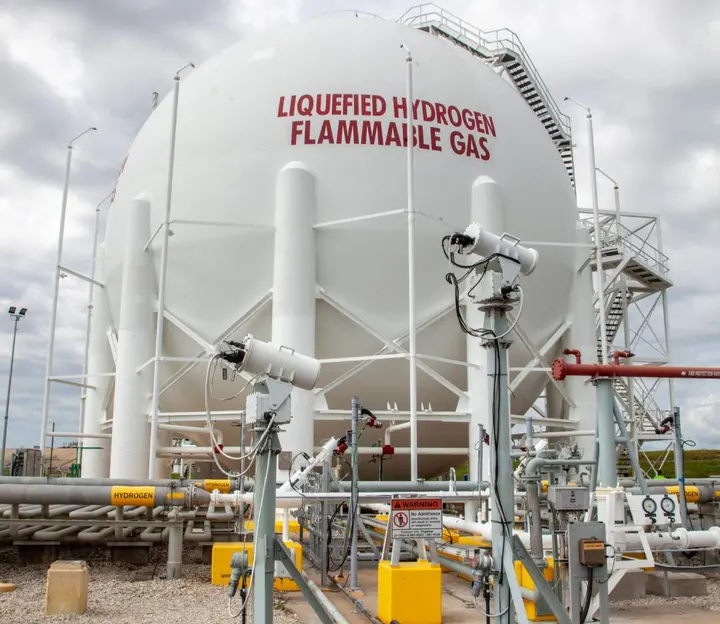
There are also major challenges regarding the storage and transport of hydrogen. Hydrogen is an extremely explosive gas, and its flames are not visible in daylight, which can pose a safety risk. Keeping it in liquid form requires extremely low temperatures, for which large spherical storage tanks are used. Organizations like NASA have decades of experience in storing liquid hydrogen, but building this type of infrastructure on public roads is a massive economic and engineering task.
The Hydrogen Mission is very important for countries like India. The Government of India is providing incentives for the production of green hydrogen to enhance energy security and reduce dependence on imported oil. However, to achieve the targets by 2030, a reduction in the cost of electrolyzers and a robust distribution network are essential. The hydrogen economy is not just a concept but a future necessity, where electricity and hydrogen will complement each other to make the world pollution-free.