Hubble's 'Cosmic Origins Spectrograph': Tracking the Primordial Footprints of the Universe through a Remarkable Fusion of Science and Technology
A technical and scientific exploration of how the Hubble Space Telescope's 'Cosmic Origins Spectrograph' (COS) utilizes ultraviolet light to unravel the mysteries of the universe.
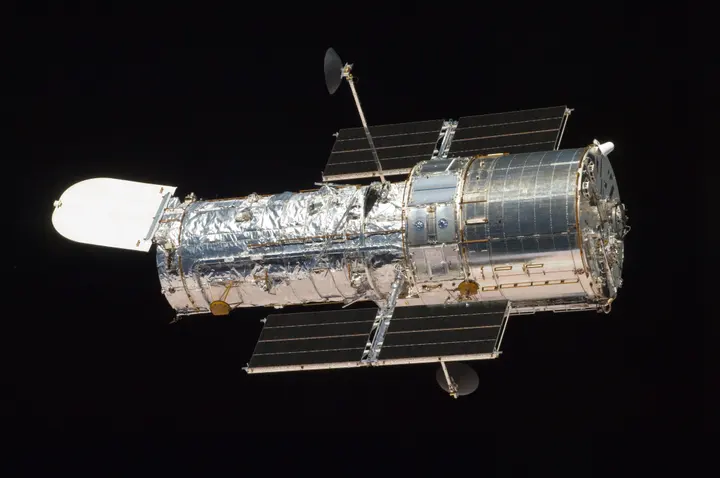
The Hubble Space Telescope is a scientific instrument in human history that has completely transformed our understanding of the universe. Launched into low Earth orbit in 1990, this telescope remains operational today and has proven to be a vital research tool for astronomy. The Hubble telescope is named after the famous astronomer Edwin Hubble. The greatest feature of this telescope is that it observes from outside Earth's atmosphere, which allows it to obtain extremely clear images without atmospheric interference. One of the many highly powerful instruments on Hubble is the 'Cosmic Origins Spectrograph' (COS). This instrument was installed on Hubble during Servicing Mission 4 (STS-125) in May 2009.
A spectrograph is an instrument that splits light into its component colors or wavelengths, much like a prism splits sunlight into the colors of a rainbow. This process is called spectroscopy. For astronomers, this method is extremely important because it provides information about the temperature, density, chemical composition, and motion of distant stars and galaxies that is impossible to obtain through photography alone. COS is specifically designed for the study of ultraviolet (UV) light. Ultraviolet light is a type of light with a wavelength shorter than visible light, and it cannot be seen by the human eye. Earth's atmosphere absorbs most ultraviolet rays, so an accurate study of these rays is only possible from space.
The History and Struggle Behind Hubble and COS
The idea of placing a telescope in space was first proposed by Hermann Oberth in 1923. However, the serious scientific foundation in this direction was laid by astronomer Lyman Spitzer in 1946. In his paper, he explained that there are two main advantages to keeping a telescope outside Earth's atmosphere: first, the problem of stars twinkling due to atmospheric instability is eliminated, allowing for the observation of extremely fine details. Second, it allows for the study of ultraviolet and infrared light, which are absorbed by the atmosphere. The contribution of Nancy Grace Roman, who is known as the 'Mother of Hubble,' in realizing this dream is also immense. She played a significant role in securing funding and setting scientific standards for this project in the 1970s.
The construction and launch of the Hubble Space Telescope faced numerous obstacles. In 1974, the project's funding was cancelled due to budget cuts. However, funding was re-approved thanks to nationwide lobbying by astronomers and strategic presentations by NASA officials. Initially, the telescope's mirror was planned to have a diameter of 3 meters, but it was reduced to 2.4 meters to cut costs. After its launch in 1990, it was discovered that Hubble's primary mirror had a defect known as 'spherical aberration.' This defect caused the images to appear blurry. In 1993, astronauts corrected this flaw through a servicing mission. The COS instrument was part of Hubble's fifth and final servicing mission, which increased Hubble's ultraviolet viewing capability by many times.
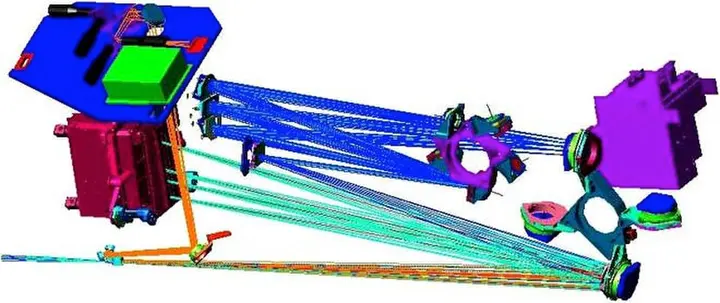
- Entry of lightLight from distant objects enters the instrument through the PSA or BOA aperture.
- Diffraction and correctionLight falls on a special grating that splits the light and corrects the defects of Hubble's mirror.
- DetectionThe split light falls on the FUV or NUV detector, where photons are converted into electrical signals.
- Data processingThese signals are sent to Earth where scientists analyze the spectrum.
Architecture and Functionality of COS
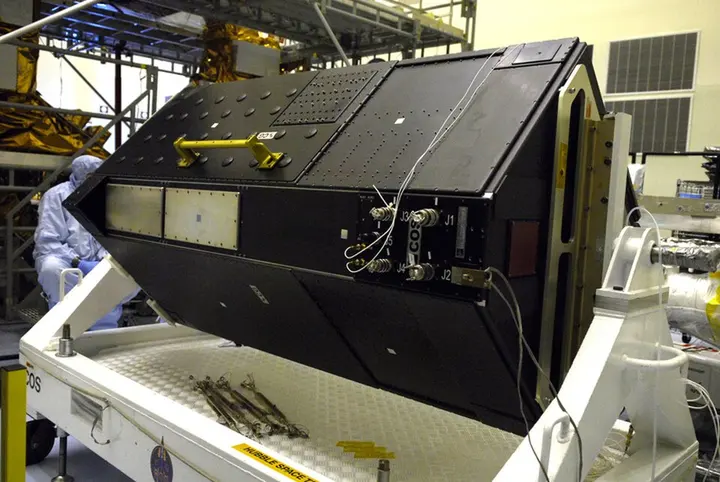
The Cosmic Origins Spectrograph is installed in Hubble's 'axial instrument bay.' It replaced a previous instrument called COSTAR. The design of COS is highly precise, allowing it to capture ultraviolet light coming from faint and distant objects. This instrument is primarily divided into two channels: Far Ultraviolet (FUV) and Near Ultraviolet (NUV). The FUV channel covers wavelengths from 90 to 205 nanometers (nm), while the NUV channel operates at wavelengths from 170 to 320 nanometers.
| Channel | Wavelength (nm) |
|---|---|
| Far Ultraviolet (FUV) | 90 - 205 |
| Near Ultraviolet (NUV) | 170 - 320 |
A revolutionary approach has been adopted in the design of COS, particularly in the FUV channel. When ultraviolet light hits any mirror or lens, a large portion of it is absorbed or lost. To minimize this loss, a 'single optic' design has been used in COS. This means that the light coming from Hubble's primary mirror falls directly onto a specially crafted 'diffraction grating.' This single optical component simultaneously disperses the light, corrects the defect in Hubble's mirror, and focuses the light onto the detector. Due to the use of minimal mirrors, COS has become significantly more sensitive than previous instruments.
| Detail | FUV channel | NUV channel |
|---|---|---|
| Wavelength range | 90-205 nm | 170-320 nm |
| Detector type | Microchannel plate | MAMA detector |
| Design type | Rowland circle | Czerny-Turner |
| Main use | Study of distant gas clouds | Imaging of stars and galaxies |
When light enters the COS, it passes through one of two apertures: the Primary Science Apertures (PSA) or the Bright Object Apertures (BOA). The PSA is used for standard observations, while the BOA contains a filter that reduces the light of extremely bright objects by a factor of 100 to prevent damage to the sensor. The FUV detector is a 'cross delay line microchannel plate' with a size of 170x10 millimeters. The surface of this detector is curved to match the focal surface of the spectrograph precisely. On the other hand, the NUV channel uses a 'Czerny-Turner' design, in which light is split into three separate strips and projected onto a 25x25 millimeter MAMA detector.

Science Goals: Exploring the Early Universe
The primary task of the COS is to study the large-scale structure of the universe and the formation of galaxies. It specifically helps in understanding the 'Cosmic Web'. The Cosmic Web is a vast network composed of gas and dark matter that spans the entire universe. It is difficult to directly observe the intergalactic gas within this web, but when light from a distant galaxy or quasar passes through this gas, the gas absorbs certain portions of the light. By studying the signatures of this absorbed light, the COS determines the temperature, density, and chemical composition of the gas.
In this process, the study of the 'Lyman-alpha forest' is extremely important. When light passes through clouds of hydrogen gas, numerous absorption lines appear in the spectrum, resembling a forest. From this, one can determine how matter is distributed throughout the universe. Furthermore, the process of 'reionization' is also studied using the COS. To understand how the first stars and galaxies ionized the surrounding gas during the early stages of the universe, the absorption of helium gas is studied.
The COS also plays an important role in understanding the lifecycle of stars. It studies hot stars, white dwarfs, and binary star systems within galaxies. Data from the COS also provides information on how chemical elements essential for life, such as carbon, nitrogen, and oxygen, were formed in massive stars and dispersed into space through supernova explosions. It is also capable of investigating the atmospheres of planets in the solar system and the composition of comets.
Technical Specifications and Comparison
The capability of COS lies in its resolving power and sensitivity. Its resolving power ranges between 1,550 and 24,000, which means it can distinguish between wavelengths that are extremely close to each other. Compared to the 'Space Telescope Imaging Spectrograph' (STIS) already present on Hubble, COS is many times more sensitive in the ultraviolet range. While STIS covers a broad range of wavelengths, COS has been specifically optimized for faint point sources.
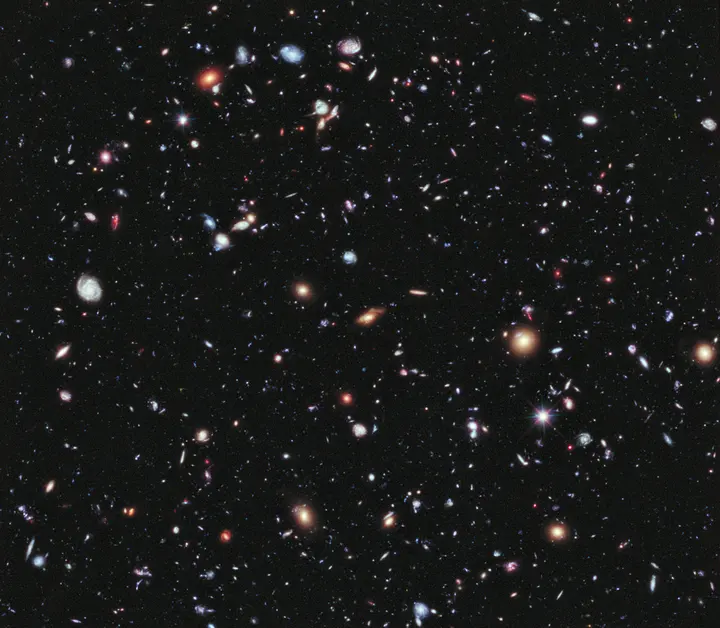
According to its performance since launch, the sensitivity of COS has remained as expected. The background noise in the FUV detector is extremely low, at only 0.16 counts per 1,000 seconds. This means it can clearly capture even extremely weak signals. Although the resolution of the FUV has been slightly lower than expected due to minor polishing errors in Hubble's primary mirror, the resolution of the NUV has been found to be even better than expected.
Conclusion and Future
The Cosmic Origins Spectrograph is not just a scientific instrument, but a window into the past of the universe. It tells us how the structure of the universe was formed and how the elements we are made of were born in stars. The Hubble Telescope is expected to remain operational until 2030 to 2040, and until then, COS will continue to help us solve the mysteries of the universe. As the James Webb Space Telescope (JWST) makes new discoveries in infrared, the ultraviolet capability of COS acts as a complement, shaping a new era of astronomy. Such research is also inspiring for countries like India, as it demonstrates the pinnacle of science and engineering.