The Clarion Call of the Robotics Revolution: Samsung and LG in Fierce Competition for Global Talent
In the race to build commercial robots and humanoids, South Korean tech giants are now recruiting engineers and AI researchers from abroad.
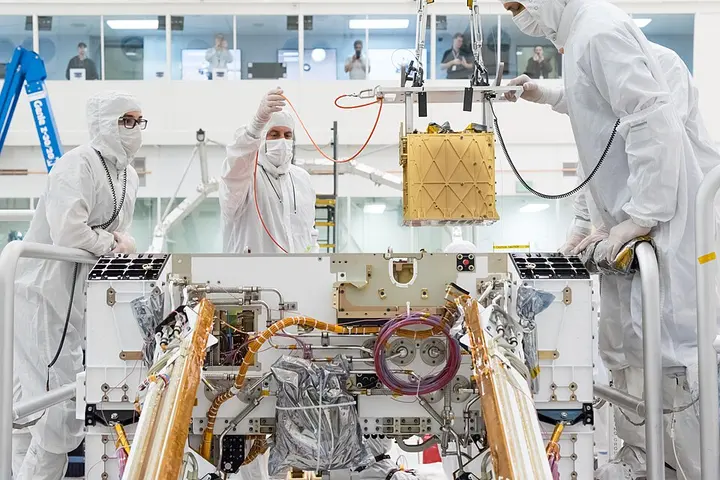
The world's leading electronics companies are no longer limited to smartphones or household appliances; they are making a major play in the field of commercial robotics. Two South Korean tech giants, Samsung Electronics and LG Electronics, are crossing borders to recruit top-tier global talent to expand their robotics operations. Recent job postings from these companies indicate that they are moving aggressively to make both the hardware and software aspects of robots commercially successful.
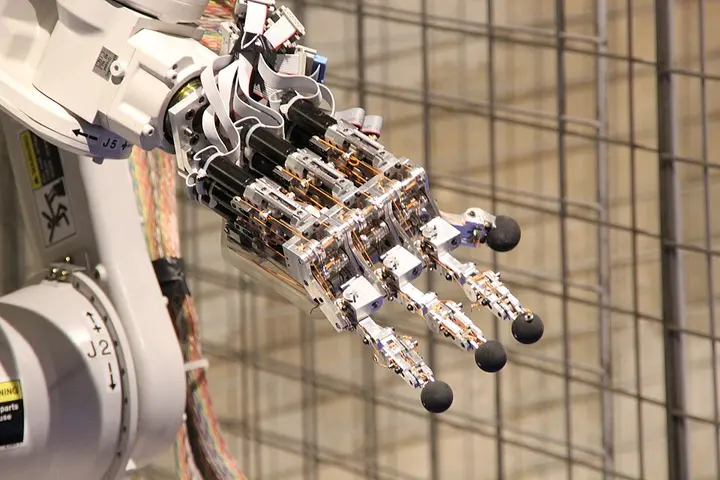
Samsung has begun recruiting robotics control engineers and sensor experts for its research center in Yokohama, Japan. This work focuses specifically on small actuators (devices that convert energy into physical motion), firmware for robotic hands and fingers (software code that controls hardware), and tactile sensors (sensors that detect touch and force). On the other hand, LG Electronics is building a team of sales and application engineers to supply its robot components to the North American market, while recruiting physical AI researchers at its lab in Santa Clara, California.
- 1. Power SourceLithium-ion batteries or other energy sources supply energy to all electronic components of the robot.
- 2. Control SystemElectrical circuitry and sensors control motor movement and process signals.
- 3. Software & AIThrough Artificial Intelligence and foundation models, the robot decides when and how to move.
- 4. Mechanical ActuationMotors and actuators convert electricity into physical motion to move arms, legs, and fingers.
The fundamental structure of robotics: Four main pillars
Robotics is the multidisciplinary study of the design, construction, operation, and use of robots. Any robot is primarily based on four functional pillars: power source, mechanical construction, control system, and software. All these components work together to give the robot the ability to function properly in the physical world.
This entire process can be compared to the human body. A robot's power source is like its heart and metabolism, providing energy. The mechanical structure and actuators are its bones and muscles. The control system, made of electrical circuits, is the nervous system, while the artificial intelligence (AI)-based software is its brain, which determines when and how to move.
| Technology Name | Method of Operation | Main Feature / Capability |
|---|---|---|
| Pneumatic Artificial Muscles | Expansion of air-filled tubes | Up to 42% expansion capacity |
| Shape Memory Alloy (Muscle Wire) | Contraction upon applying electric current | Less than 5% contraction |
| Electroactive Polymers | Contraction of plastic via electric current | Up to 380% activation strain |
| Carbon Nanotubes | Deformation of elastic filaments | 10 J/cm3 energy storage and high force |
Portable and humanoid robots mostly use nickel-manganese-cobalt-based lithium-ion batteries. In contrast, silver-cadmium batteries are used in space or military operations, which are small but expensive. Robot control is managed via remote control or artificial intelligence (AI), which plays a vital role in human-robot interaction and navigation.
Mechanical motion and actuation technology: Beyond muscles
The most challenging aspect of robotics is the design of actuators, which convert stored energy into motion. Industrial robots predominantly use AC or DC electric motors and linear actuators. However, for nanometer-level precision, piezoelectric motors are used, in which piezoceramic components vibrate thousands of times per second to generate motion.
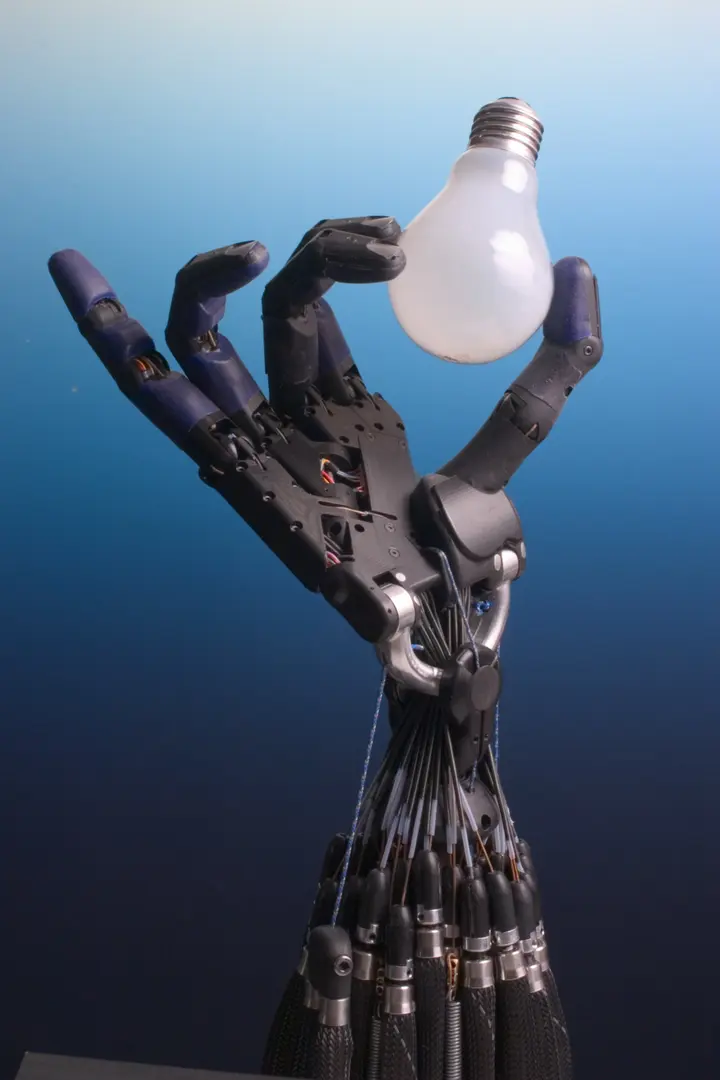
For human interaction and compliant environments, the series elastic actuation (SEA) method has been developed, in which elasticity is intentionally added between the motor and the load. This ensures safety during collisions and increases energy efficiency. Furthermore, scientists have created pneumatic artificial muscles, which expand by up to 42% when inflated. Electroactive polymers can contract by up to 380% when electrified, while carbon nanotubes possess an energy density of 10 J/cm3, and a wire with a diameter of 8 millimeters can provide more power than a human bicep.
| Company Name | Main Research / Production Sector | International Strategy and Recruitment |
|---|---|---|
| Samsung Electronics | Robotics hand, tactile sensors, motor control | Yokohama (Japan) Research Center, 35% stake in Rainbow Robotics |
| LG Electronics | Axium actuators, Physical AI, training data | Santa Clara (US) lab, partnership with Nvidia, humanoid by 2030 |
Locomotion and Mobility: The Science of Balance
Various designs are used for the mobility or locomotion of robots. A single-wheel robot (such as Carnegie Mellon University's Ballbot) maintains balance on a spherical ball, while two-wheel robots use gyroscopes and inverted pendulum dynamics to prevent themselves from falling by rotating their wheels hundreds of times per second. Maintaining balance for bipedal humanoid robots is more complex.
For two-legged robots, the algorithm used by Honda's ASIMO is known as the zero moment point (ZMP), which balances the ground reaction force and the robot's inertial force. In the method developed by Marc Raibert at the MIT Leg Laboratory, balance was maintained by hopping. A more modern approach is passive dynamics, which utilizes the momentum of the swing of the calves and arms for walking, providing 10 times more energy efficiency than the ZMP method.
The Masterplan of South Korean Giants: Samsung and LG's Strategy
Recent steps taken by Samsung and LG show that commercial robotics is no longer just a subject of the laboratory. Samsung Electronics, which recorded a record revenue of ₩333.61 trillion ($248.91 billion) and an operating profit of ₩43.6 trillion ($32.53 billion) in 2025, is leveraging its financial strength in robotics. After increasing its stake in Korean robot manufacturer Rainbow Robotics to 35% in December 2024, it established a 'Robotics eXperience' business unit in July that reports directly to CEO Roh Tae-moon.
On the other hand, Lee Jae-mo, Robotics Strategy Executive at LG Electronics, stated during the earnings call on October 28 that the company will first strengthen its robot components business in the manufacturing and logistics sectors, and subsequently expand into the field of household humanoid robots around 2030. LG unveiled its Axium actuator brand at CES in January and has started a pilot production line in Changwon. It is also operating a data facility for robot training in collaboration with Nvidia.
What this revolution means for India and the common man
This rapid commercialization of robotics is likely to bring major changes to the global labor market. Robots will replace human workers in factories, logistics, and the service sector, which has intensified discussions on concepts such as universal basic income.
For countries like India, which possess a large workforce in IT and software engineering, vast opportunities are emerging in the fields of robotics foundation models and AI graphics training. However, at the same time, developing world-class technical expertise in hardware and actuator designing will become equally essential.