Blindness and the Brain's Remarkable Plasticity: How Hearing Sharpens When Sight Is Lost
The science behind the neurological changes in the brains of individuals who lose their vision at an early age and their extraordinary auditory capabilities.

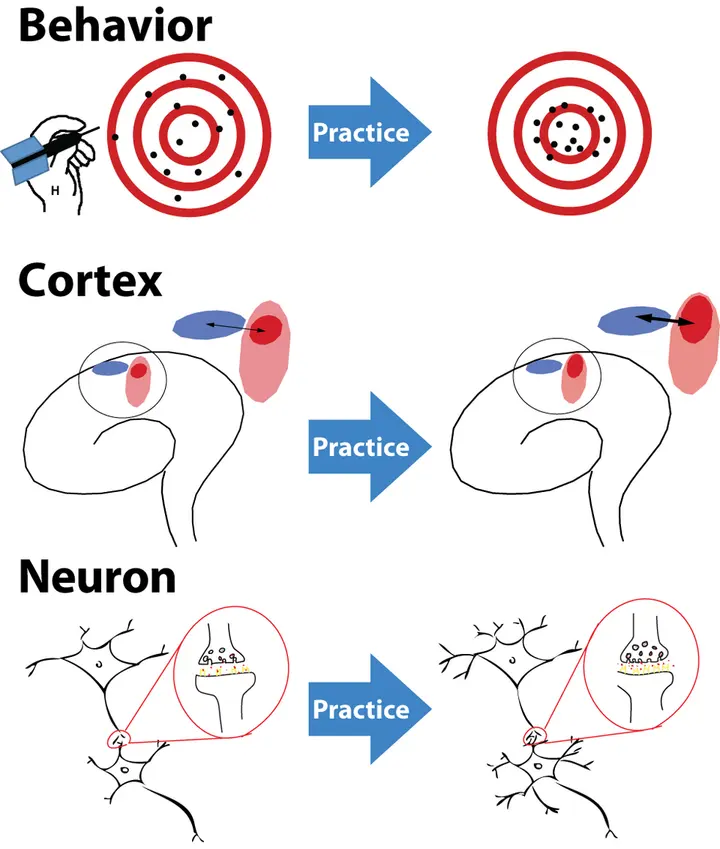
The human brain is nature's most complex and adaptive structure. When a person loses their vision, especially at an early age, their brain remarkably reorganizes itself to compensate for this loss. In the language of science, this process is called neuroplasticity. Neuroplasticity refers to the tendency of the brain's neural networks to change through development and reorganization. This ability enables the brain to function and adapt in ways different from its previous state.
According to a report from Source 1, it has been observed that individuals who have lost their vision at a young age possess hearing abilities far superior to those of the average person. This is not merely a matter of ear strength, but a change in the way the brain processes sound. Research indicates that such individuals have a much higher capacity for pitch discrimination—the ability to distinguish fluctuations in sound—compared to those with normal vision. This suggests that blindness leads to profound neurological changes in the brain that sharpen auditory perception.

The History and Science of Neuroplasticity
The concept of neuroplasticity is not new, but it has taken decades to understand. William James first used the term 'plasticity' in 1890. He described it as a structure weak enough to yield under influence, yet strong enough not to break. According to Wikipedia, in 1793, the Italian anatomist Michele Vincenzo Malacarne conducted experiments on animals. He observed that the animals that had been trained had a larger cerebellum—the small brain—compared to untrained animals.
For a long time, scientists believed that the structure of the adult brain was fixed and could not undergo any changes. However, research conducted in the latter half of the 20th century changed this belief. A pioneering neuroscientist named Santiago Ramón y Cajal used the term neuronal plasticity to describe non-pathological changes occurring in the adult brain. This capacity of the brain is not limited to childhood but continues into adulthood, although it is more intense during childhood.
- Sensory changeWhen one sense (such as vision) stops working, the input received by the brain changes.
- Neural reorganizationThe brain reorganizes its neural network and creates new neural connections (synapses).
- Cortical remappingThe part of the brain that was for vision now begins to process signals of hearing or touch.
- Increased capacityDue to this redistribution, there is a significant increase in the sensitivity and efficiency of other senses.
The Redistribution of Brain 'Real Estate'
To understand these changes in the brain, experiments by scientists such as Michael Merzenich and David Hubel are significant. In an experiment conducted on kittens, Hubel and Wiesel observed that when one eye is closed, the part of the brain allocated to that eye does not remain idle. Instead, it begins to process information coming from the open eye. Merzenich has referred to this as 'cortical real estate.' The brain does not want to waste its space, and if one sense is not functioning, it allocates that space to other senses.
When a person is blind from birth or at an early age, their brain's visual cortex, which normally performs the task of seeing, begins to process information from sound and touch. This is called cross-modal reassignment. This is the reason why blind individuals can identify the source of a sound more accurately and learn touch-based languages like Braille more quickly. This change is not only functional but also structural.
| Category | Description | Visual Acuity |
|---|---|---|
| 0 | Normal or mild impairment | Better than 6/18 |
| 1 | Moderate visual impairment | Between 6/18 and 6/60 |
| 2 | Severe visual impairment | Between 6/60 and 3/60 |
| 3-5 | Blindness | Less than 3/60 or lack of light perception |
Structural and Functional Plasticity
There are two main types of neuroplasticity: structural and functional. In structural plasticity, the brain changes its anatomical structure. This includes the formation of new dendritic spines—that is, the ends of neurons—axonal sprouting, and neurogenesis, which is the formation of new neurons. These changes help the brain store new information and learn.
On the other hand, functional plasticity refers to the brain's ability to transfer the functions of damaged parts to healthy parts. For example, if a specific part of the brain is damaged, other parts take over that function. In the case of blind individuals, auditory and tactile signals are sent to areas of the brain that are normally reserved for vision. This process occurs through the strengthening of synapses, which are the connections between two neurons.
Vision Impairment: Statistics and Classification
According to 2015 statistics from the World Health Organization (WHO), approximately 940 million people in the world suffer from some form of vision problem. Of these, 246 million people have low vision and 39 million people are completely blind. The main causes of vision impairment include uncorrected refractive errors (43%), cataracts (33%), and glaucoma (2%). According to the WHO, 80% of vision impairment is preventable or treatable.
Visual impairment is classified into various categories. Category 0 represents normal vision, while categories 3 through 5 are defined as blindness. In category 5, an individual does not even perceive light. In the United States, if a person's vision is less than 20/200 even with glasses, they are considered legally blind. This statistical data shows that vision problems are a widespread global challenge, which makes the science of brain adaptation even more relevant.
મિલિયન લોકો
Effects on Life and Adaptation
Losing one's vision has a major impact on an individual's daily life. In the elderly, visual impairment leads to increased physical inactivity, slower walking speeds, and a fear of falling. According to the National Health and Nutrition Examination Survey (NHANES), people with vision worse than 20/40 spend significantly less time on physical activity. Furthermore, vision loss can also increase the risk of memory decline and cognitive impairment.
However, brain plasticity helps in combating these challenges. Blind individuals learn to perceive space with the help of sound, which can be further sharpened through methods such as echolocation. They can discern the distance and size of surrounding objects based on sound echoes. The changes that occur in the brain to develop this ability prove that the brain is never static; it is always learning and changing.

Future Direction and Conclusions
Research in the field of neuroplasticity has proven that cognitive functions can be improved through brain exercises and training. Scientists like Michael Merzenich believe that this capacity of the brain can also be used in the treatment of serious diseases like schizophrenia. The changes occurring in the brains of blind individuals help us understand how the brain can maximize its efficiency even with limited resources.
Ultimately, becoming blind at an early age is certainly a major physical limitation, but the brain's adaptability transforms it into a different kind of strength. In this process, the brain's neurons create new connections and strengthen old ones. This science is a ray of hope not only for blind individuals but also for patients recovering from brain injuries and researchers seeking new methods of learning. This brain plasticity is the foundation of human evolution and the ability to survive.